
01 Introduction: From Mine to Industrial Hub
Modern mining projects are rarely just extraction operations. Ore must be processed, equipment must be maintained, consumables must be stored, and a workforce must be housed, all at a location that is usually far from any established industrial base. Each of those functions needs a building of its own, and each depends on the others being in place at roughly the same time. The result is that a mine tends to become an industrial hub in its own right, with workshops, warehouses, processing buildings, and accommodation clustered around the pit or the shaft, and all of it needed at once.
Lida Group’s turnkey approach addresses that cluster as a single deliverable rather than as a series of separate contracts. Steel factories and workforce camps are designed together, manufactured under one quality regime, and delivered against one programme, so that a mining client receives functioning infrastructure rather than a set of buildings to be assembled and reconciled. This article explains what turnkey delivery means in a remote industrial setting, why steel construction suits it, and how factories and camps depend on each other.
02 What Turnkey Really Requires
Turnkey is a much-abused word, and it is worth setting out what it should involve. In a remote mining context it means the supplier takes responsibility for the design, the manufacture, the transport, the installation, and the initial commissioning, and hands over a facility that can be operated rather than one that still needs to be integrated by someone else. It also means accepting accountability for the sequence, since a package that arrives late is no better than a package that was never ordered. That includes resolving connections between buildings, not merely delivering each building in isolation.
The value of that arrangement appears in the interface between disciplines. When the factory structure, the camp accommodation, and the services that link them are planned by one party, the electrical load, the water demand, and the access arrangements are coherent from the start. Foundations can be scheduled once, deliveries can be sequenced so that they do not compete for the same crane, and the site layout can be fixed before ground is broken rather than revised with each new arrival. On a site where every additional contractor means another mobilization, another accommodation requirement, and another set of freight movements, reducing the number of parties is an operational advantage as much as a commercial one.
03 Steel Factories: Manufacturing at the Point of Extraction
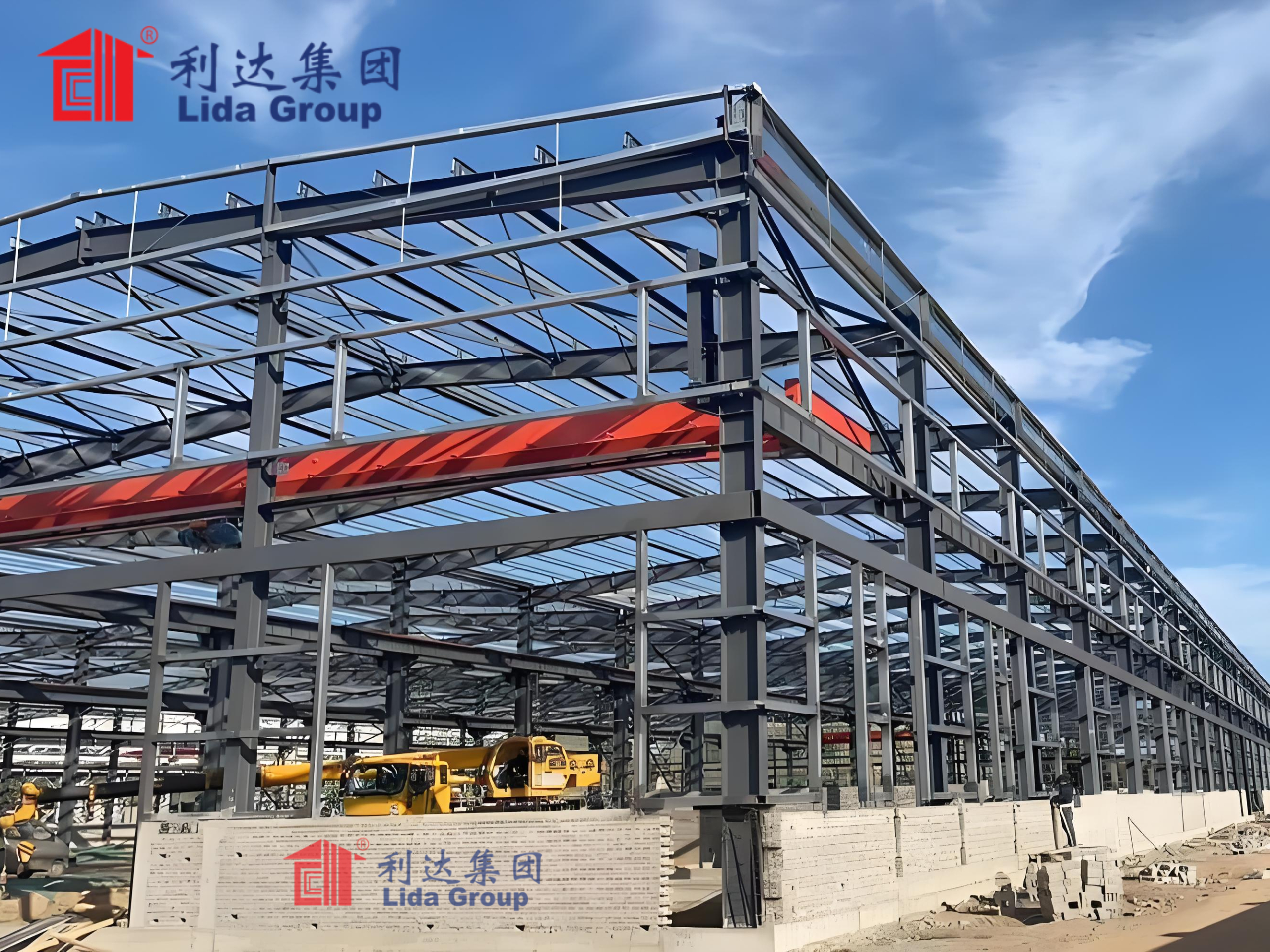
A steel factory building on a mining site is asked to do work that would normally happen in an established industrial area. It houses fabrication, repair, and assembly, often with heavy lifting equipment, welding, cutting, and the storage of large components. That combination means the structure must tolerate heat, vibration, impact, and the loads imposed by plant that was designed for a permanent industrial facility rather than a temporary one. Lida’s steel structures are engineered for those loads, with frames designed to carry concentrated weight and dynamic forces, and spans that leave usable floor area rather than a forest of internal columns.
Because these buildings are prefabricated, they can be erected quickly in conditions where site labour is scarce and the weather windows are short. The components arrive cut, prepared, and marked, so site work is assembly rather than fabrication, and the building can be brought into service before the plant it supports is fully commissioned. Equipment such as overhead cranes or lifting beams can be allowed for from the start, rather than being retrofitted into a structure that was never designed to carry them. That sequence matters, because a workshop that is running early can repair the equipment that installs everything else.
04 Structural and Environmental Demands
Remote mining environments impose specific demands on industrial buildings. Dust abrades surfaces and enters every gap, wind applies continuous pressure, and temperature swings act on joints and seals until they open. A factory that looks adequate on handover can be leaking, corroded, or structurally compromised within a few years if its envelope and detailing were not designed for the location rather than for a moderate climate.
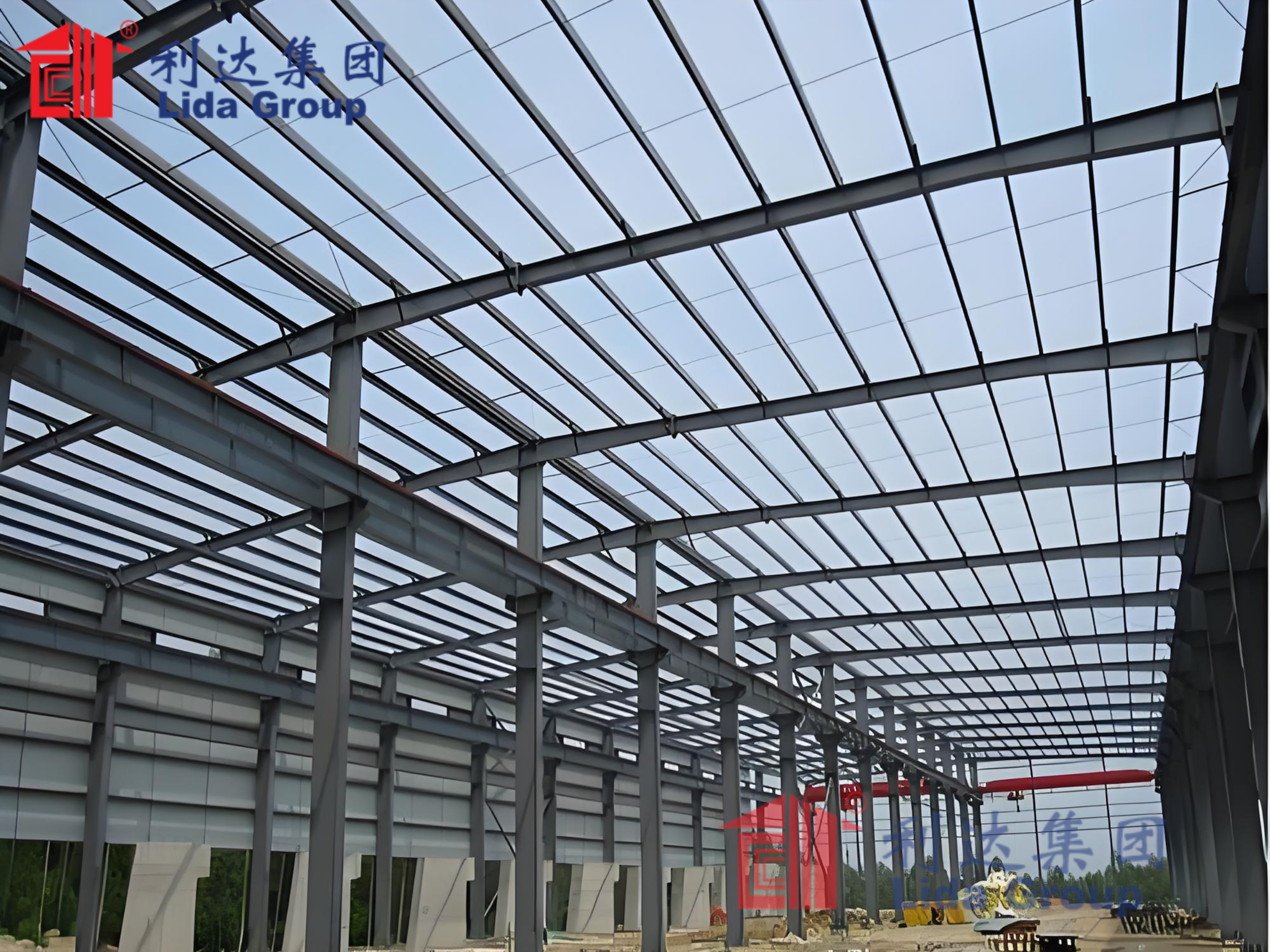
Lida addresses this through the structural system and the envelope together. Steel provides strength, dimensional stability, and resistance to the biological deterioration that affects other materials, while cladding and roofing are detailed to resist ingress and to accommodate thermal movement. Fixings are selected for the corrosivity of the local atmosphere rather than for a temperate default, and roof edges and gutters are shaped so that water leaves the building instead of working back into the fabric. Roof drainage, penetration sealing, and opening protection are resolved at the design stage, which is where the difference between a durable industrial building and a maintenance liability is actually decided.
05 Workforce Camps: Housing the Hub
An industrial hub needs people, and those people need to live somewhere. Mining camps house a workforce that may number in the hundreds, often on rotation, often in conditions where the nearest town is hours away. Lida’s workforce camps are built from modular accommodation units with insulated panels and steel frames, arranged as blocks with sanitation, dining, and communal space integrated into the layout rather than added afterwards. Because the units are complete when they arrive, a block can be occupied within days of delivery, which is what makes a camp viable when the mobilisation schedule is already tight.
Accommodation quality is an operating variable rather than a welfare footnote. A camp that holds its interior conditions, provides reliable services, and offers somewhere to sit that is not a bunk keeps the workforce it has trained, and training is one of the largest costs a remote mine carries. Turnover also carries a safety cost, because new arrivals are the people least familiar with a site’s hazards and most likely to be involved in an incident during their first weeks. When the camp is delivered as part of the same turnkey package as the factories, the accommodation is available when the construction workforce arrives, which is precisely when a shortage of beds would do the most damage.
06 The Interface Between Plant and People
The relationship between the industrial buildings and the camp is more consequential than it appears. Workers move between accommodation and workplace several times a day, and the distance, the route, and the conditions along it shape how much of a shift is actually available for work. A camp placed without regard to the factory layout produces long walks, vehicle dependencies, and lost time that nobody records.
Turnkey planning allows that interface to be designed. Access roads, service corridors, and pedestrian routes can be laid out once for the whole hub, and buildings positioned so that material flows and people flows do not conflict. A heavy vehicle route that crosses a walking route between camp and workshop is a hazard that repeats every shift change, and it is far cheaper to separate the two on a drawing than to manage it for years afterwards. Sanitation and rest facilities can be placed where the working population actually is, rather than where a spare unit happened to fit. These decisions cost almost nothing at the planning stage and are expensive to correct once the site is built.
07 Phasing a Hub That Grows
Mining projects are developed in phases, and the infrastructure must follow. Construction begins with a relatively small footprint, expands as the plant is commissioned, and may grow again during later expansions or life-of-mine extensions. A hub built as a single fixed installation either overbuilds at the start or falls short later, and both outcomes waste capital that a mining company would rather spend on production.
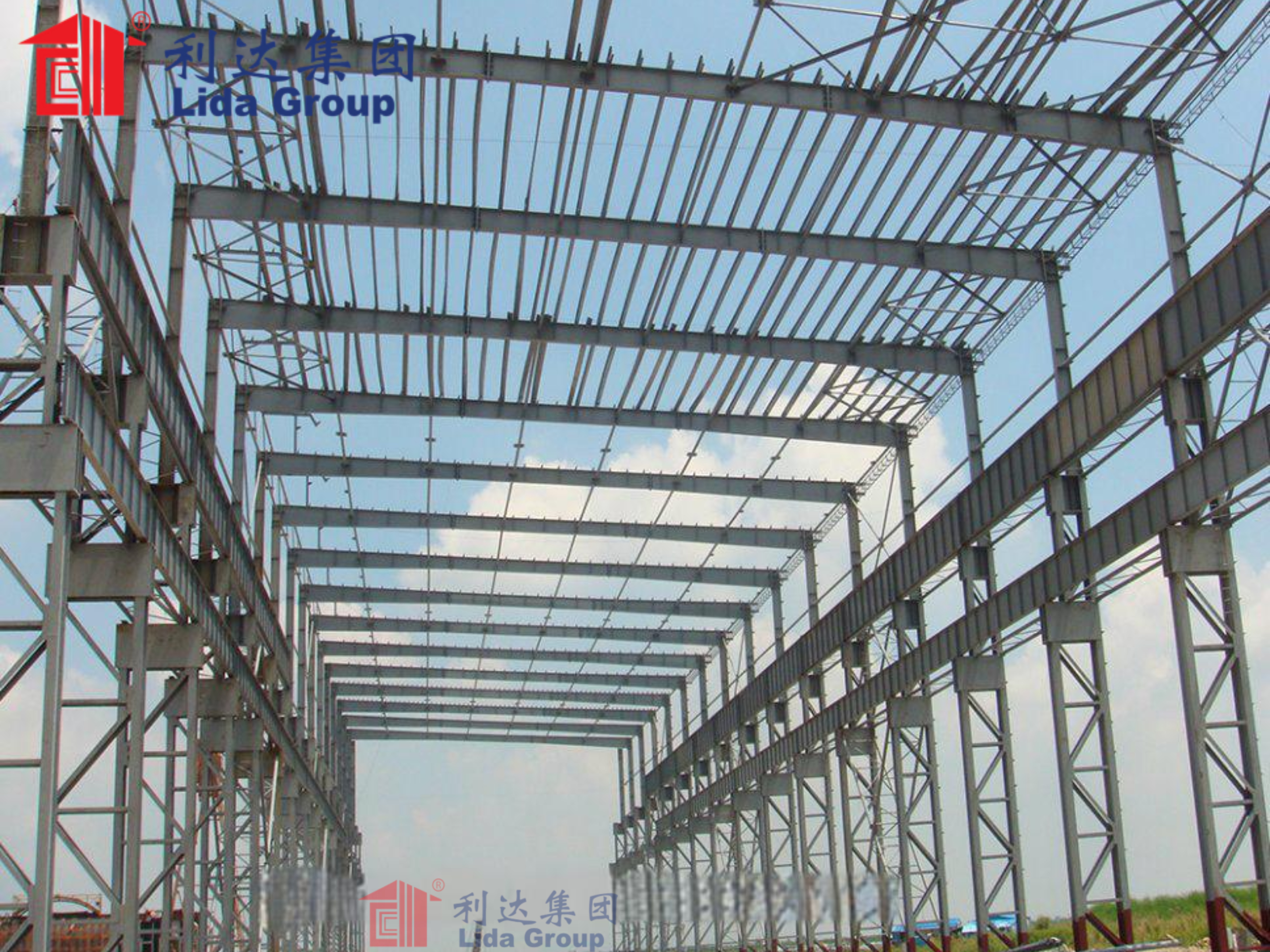
Because Lida delivers factories and camps as modular systems, capacity can be added where it is needed. Factory bays can be extended, warehouse space enlarged, and accommodation blocks added as the workforce grows, all using the same structural system and the same connection details. A unit installed in the fourth year of a development therefore behaves like one installed in the first, and the camp does not end up divided between an older section that is comfortable and a newer one that is not. The hub therefore grows with the mine plan rather than being rebuilt around it, and each phase can be justified against the demand that actually exists at the time.
08 Logistics, Commissioning and Handover
On a remote site, logistics is the constraint that governs everything else. Materials must travel long distances, often over roads that impose limits on size and weight, and deliveries must be sequenced so that the site can receive them without blocking other work. A hub that needs three hundred separate deliveries during construction will spend much of its schedule waiting at a gate, whereas a prefabricated package converts that into a smaller number of planned loads with known dimensions. Each load can then be tracked, scheduled against site readiness, and received by equipment the site already has.
Commissioning and handover are part of the same discipline. A turnkey delivery is only complete when the buildings are connected, tested, and documented, and when the client’s team understands how to operate and maintain them. That means records of what was installed and where, a clear schedule of the consumables and spares that the site should hold, and procedures written for the maintenance team that will actually be on site rather than for a factory-based service department. Lida’s approach includes the documentation, spares recommendations, and procedures that allow a site team to take over a functioning facility, which is the point at which a construction project becomes infrastructure.
09 Conclusion: Infrastructure That Arrives as a System
Remote mining sites need industrial buildings and accommodation at the same time, in the same place, and under the same schedule pressure. Treating those needs as separate purchases produces the familiar pattern of half-finished hubs, late camps, and contractors blaming one another for delays. A turnkey package replaces that fragmentation with a single programme in which factories, camps, and the services between them are designed to work together from the first drawing.
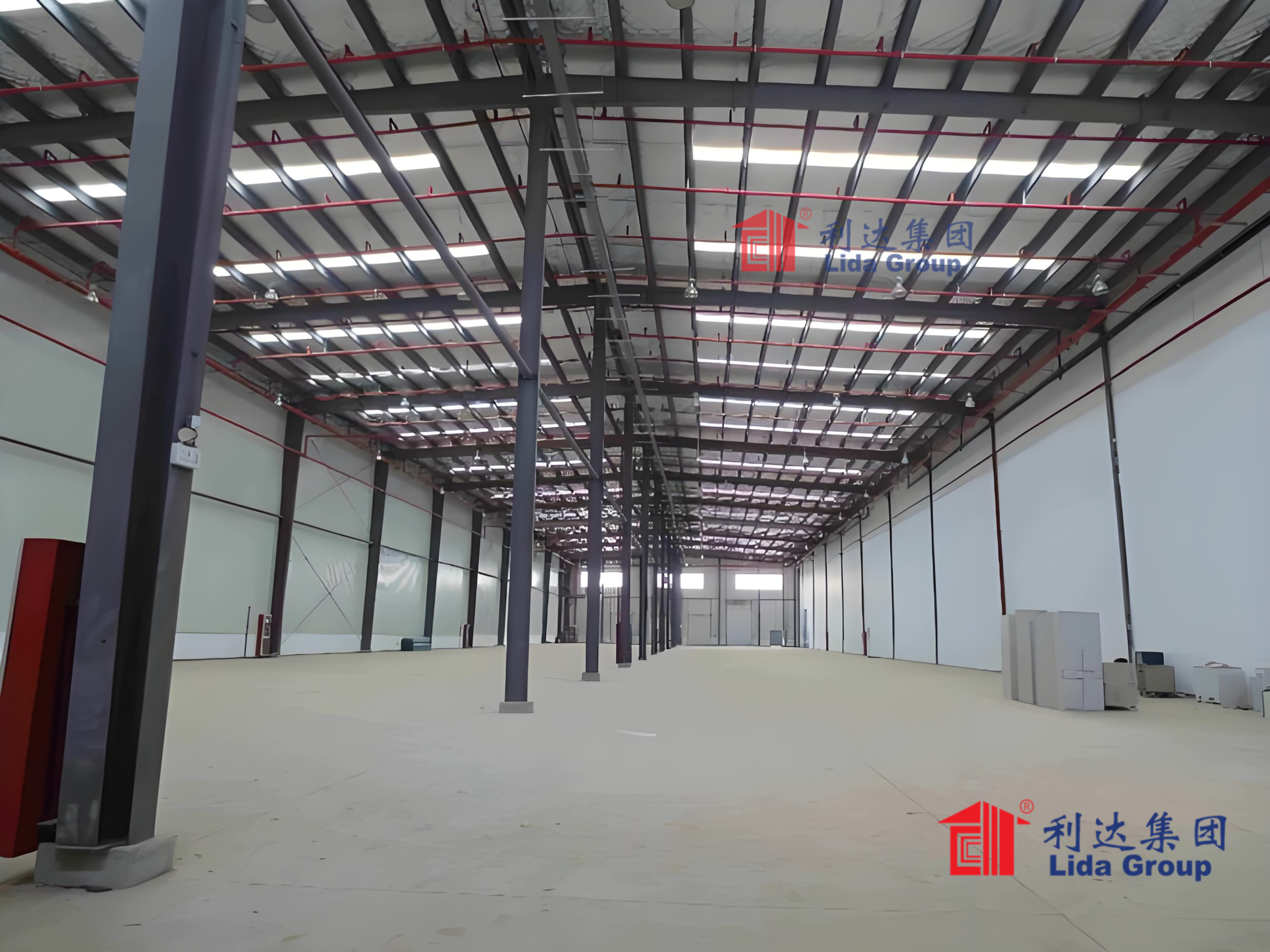
Lida Group’s steel factories and workforce camps are built for that role: engineered for heavy loads and hostile climates, manufactured under one quality regime, delivered in sequence, and extendable as the mine develops. The result is a hub that can be operated rather than merely occupied, and that continues to serve the project reliably through commissioning, production, and any later expansion of the mine. For a mining company working far from any industrial base, receiving infrastructure as a system rather than as a set of parts is the difference between a site that starts on time and one that spends its first year catching up.
Post time: Nov-24-2026