
Introduction
Remote site operations represent one of the most demanding challenges in modern industry. Whether supporting mining operations in the Australian outback, oil and gas exploration in the Arctic, construction megaprojects in Southeast Asia, or humanitarian missions in disaster-affected regions, establishing adequate housing for workers in locations far from urban infrastructure requires overcoming significant logistical, financial, and operational hurdles. Among these challenges, the cost of providing safe, comfortable, and dignified accommodation consistently ranks as one of the most significant budget items—and one of the most difficult to control.
Traditional approaches to remote site housing have long relied on conventional construction methods: building permanent or semi-permanent structures on-site using locally available materials and labor. While this approach has historical precedent, it is increasingly recognized as financially inefficient, operationally cumbersome, and strategically inflexible. The costs of traditional construction in remote locations are inflated by transportation expenses, labor premiums, weather delays, and the difficulty of managing complex supply chains in isolated environments.
Lida Group, a global leader in integrated building engineering solutions established in 1993, has developed a fundamentally different approach to remote site housing—one that leverages prefabricated construction technology to deliver accommodation solutions that are faster to deploy, more cost-effective, and more adaptable than traditional alternatives. With over three decades of experience, more than 5,000 completed projects across 152 countries, and a portfolio of over 60 independent patents, Lida Group has demonstrated conclusively that prefab houses can lower remote site housing costs by 35 percent or more while delivering superior quality and performance.
This article examines how Lida Group’s prefab houses achieve these remarkable cost savings, exploring the mechanisms that drive efficiency and the practical benefits that remote site operators can realize.
Understanding the True Cost of Remote Site Housing
To appreciate the significance of a 35 percent cost reduction, one must first understand the cost structure of traditional remote site housing. The expenses associated with building accommodation in isolated locations extend far beyond the materials and labor that would be required in an urban setting.
Transportation represents a major cost driver. Remote sites are, by definition, difficult to access. Materials must be transported over long distances, often using specialized vehicles or equipment. Roads may be unpaved, seasonal, or non-existent. In some cases, materials must be flown in by helicopter or transported by barge. Each of these transportation modes carries significant costs that compound with distance and difficulty.
Labor costs are similarly inflated. Skilled construction workers are reluctant to relocate to remote sites, requiring premium compensation to attract and retain them. These workers must themselves be housed, fed, and supported—adding further costs. The productivity of construction crews in remote locations is often lower than in urban settings due to environmental conditions, logistical constraints, and the psychological toll of isolation.
Weather delays extend project timelines unpredictably. Remote sites are often located in regions characterized by extreme weather—monsoon seasons, harsh winters, or high winds—that can halt construction for days or weeks at a time. These delays compound labor costs, extend financing periods, and postpone the revenue generation that the housing is intended to support.
Material waste represents another hidden cost. Traditional construction generates substantial waste through offcuts, damaged materials, and over-ordering (which is common when re-supply is difficult). This waste must be disposed of, often at additional cost in environmentally sensitive locations.
Finally, the end-of-life costs of traditional buildings are significant. When projects conclude or shift to new phases, buildings constructed for temporary use may become stranded assets. Demolition and disposal costs must be borne, or abandoned structures must be left behind—creating environmental liabilities and wasting the capital invested in their construction.
Lida Group’s Prefab House Solution
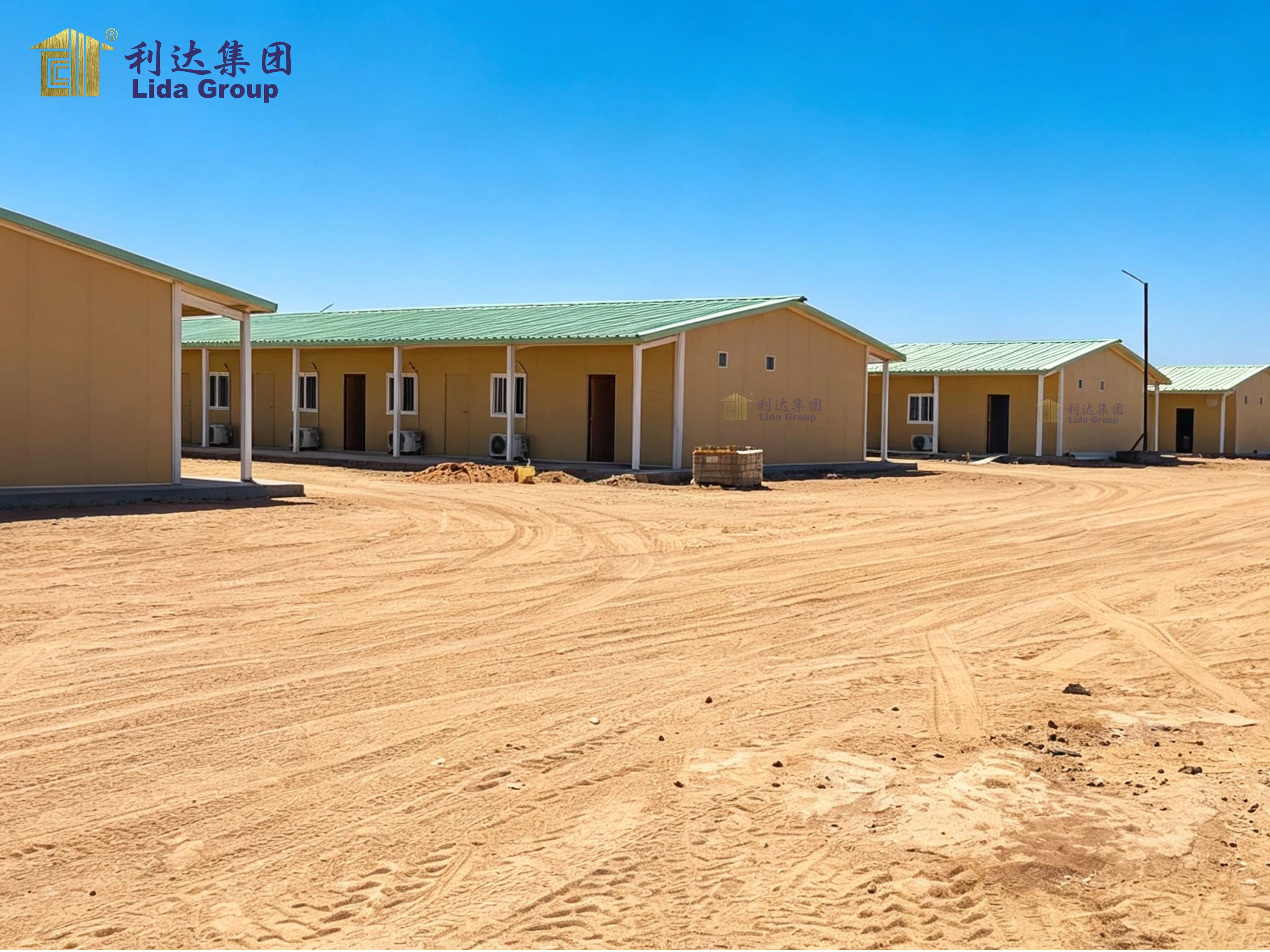
Lida Group’s prefab houses address these cost drivers through a fundamentally different approach to building design, manufacturing, and deployment. By moving the majority of construction work from the remote site to controlled factory environments, the company eliminates or dramatically reduces the inefficiencies that inflate traditional construction costs.
The foundation of Lida Group’s solution is its advanced prefabricated construction system. Buildings are manufactured in the company’s factories, where computerized cutting, robotic welding, and automated assembly ensure precision and consistency. Components are produced to exact specifications, eliminating the material waste that characterizes on-site construction. The controlled factory environment is unaffected by weather, ensuring consistent production schedules regardless of external conditions.
The prefabricated components are then transported to the remote site for assembly. Because components are designed for efficient shipping—with flat-pack containers compressing to a fraction of their assembled volume—transportation costs are dramatically reduced. A single standard shipping container can transport multiple complete housing units, reducing the number of deliveries required and the associated logistics expenses.
On-site assembly is rapid and straightforward. Lida Group has developed advanced assembly protocols that enable teams to erect complete buildings in hours rather than days. Using simple tools and standardized connections, assembly can proceed with relatively unskilled labor—a critical advantage in remote locations where skilled tradespeople are unavailable. The company has demonstrated the capability to assemble 50 modules, approximately 1,500 square meters of living space, in a single day.
The 35 Percent Cost Reduction: How It Is Achieved
The remarkable cost savings delivered by Lida Group’s prefab houses result from multiple factors working in concert. Understanding these factors illuminates why this approach consistently outperforms traditional construction in remote locations.
Transportation Savings
Transportation represents one of the largest cost components in remote site housing. Traditional construction materials—concrete, masonry, timber, and finishes—are bulky and heavy, requiring extensive shipping capacity. Lida Group’s prefab houses are designed for maximum shipping efficiency.
The flat-pack container design is particularly transformative. By disassembling buildings into flat plate components and stacked accessories, the volume of each unit is reduced by up to 80 percent. This compression enables a single standard shipping container to transport multiple complete units—typically four to five times as many as would fit using integral container designs. The implications for remote sites are profound: transportation costs are reduced by 60 percent or more, and the number of truckloads or shipping containers required to deliver a complete camp is dramatically reduced.
For sites accessible only by air or sea, these savings are even more significant. Helicopter transport, which is charged by weight and volume, becomes far more economical when buildings are compressed into compact packages. Barge transport, similarly, can carry more units per voyage, reducing the number of trips required.
Labor Savings
Labor costs in remote locations are typically two to three times higher than in urban settings. Skilled tradespeople command premium wages, and their productivity may be lower due to environmental conditions and logistical constraints. Lida Group’s prefab houses dramatically reduce labor requirements.
Because components are prefabricated and connections are standardized, assembly requires fewer workers and fewer labor hours than traditional construction. The ability to use relatively unskilled labor further reduces costs and addresses the challenge of finding skilled tradespeople in remote areas. Lida Group provides comprehensive installation guides and, where required, on-site supervision, ensuring that assembly proceeds correctly without the need for extensive on-site expertise.
The speed of assembly also reduces labor costs. A building that would take months to construct using traditional methods can be assembled in days using Lida Group’s prefab system. Fewer days of labor translate directly into lower payroll costs, as well as reduced requirements for worker accommodation and support during the construction period.
Time Savings
Time is money in remote site operations. Every day of delayed housing means workers cannot be mobilized, operations cannot commence, and revenue generation is postponed. Lida Group’s prefab houses compress project timelines dramatically.
Traditional construction of remote site housing typically takes six months or more. Lida Group can deliver and assemble complete housing facilities within four to six weeks from order confirmation. This time savings translates into accelerated project timelines, earlier revenue generation, and improved project economics.
The time value of money strongly favors rapid deployment. Capital that would otherwise be tied up in unfinished construction can be deployed productively. Financing costs are reduced. And the competitive advantage of bringing operations online ahead of schedule can be substantial.
Waste Reduction
Traditional construction generates substantial waste—offcuts, damaged materials, packaging, and over-ordered supplies. In remote locations, waste disposal is expensive and environmentally problematic. Lida Group’s prefabricated construction minimizes waste through precision manufacturing.
Components are cut to exact specifications in controlled factory environments, eliminating the offcuts that characterize on-site cutting. Factory production reduces material waste by up to 35 percent compared to on-site builds through precise material cutting and unified component processing. Packaging materials are minimized and recyclable. And because components are manufactured to exact specifications, over-ordering is eliminated.
The waste reduction delivers both economic and environmental benefits. Disposal costs are minimized, and the environmental impact of construction activities is reduced.
Reusability and Residual Value
Perhaps the most significant long-term cost advantage of Lida Group’s prefab houses is their reusability. Unlike traditional buildings, which become stranded assets when projects conclude, Lida Group’s modular structures can be disassembled, transported, and reassembled at new locations.
This capability allows remote site operators to recover their housing investments and redeploy them to future projects. Buildings that might otherwise be abandoned or demolished become productive assets that continue generating returns across multiple deployments. Over the lifecycle of a mining operation or construction program, this reusability can reduce housing costs by an additional 20 to 30 percent compared to single-use traditional construction.
The modular design of Lida Group’s buildings facilitates complete disassembly without damage to components. Bolted connections can be unfastened, panels can be removed intact, and structural frames can be separated for transport. The company’s over 60 technical patents optimize connection structures and anti-aging performance, ensuring that reused buildings meet local safety and environmental standards after multiple deployments.
Real-World Applications and Proven Savings
The cost savings delivered by Lida Group’s prefab houses have been validated through thousands of real-world projects across diverse industries and geographic regions.
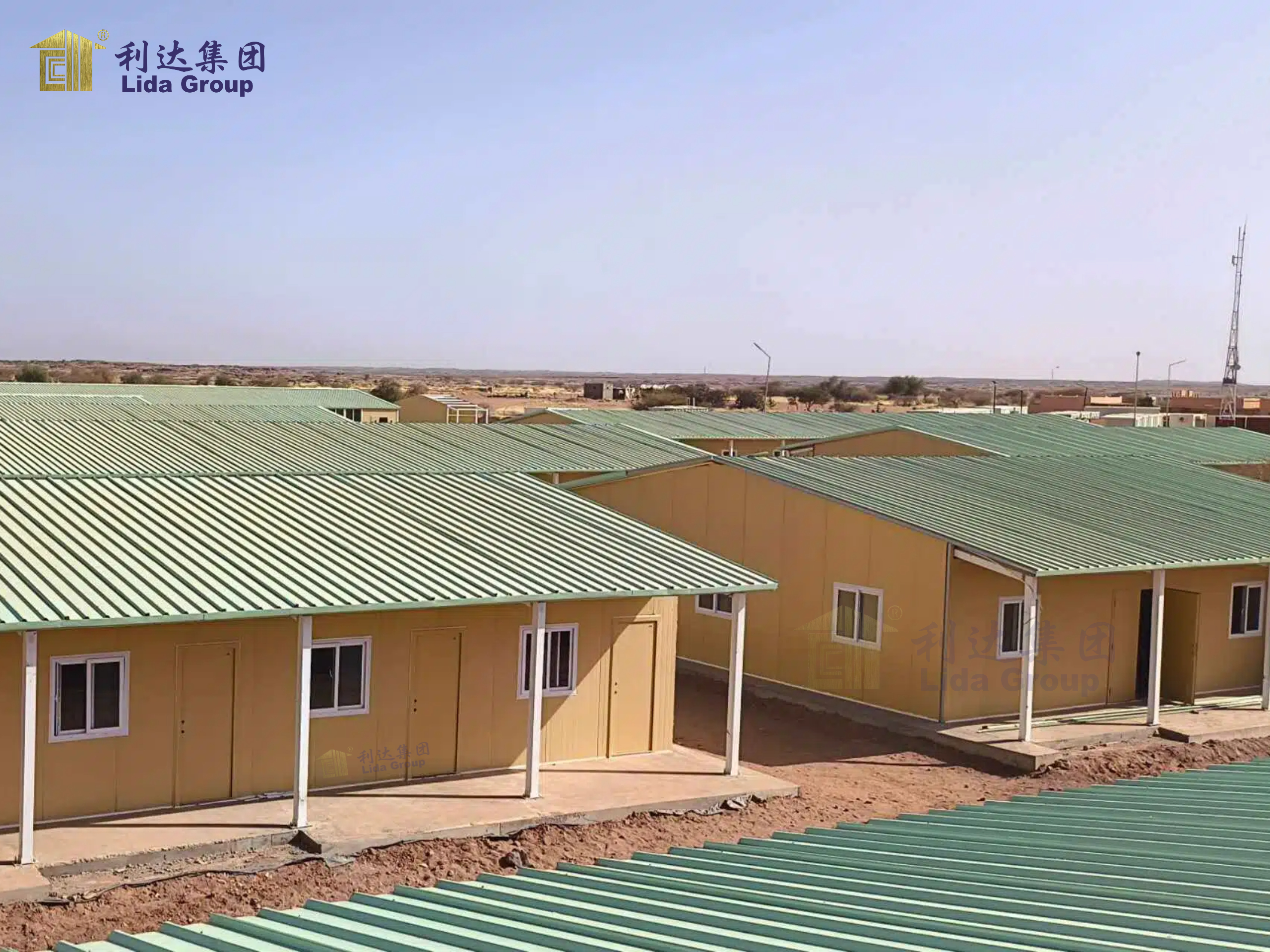
In the mining sector, a major international mining company partnered with Lida Group to construct a camp capable of accommodating 1,200 workers. The camp included 300 container house units, complete with housing, dining facilities, and recreational amenities. The project was delivered in a fraction of the time that traditional construction would have required, enabling the mining operation to commence production months earlier than planned. The cost savings compared to traditional construction exceeded 35 percent.
In the oil and gas sector, Lida Group has supplied modular camps and site offices for projects in the Middle East, Africa, and Southeast Asia. These facilities have enabled rapid project mobilization, provided durable infrastructure for extended operations, and been successfully relocated to subsequent projects, recovering value that would otherwise have been lost.
In the humanitarian sector, Lida Group has deployed prefab housing to disaster-affected regions, providing shelter for displaced populations within days of earthquakes, typhoons, and floods. The speed of deployment has saved lives and reduced suffering, while the cost-effectiveness of the solution has allowed humanitarian organizations to serve more people within their budgets.
Conclusion
The cost of housing workers at remote sites represents a significant and often underestimated expense in project budgets. Traditional construction methods, with their reliance on on-site labor, weather-dependent schedules, and fragmented supply chains, consistently fail to deliver value in remote locations. The result is housing that is expensive, slow to deploy, and often left behind as a stranded asset when projects conclude.
Lida Group’s prefab houses offer a fundamentally different approach—one that leverages the efficiency of factory manufacturing, the speed of modular assembly, and the reusability of demountable structures to lower remote site housing costs by 35 percent or more. By reducing transportation expenses, minimizing labor requirements, compressing project timelines, eliminating waste, and recovering value through reusability, these solutions directly address the cost drivers that inflate traditional construction.
The benefits extend beyond cost savings. Lida Group’s prefab houses provide safe, comfortable, and dignified accommodation for workers in challenging environments. They can be deployed rapidly, allowing projects to mobilize quickly. They are durable and weather-resistant, ensuring reliable service over extended periods. And they are adaptable, accommodating changing needs as projects evolve.
As global industries continue to push into increasingly remote and challenging locations, the demand for cost-effective, rapidly deployable, and reusable housing solutions will only grow. Lida Group, with its three decades of experience, its industrial-scale manufacturing capacity, and its proven track record across 152 countries, stands ready to meet this demand. The company’s prefab houses are not merely buildings—they are strategic assets that enable remote site operators to reduce costs, accelerate timelines, and improve project economics. For those seeking to deploy housing in days rather than months, and at a fraction of the traditional cost, Lida Group offers the solution.
Contact us, please click here!
Post time: Oct-13-2026