
Introduction
As global industries push further into remote and challenging environments—from rugged mountain ranges and dense jungles to offshore platforms and Arctic tundra—the logistical challenges of providing basic amenities for workforces have grown exponentially. Mining operations, oil and gas exploration, construction mega-projects, and humanitarian relief efforts all share a common imperative: delivering safe, hygienic, and dignified living conditions for personnel who must operate far from established infrastructure. Among the most critical yet often overlooked components of any remote camp is sanitation—the facilities that ensure workers can maintain personal hygiene, launder clothing, and access clean water for bathing and washing.
Traditional temporary site infrastructure has consistently fallen short. Aging portable toilets, jury-rigged shower setups, and makeshift laundry facilities fail to meet the needs of a modern workforce. Substandard sanitation not only impacts worker morale and productivity but also poses serious health and safety risks in isolated environments where medical care may be hours or days away. Recognizing these challenges, Lida Group—a global leader in integrated building engineering solutions established in 1993—has developed a comprehensive range of mobile prefabricated sanitation units specifically engineered for remote and challenging site conditions.
These self-contained modules integrate flush toilets, sinks, showers, and laundry facilities into compact, rugged, and easily deployable packages. Constructed using advanced composite panel technology and backed by decades of engineering expertise, Lida Group’s sanitation solutions are transforming how engineers and project managers approach workforce accommodation in the world’s most demanding locations.
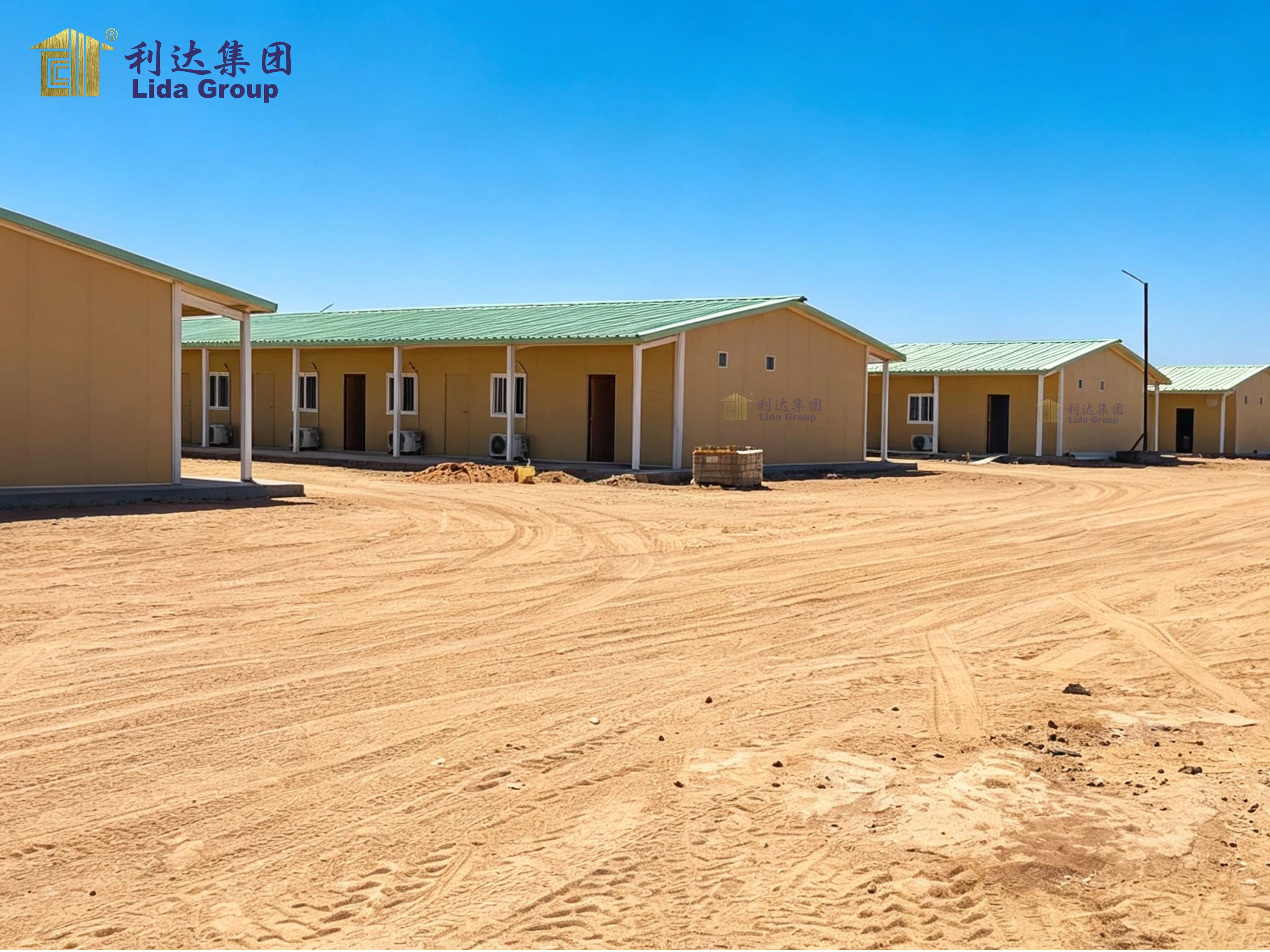
The Critical Role of Sanitation in Remote Camp Environments
The importance of proper sanitation in remote camp settings cannot be overstated. When hundreds or even thousands of workers live and work in isolated locations, getting the sanitation and hygiene infrastructure right is absolutely critical. Poor sanitation leads to the rapid spread of disease, decreased worker morale, increased absenteeism, and ultimately, project delays and cost overruns.
In humanitarian contexts, the stakes are even higher. Following natural disasters, displaced populations are particularly vulnerable to waterborne diseases and sanitation-related health crises. Separate hygienic sanitation units are essential to control disease outbreaks following widespread infrastructure damage. The World Health Organization and other public health bodies have long recognized that access to adequate sanitation is one of the most effective interventions for reducing morbidity and mortality in emergency settings.
Lida Group’s approach addresses these challenges through thoughtful engineering and industrial-scale manufacturing. “Our prefabricated units are designed to deliver a high level of comfort and cleanliness, while also being robust enough to withstand the demanding environments these sites can present,” explains the company’s Director of Product Development. From the Arctic Circle to the equatorial tropics, Lida Group’s sanitation solutions are helping organizations around the world establish hygienic, code-compliant facilities that improve worker well-being and productivity.
Composite Panel Technology: The Engineering Foundation
At the heart of Lida Group’s prefabricated sanitation units lies advanced composite panel construction—a technology that has revolutionized the modular building industry. The exterior walls and roof utilize composite insulated sandwich panels, which combine rigid foam insulation sandwiched between durable metal skins. This construction method delivers exceptional thermal and acoustic performance, helping to maintain comfortable temperatures and minimize noise levels inside the units.
The company’s patented composite structural insulated panel (CSIP) technology represents a significant advancement over conventional prefabricated building methods. Panels comprise a rigid polyurethane foam core sandwiched between durable metal or composite skins, creating complete building modules that are exceptionally strong yet extremely lightweight for transportation. Unlike conventional prefabricated buildings that still require extensive foundations, Lida’s innovative CSIP designs render traditional concreting obsolete. Modules erect directly onto prepared gravel bases, accelerating setup and reducing environmental impact.
The insulation materials used in these composite panels can be customized based on environmental requirements, with options including polystyrene, polyurethane, rock wool, and fiberglass. Thicknesses range from 50mm to 200mm, allowing engineers to specify the appropriate thermal performance for extreme climates. The structural frames are fabricated from heavy-gauge galvanized steel, providing a sturdy and corrosion-resistant foundation that can withstand everything from searing desert heat to sub-zero Arctic conditions.
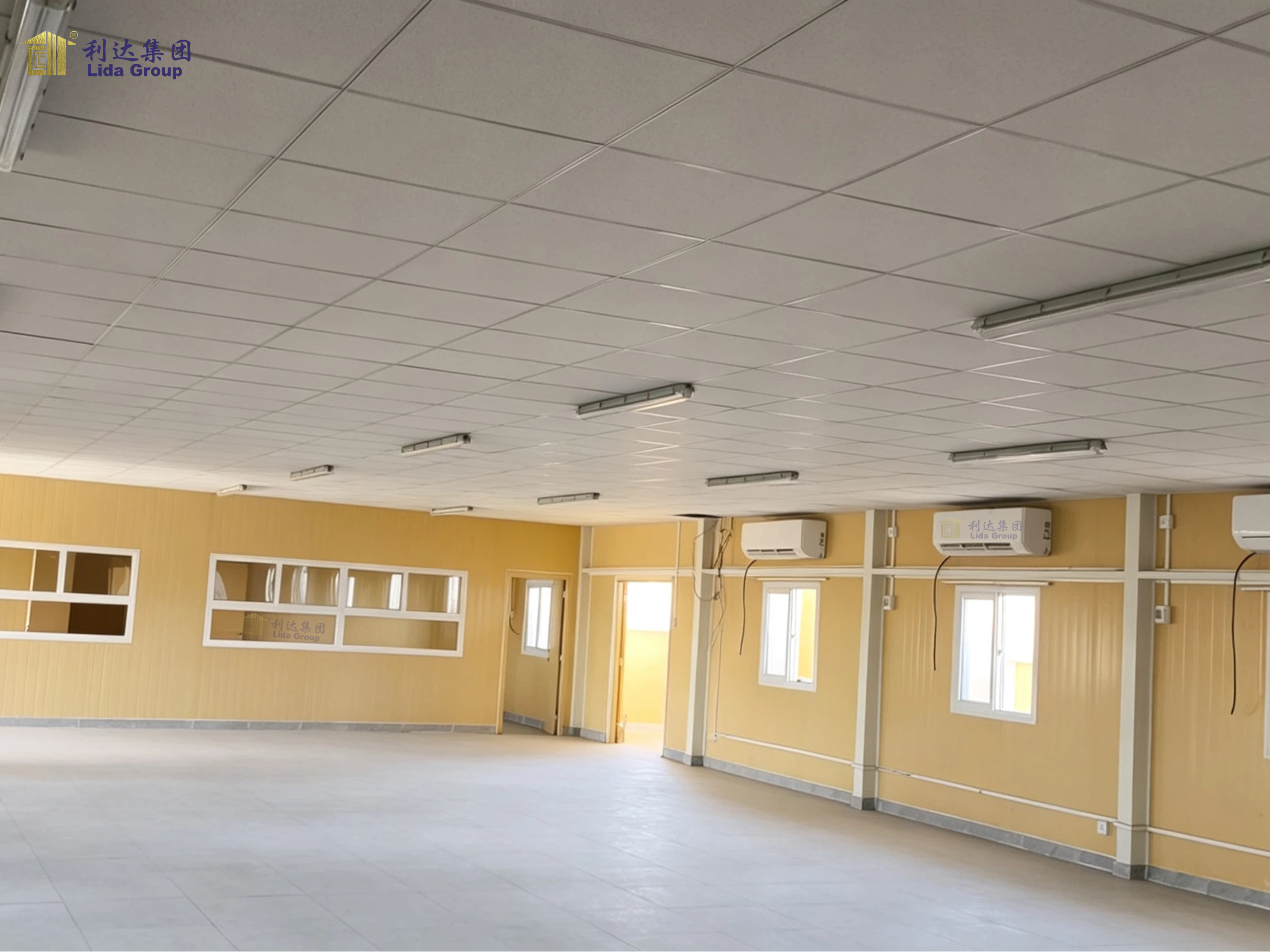
This combination of steel framing and composite panel construction yields structures that are durable, weatherproof, and capable of withstanding the demanding environments of remote worksites. The panels are also inherently hygienic—interiors feature water-resistant composite wall and floor panels with no exposed materials, permitting easy disinfection and maintenance.
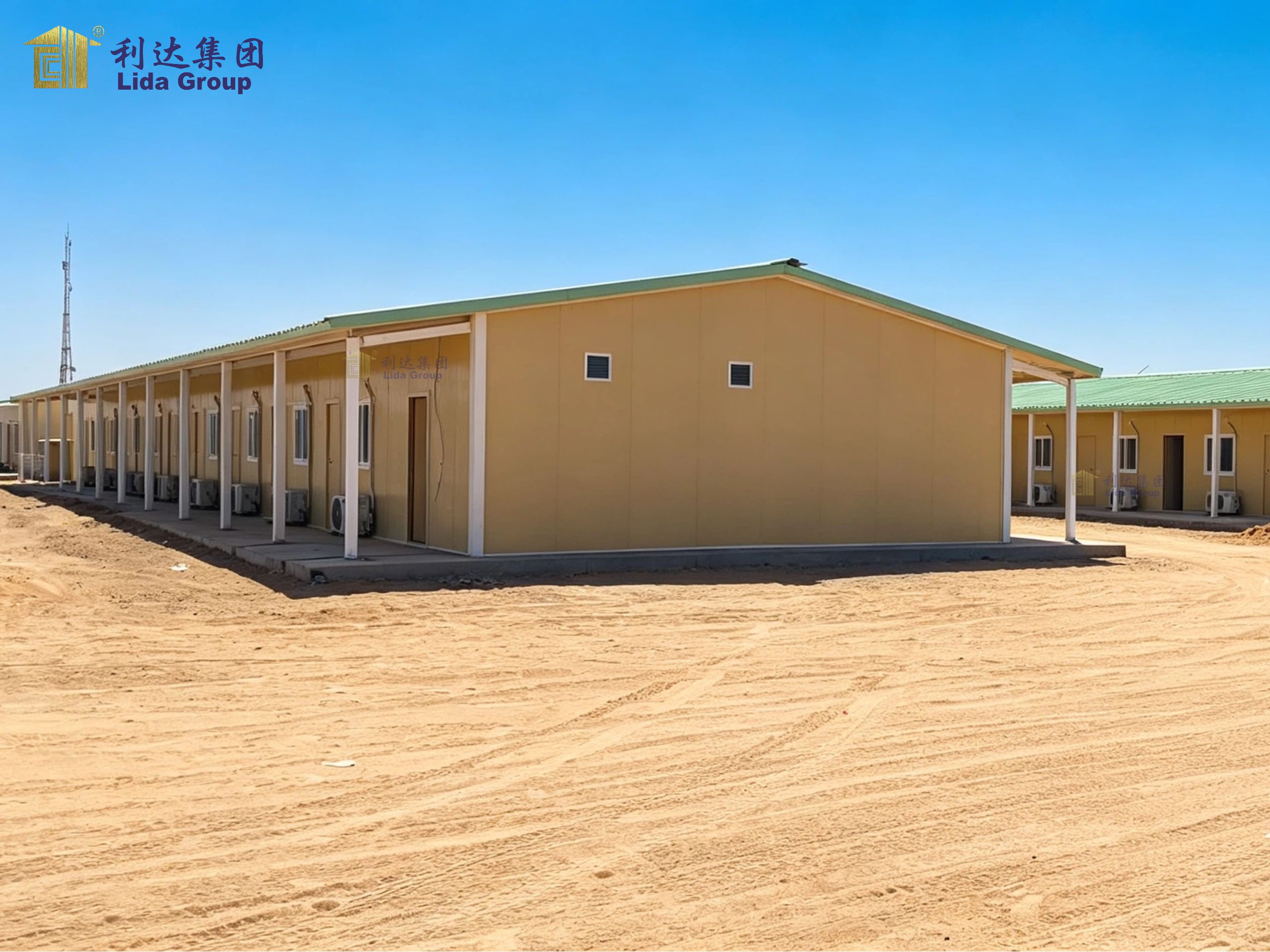
Mobile Prefabricated Sanitation Units: Core Features and Capabilities
Lida Group’s prefabricated sanitation units are engineered to deliver comprehensive hygiene solutions in a compact, transportable format. These self-contained modules integrate all essential sanitation functions—toilets, sinks, showers, and laundry facilities—into a unified package that can be rapidly deployed and connected to site utilities.
Modular, Scalable Design
A key advantage of Lida Group’s sanitation units is their modular and scalable design. Rather than a one-size-fits-all approach, the company offers a range of standard unit configurations that can be easily combined and expanded to meet the specific needs of each worksite. The basic sanitation module includes toilet cubicles, sinks, and showers, with add-on options including laundry facilities, changing rooms, and even medical treatment spaces. This modular system allows engineers to tailor the solution to the exact requirements of the client, whether it is a small exploration camp or a large-scale mining operation.
The individual modules are constructed off-site in Lida Group’s manufacturing facilities, then transported to the worksite and rapidly assembled. This prefabricated approach minimizes disruption and on-site construction time, ensuring the facilities can be deployed quickly to get workers comfortable and productive.
Container-Based and Flat-Pack Options
Lida Group offers sanitation units in both container-based and flat-pack configurations, providing flexibility for different logistical requirements. Container-based units utilize standard shipping container dimensions—typically 8 feet wide by either 20 or 40 feet in length—to facilitate single or multiple stacking on-site. Corrugated galvanized steel exteriors provide weatherproofing suitable for all climate extremes.
Flat-pack containers offer even greater logistical efficiency. Specially designed portable toilet and shower flat-pack containers can be disassembled into flat plate components and stacked accessories, enabling multiple units to be shipped in a single standard container. Widely used in construction sites and worker camps, these portable containers can be easily relocated. Thanks to their disassembled features, they can be swiftly installed and moved to new locations at the end of a project.
Pre-Installed Systems for Plug-and-Play Deployment
All plumbing, electrical, and ventilation systems are preinstalled at Lida Group’s factories. Toilet modules connect directly to pre-plumbed septic or drain lines running within interstitial spaces formed when multiple units stack. Hot water on-demand, touchless faucets, no-touch fixtures, and automatic paper towel dispensers promote hygienic use. Natural lighting and exhaust vents further enhance user experience.
This turnkey approach means that upon delivery, crews can connect quick-couple utility lines within a few hours using standard hand tools. The result is a plug-and-play installation that minimizes downtime and allows camps to become operational almost immediately.
Integrated Laundry and Shower Facilities
Recognizing that personal hygiene extends beyond toilet facilities, Lida Group has developed integrated laundry and shower units that address the full spectrum of worker sanitation needs. These units are constructed using the same durable composite panel technology, ensuring consistency in quality and performance across all camp facilities.
The composite panel construction of laundry units ensures durability in high-moisture environments. Laundry facilities are equipped with commercial-grade washing machines and dryers, plumbing connections, and ventilation systems designed to handle the demands of large workforces. Adjoining recreation modules may contain lounge areas, gyms, laundry, and commercial kitchens, creating comprehensive wellness environments within the camp.
Shower facilities feature multiple individual stalls with hot water on-demand systems, touchless fixtures, and water-resistant finishes that facilitate cleaning and maintenance. The units are designed to handle high-volume usage while maintaining comfortable temperatures and minimizing water consumption through efficient fixtures and greywater recycling systems where appropriate.
The integration of laundry and shower facilities within the same modular system allows camp designers to create consolidated hygiene centers that are efficient to operate and maintain. Multiple ablution and amenity modules can consolidate plumbing and services for reduced servicing requirements at camp locations.
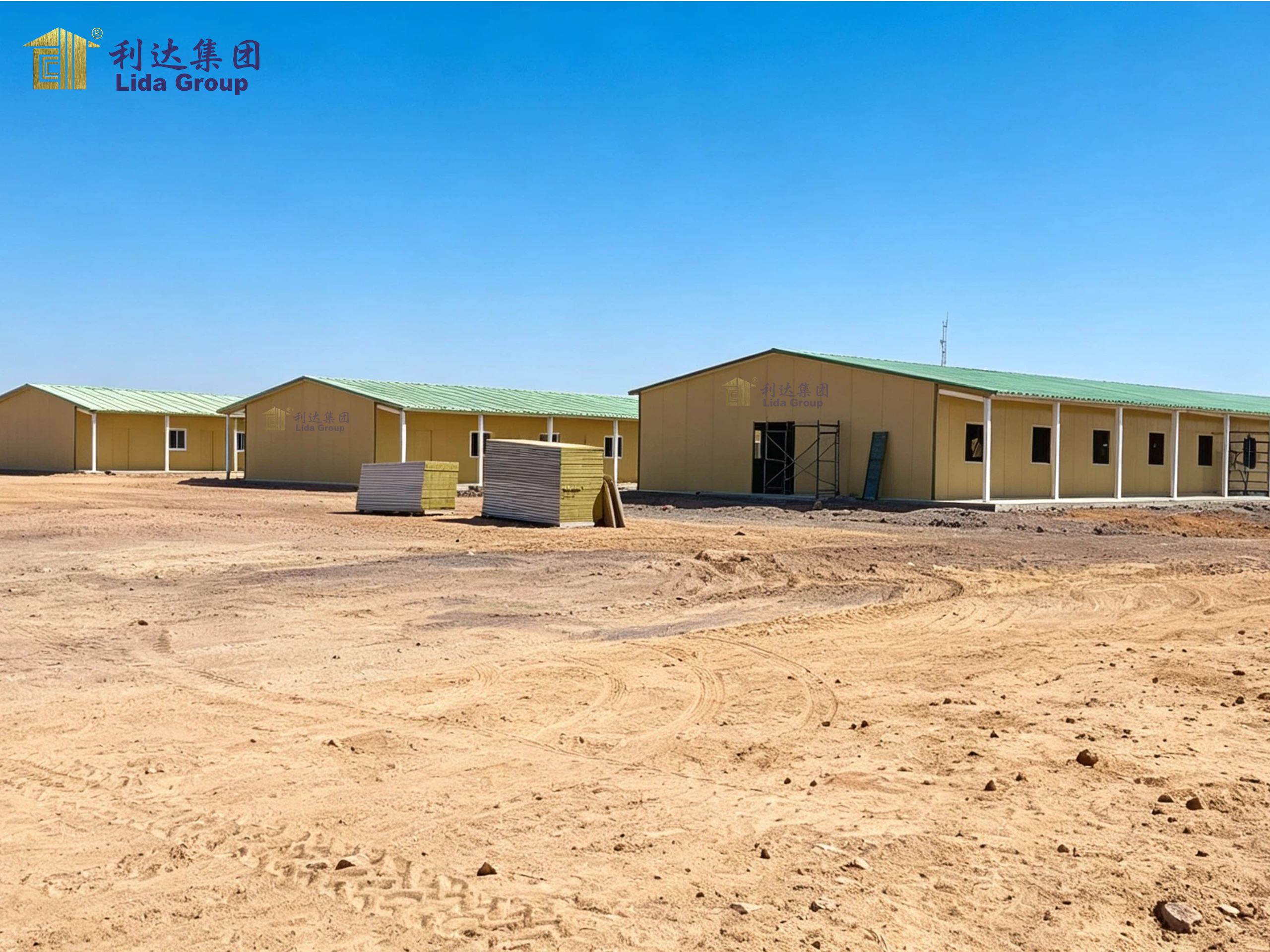
Sustainability and Environmental Responsibility
Lida Group’s sanitation solutions are designed with sustainability as a core principle. The company’s movable prefab portfolio is optimized for mobility and versatility, enabling dignified interim housing integrated with renewable resources.
Water Conservation and Treatment
Greywater filtration systems that recycle shower and laundry water for irrigation foster responsible resource management even amidst disruption. The company is also exploring various sewage handling options, including self-contained composting toilets that avoid drainage network needs, and maceration pump systems that compact waste for portable storage prior to treatment or disposal.
Off-Grid Capability
For truly remote locations where grid connections are unavailable, Lida Group’s units can be equipped with solar panels to power pumps, lights, and fans. Integrated solar and battery installations require no additional setup for off-grid power. Autonomous water and waste treatment systems are prepackaged to minimize consumption and maintenance requirements. The company aims to achieve completely self-sustaining lavatory stations capable of operating independently in any environment.
Reusability and Reduced Waste
Lida Group’s modular design supports complete disassembly, migration, and repeated reuse—forming a closed-loop sustainable construction model. Durable steel shells withstand extreme climates for thirty or more deployment reuse cycles before recycling, contrasting sharply with single-use tents that generate waste after brief use. Containerization boosts sustainability through optimized shipping densities versus site-built structures, with flat-pack stacking reaching up to ninety-six percent payload utilization.
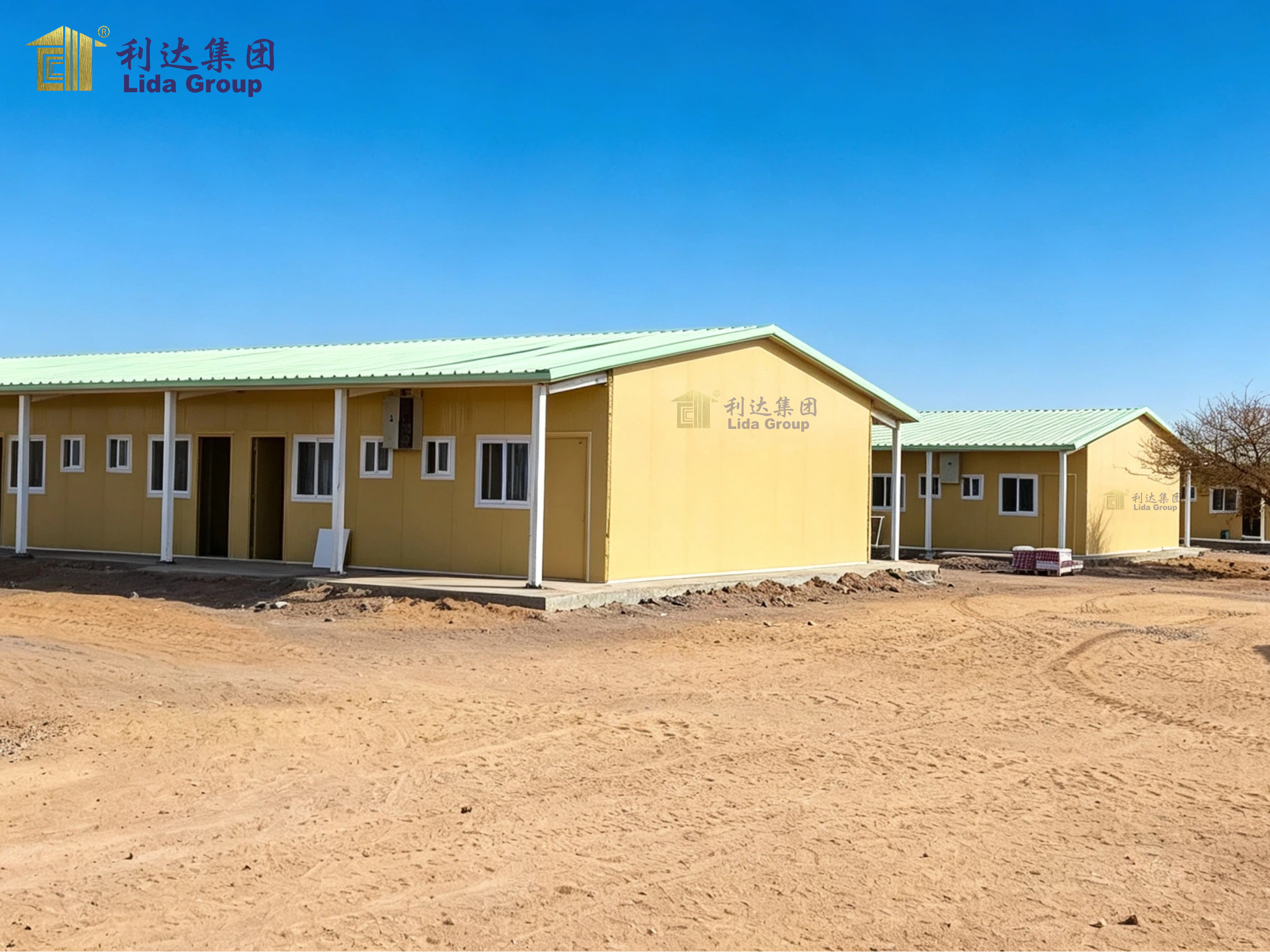
Real-World Applications and Case Studies
Lida Group’s prefabricated sanitation units have been deployed across a wide range of industries and geographies, demonstrating their versatility and effectiveness in real-world conditions.
Remote Mining and Resource Extraction
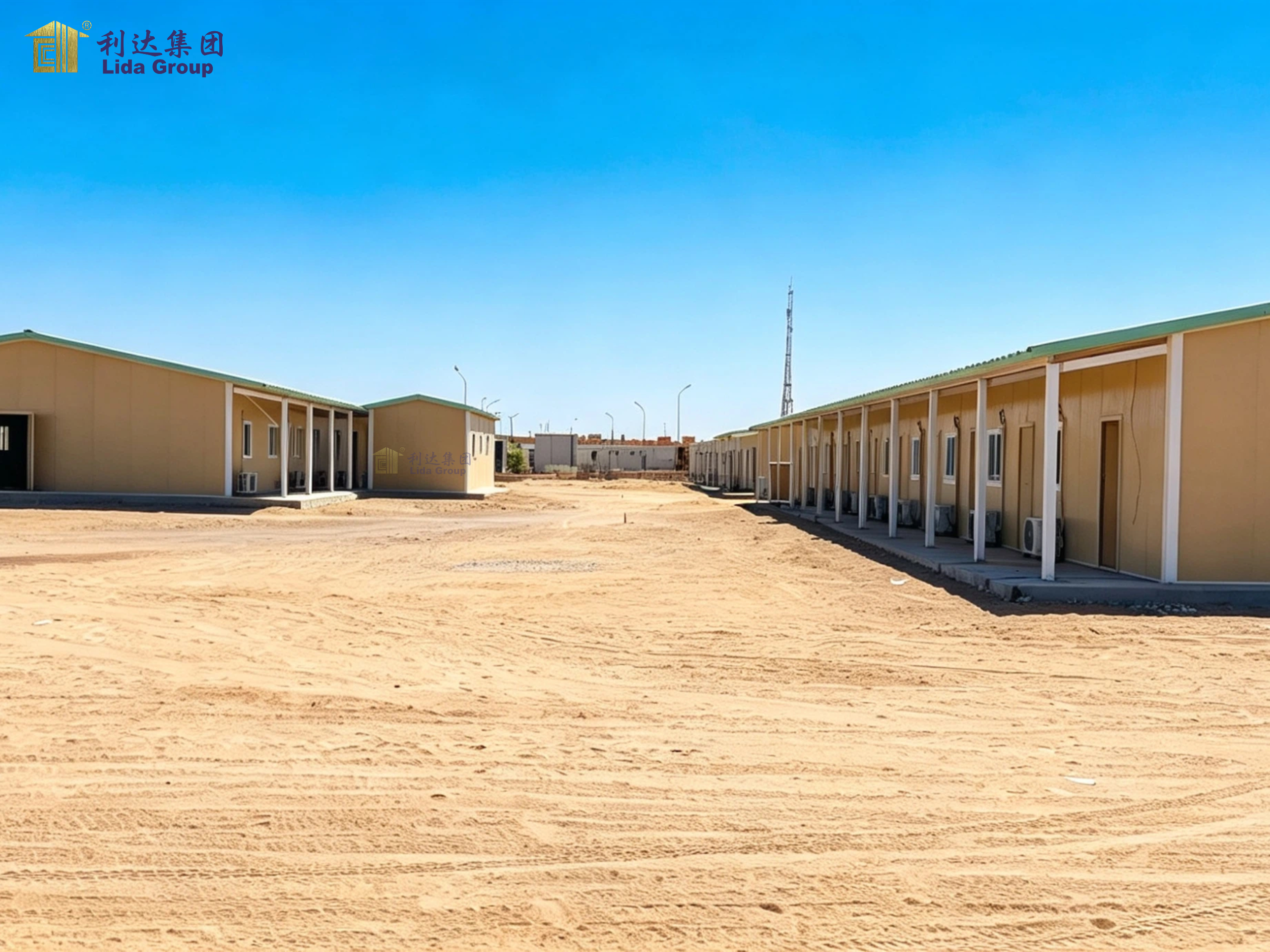
Remote mine sites across Australia and other resource-rich regions have contracted Lida Group to deliver complete prefabricated modular camps featuring foundationless sandwich panel dormitories, kitchens, and amenities for fly-in workers. These camps include comprehensive sanitation facilities that meet the needs of large workforces operating in isolated environments. Mining companies choose Lida Group’s solutions for their durability, rapid deployment, and ability to be relocated as operations progress.
Humanitarian and Disaster Relief
Following natural disasters, rapid deployment of sanitation facilities is essential to prevent disease outbreaks. Lida Group has supplied mobile prefabricated housing systems featuring hurricane-proof composite panel shelters and sanitation units for rapid deployment to disaster sites. Portable services supplied reliable power, water, and sanitation for hundreds of people at remote locations.
In the Philippines after Typhoon Haiyan, one hundred families sheltered securely through over a year of temporary displacement within container module apartments. Following Indonesian earthquakes, a village of five hundred units installed within two months provided sustainable housing. Standardized sanitation facilities treated waste on-site, preventing environmental contamination.
Public Health Partnerships
A leading public health non-profit organization has partnered with Lida Group on pilot projects testing mobile modular camps featuring prefabricated sanitation facilities built using stacked shipping container components. The initiative aims to evaluate innovative approaches for rapidly deployable hygiene and washrooms needed in emergency response and resource development projects globally. According to the organization’s Director of Operations, “Having prefabricated units that can rapidly assemble complete hygienic facilities would improve conditions and reduce health risks”.
Forestry and Logging Operations
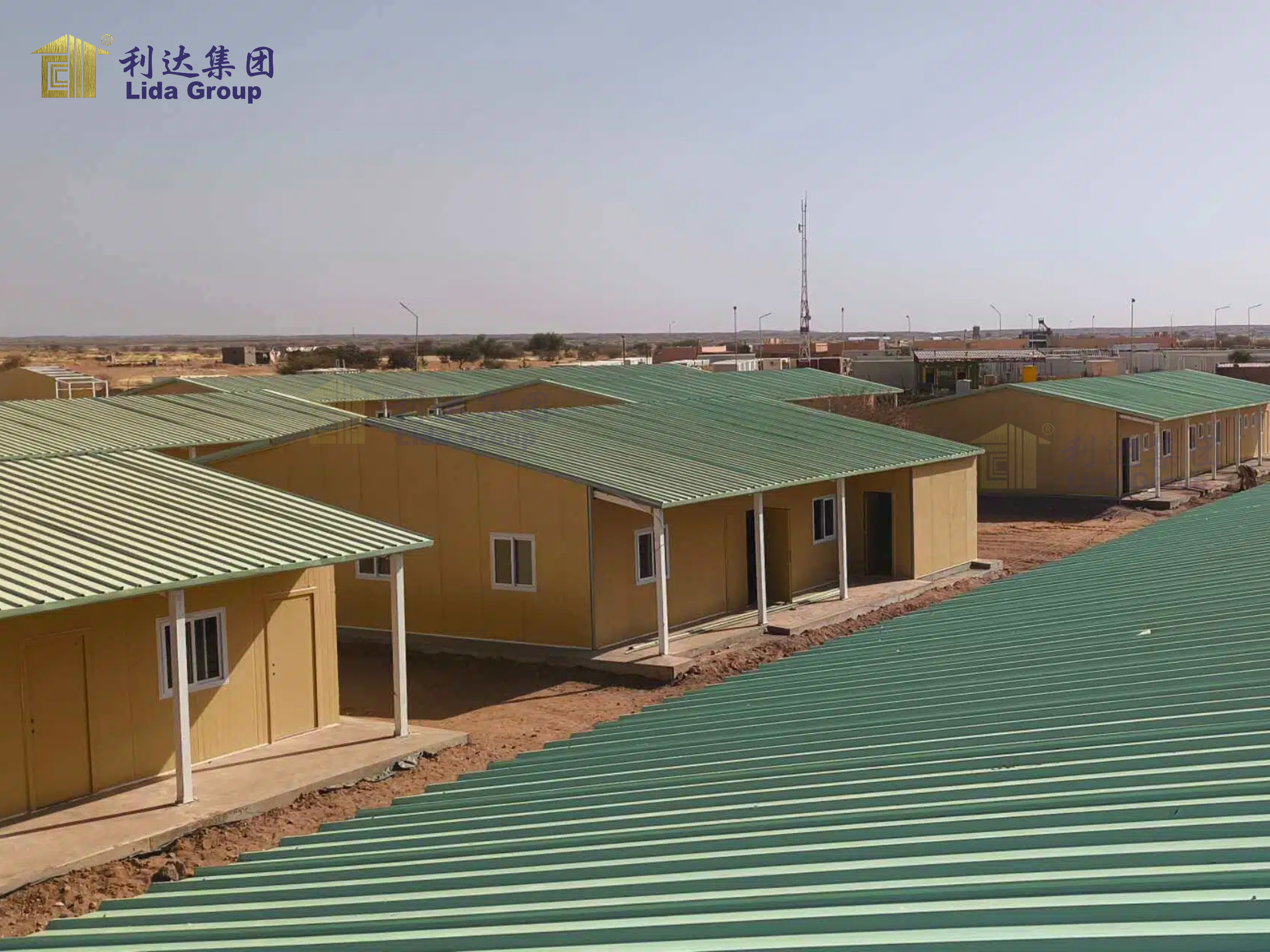
Australian forestry contractors have procured transportable buildings from Lida Group for remote logging camps, complete with insulated structural panel bunkhouses and ablution centers. The coordinated camp design allows entire “villages” of foundationless structures to relocate as logging operations progress through varying terrains. Multiple ablution and amenity modules consolidate plumbing and services for reduced servicing requirements.
The Engineer’s Perspective: Why Specifications Favor Lida Group
Engineers and project managers increasingly specify Lida Group’s prefabricated sanitation units for several compelling reasons.
First, the units offer predictable performance. Factory construction under controlled conditions ensures consistent quality, eliminating the variability inherent in on-site construction. All fixtures, coatings, and insulation systems conform to stringent safety ratings. The company holds ISO9001, ISO14001, and ISO45001 certifications, along with EU CE certification, providing engineers with confidence in the products’ quality and safety.
Second, the units enable rapid deployment. With pre-installed systems and plug-and-play connections, camps can become operational within days rather than weeks. This speed is particularly valuable in emergency response scenarios where time is of the essence.
Third, the units are durable and long-lasting. With service lives extending up to twenty years and the ability to withstand multiple relocation cycles, Lida Group’s sanitation units represent a sound long-term investment.
Fourth, the units support workforce well-being. By providing clean, comfortable, and dignified sanitation facilities, employers can improve worker morale, reduce turnover, and enhance productivity.
Conclusion
The specification of mobile prefabricated sanitation units from Lida Group’s integrated camp solutions represents a paradigm shift in how remote workforce accommodation is conceived and delivered. No longer is sanitation an afterthought—a collection of aging portable toilets and makeshift shower setups that fail to meet the needs of a modern workforce. Instead, Lida Group offers comprehensive, engineered solutions that integrate flush toilets, sinks, showers, and laundry facilities into compact, rugged, and rapidly deployable packages.
The engineering foundation of these units—composite panel construction with steel framing—provides exceptional durability, thermal performance, and weather resistance. The modular design allows for scalable solutions tailored to specific site requirements. The pre-installed systems enable plug-and-play deployment that minimizes on-site construction time. And the commitment to sustainability—through water conservation, greywater recycling, solar power integration, and reusable components—aligns with the growing imperative for environmentally responsible construction.
From remote mining operations in Western Australia to humanitarian relief efforts in Southeast Asia, from Arctic exploration camps to tropical construction sites, Lida Group’s sanitation solutions are proving their worth. Engineers specify these units because they deliver predictable performance, rapid deployment, long-term durability, and genuine improvements in worker well-being.
As global industries continue to push into increasingly remote and challenging environments, the demand for reliable, hygienic, and sustainable sanitation solutions will only grow. Lida Group, with its decades of experience, patented technologies, and commitment to quality, stands ready to meet this demand. The company’s mobile prefabricated sanitation units—kitted with composite panel laundry and shower facilities—represent not merely a product line but a comprehensive approach to solving one of the most fundamental challenges of remote operations: providing clean, dignified, and safe sanitation for the people who make modern industry possible.
Contact us, please click here!
Post time: Aug-26-2026