
Introduction: A Construction Revolution Unfolds
China‘s housing market stands at a critical juncture. The nation is urbanizing at an unprecedented pace, requiring the equivalent of another New York City every year to accommodate its growing population. Traditional construction methods—slow, labor-intensive, and resource-heavy—are increasingly unable to meet this staggering demand. The result has been rising housing costs, persistent shortages, and mounting environmental pressure.
Into this breach has stepped a quiet revolution: prefabricated construction. And at the forefront of this transformation stands Lida Group, a company that has spent more than three decades perfecting the art of industrialized building. Founded in 1993, Lida Group has grown from a modest steel workshop into one of China‘s largest prefabricated building manufacturers, operating Asia’s largest prefabricated housing factory complex along with 23 regional manufacturing plants across the country.
At the heart of Lida Group‘s success lies a deceptively simple innovation: the structural insulated sandwich panel. Inspired by the modular assembly manufacturing principles of aircraft and vehicles, these panels have fundamentally altered the economics and logistics of homebuilding. This article explores how Lida Group’s fast and efficient sandwich panel prefab construction methods are revolutionizing China‘s housing market—transforming not just how buildings are made, but how quickly, affordably, and sustainably they can be delivered.
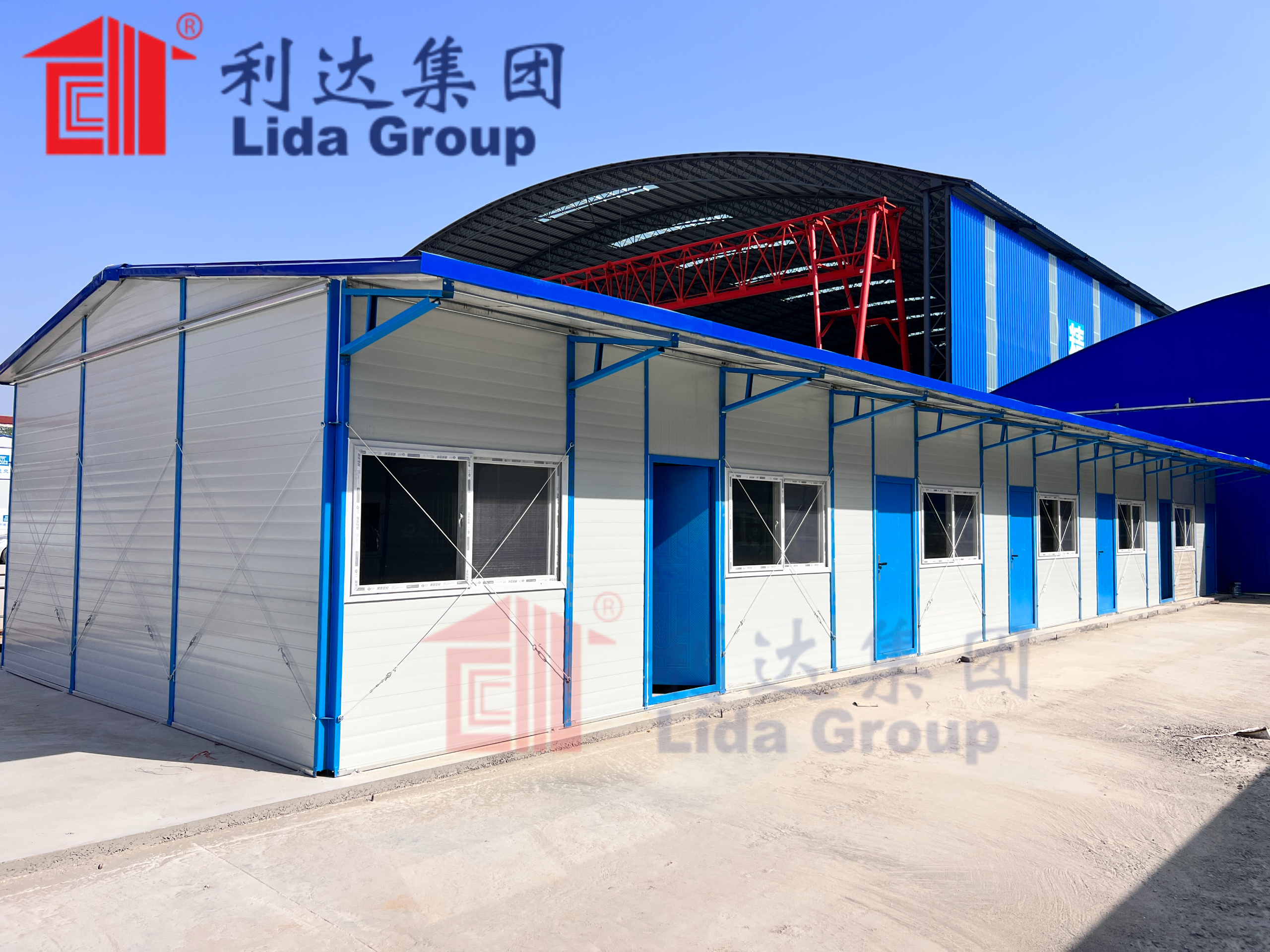
Chapter 1: The Sandwich Panel—Engineering Innovation at Its Core
1.1 What Is a Sandwich Panel?
A sandwich panel is a sophisticated composite structure consisting of three distinct layers bonded together under high pressure to form a single, unified structural element. The outer layers, or “skins,” are typically made from durable, corrosion-resistant materials such as pre-painted galvanized steel (PPGI), aluminum, or fiber cement board. These skins provide the panel with its aesthetic finish, weatherproofing, and primary structural strength.
The core, which forms the thick “filling” of the sandwich, is the true secret to the panel‘s performance. Lida Group primarily utilizes several types of core materials, each selected for specific project requirements:
**Polyurethane (PU) Foam:** A closed-cell foam renowned for exceptional thermal insulation properties. A PU core creates a highly energy-efficient envelope, keeping homes warm in winter and cool in summer while drastically reducing heating and cooling costs.
**Rock Wool (Mineral Wool):** For projects where fire safety is paramount, rock wool cores are non-combustible and provide fire-resistance ratings exceeding several hours. They also offer excellent acoustic insulation.
**Expanded Polystyrene (EPS):** A cost-effective option with good insulation properties, suitable for budget-conscious projects.
The result is a rigid, monolithic panel that is strong, lightweight, and ready for immediate assembly.
1.2 Precision Manufacturing at Scale
At Lida Group‘s flagship factory in Weifang, more than 800 robots and automated workstations mass-produce custom sandwich panel building components 24/7 under strict quality control protocols. Every panel is cut to exact specifications using computer numerical control (CNC) routers, with pre-installed features like electrical conduits, window and door openings, and connection points.
This factory-controlled environment is crucial. It ensures a level of precision, consistency, and quality control that is simply unattainable on a chaotic, weather-exposed construction site. The transformation of the construction process from a craft into a streamlined, almost surgical, assembly operation is what sets Lida Group apart.
1.3 Material Science: Balancing Durability and Affordability
Lida Group‘s panels combine three key components: high-tensile Q235 steel framing, weather-resistant exterior cladding, and precision-engineered insulation. The steel frame undergoes dual priming and finishing with alkyd paint, ensuring corrosion resistance and a lifespan exceeding 20 years.
The material flexibility allows Lida Group to optimize costs without sacrificing performance. Exterior cladding uses powder-coated color steel, while insulation options cater to diverse climate needs: rock wool for fire resistance in industrial zones, polyurethane for arctic insulation, and polystyrene for cost-sensitive projects.
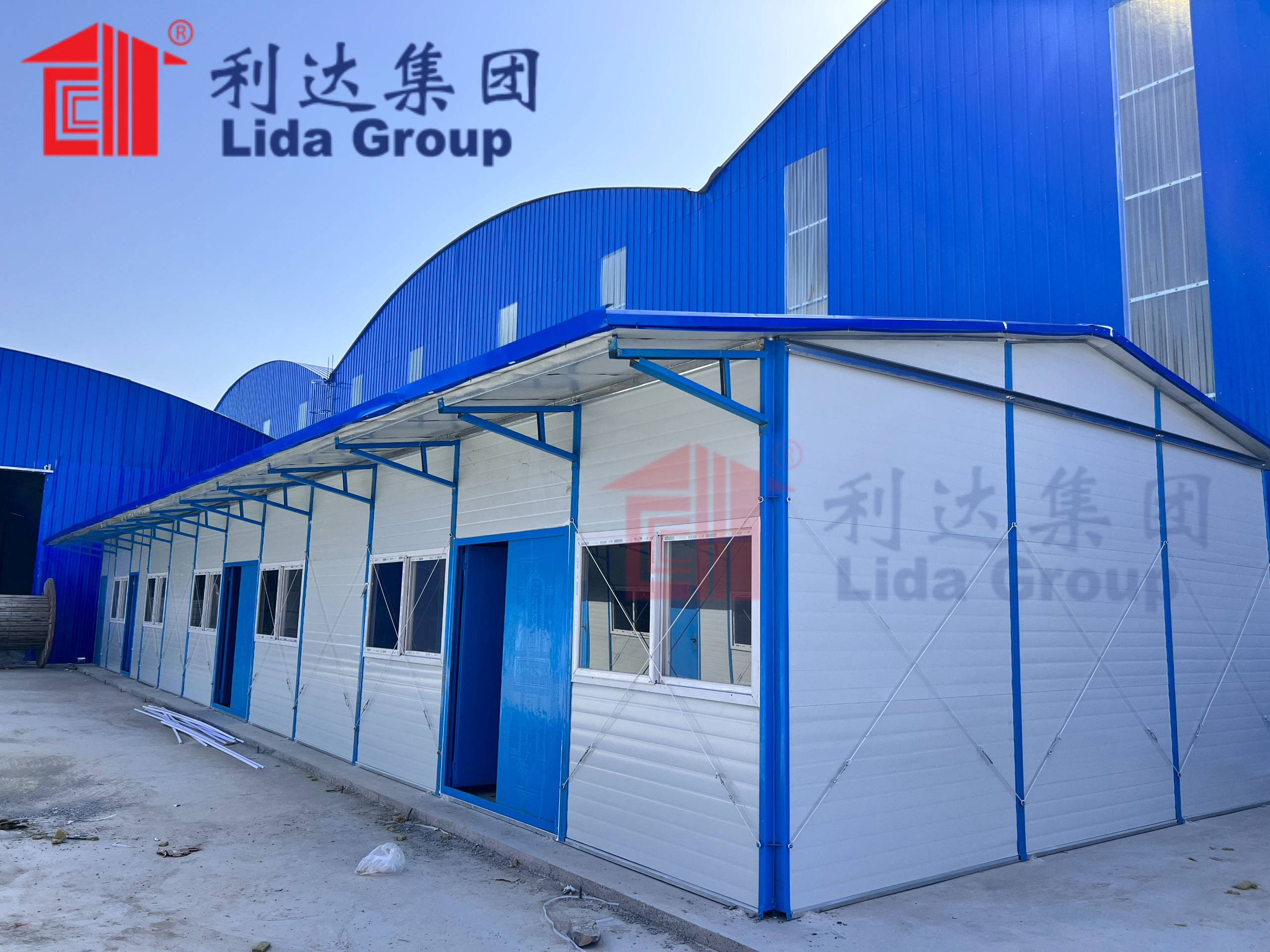
Chapter 2: Speed—The Revolution in Construction Timelines
2.1 From Months to Days
Perhaps the most compelling argument for Lida Group‘s sandwich panel construction is the dramatic reduction in project timelines. According to Lida Group, their prefabricated structures can increase construction efficiency by 40-60%.
On site, contractors typically take only 2 to 4 weeks to complete a panelized home, compared to 6 to 9 months for traditional methods. A 25,000-square-meter building can be fully constructed, including finished interiors, in just three months. All electrical, plumbing, and finishing are integrated at the factory, eliminating the need for extensive on-site work.
2.2 High-Rise Applications
The speed advantage extends far beyond single-family homes. Taller mixed-use buildings also benefit greatly. A 40-story apartment building in Shanghai used Lida Group‘s prefabricated concrete sandwich wall panels. It took only 140 days to build the entire concrete and steel frame, with each piece weighing 15 tons. The crane lifts entire floor boxes vertically, eliminating formwork that would normally add years to such a project.
2.3 Emergency and Humanitarian Response
Lida Group’s speed capabilities have proven invaluable in emergency situations. During the height of the pandemic, the company delivered the Qingdao Huangdao Container Hospital Station in just 12 days from start to delivery. The project covered 74,000 square meters and included 1,000 isolation container rooms, 126 staff dormitories, and supporting infrastructure. The project encompassed 726 prefab houses, more than 620 sets of integrated sanitary facilities, and the installation of 636 air conditioners and 632 televisions
Chapter 3: Cost-Effectiveness—Making Housing Affordable
3.1 Lower Costs Through Industrialization
Financial advantages facilitate construction. Lida Group‘s estimated costs are 15-30% lower than traditional builders due to supply chain efficiencies achieved through mass production in centralized factories. With productivity more than doubling, the payback period for many projects is measured in months rather than years.
3.2 Reducing Material Waste
Traditional construction is notoriously wasteful. Lida Group‘s precision cutting creates little on-site material waste, while the standardized nature of sandwich panel production ensures that every component is used efficiently. This waste reduction translates directly into cost savings.
3.3 Lower Maintenance and Operational Costs
The durability of sandwich panel construction means lower long-term maintenance costs. The structures are weatherproof, corrosion-resistant, and designed for a service life exceeding 20 years. The thermal insulation properties of the panels also reduce operational energy costs over the building‘s lifetime.
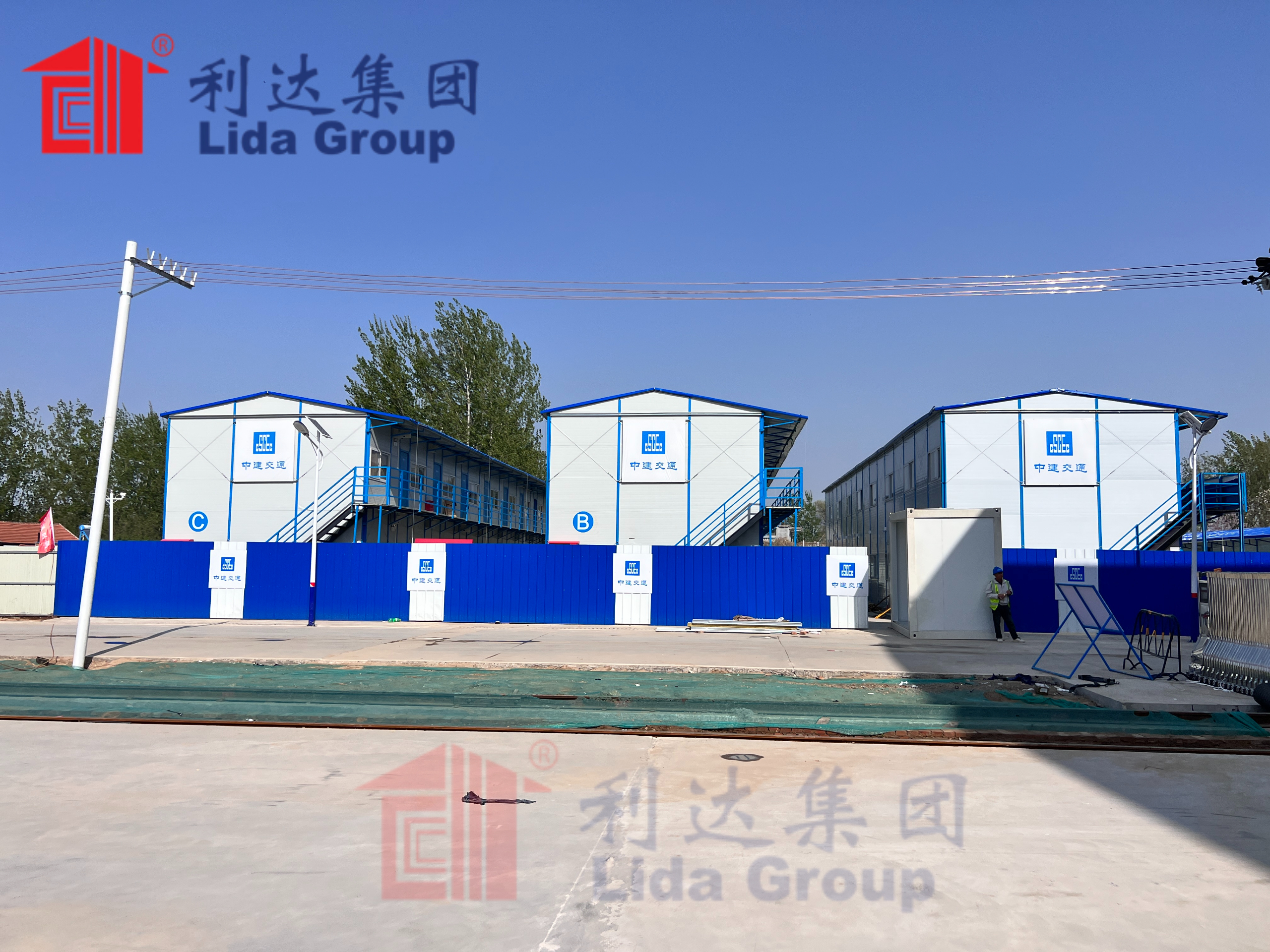
Chapter 4: Environmental Sustainability—Building Green
4.1 Energy Efficiency
The sandwich panels feature thermal insulation, an airtight vapor barrier, and high-density foam to achieve ultra-low air infiltration and leading insulation values, minimizing operational energy consumption over the long building life. With space heating and cooling consuming 40-60% of residential energy, this efficiency is significant.
4.2 Reduced Carbon Footprint
Lida Group‘s commitment to environmental stewardship is embedded throughout its operations. Every production link on the company‘s six container modular house production lines follows unified environmental protection standards, while the eight steel structure production lines adopt recycled steel raw materials that comply with international green building specifications.
Zero VOC emissions from the manufacturing process reduce indoor pollutants. The precision factory cutting process also dramatically reduces construction waste compared to traditional methods.
4.3 Circular Economy Principles
Lida Group‘s modular buildings support complete disassembly, migration, and repeated reuse, forming a closed-loop sustainable construction model. The company‘s container house systems reuse 90% of retired shipping containers, diverting more than 12 tons of steel from landfills per unit.
Chapter 5: Quality and Safety—Meeting Global Standards
5.1 Rigorous Testing and Certification
Lida Group‘s sandwich panel houses meet rigorous international safety benchmarks. They withstand Grade 11 winds (up to 111.5 km/h) and Grade 7 seismic activity, critical for disaster-prone regions. The roof‘s triangular steel structure, reinforced with section steel purlins, prevents collapse under snow loads, while waterproof roof designs eliminate leakage—a common flaw in traditional prefab builds.
The company holds ISO9001, ISO14001, and ISO45001 certifications, along with EU CE certification (EN1090), and has successfully passed inspections by SGS, TUV, and BV. It also holds a Second Class Qualification of Steel Structure Professional Construction Contracting and General Contracting Qualification of Construction Engineering.
5.2 Structural Performance
Lida‘s panels combine high-tensile Q235 steel framing with weather-resistant exterior cladding and precision-engineered insulation. For workers in remote sites, integrated soundproofing and thermal insulation maintain livable temperatures, reducing reliance on energy-intensive heating and cooling.
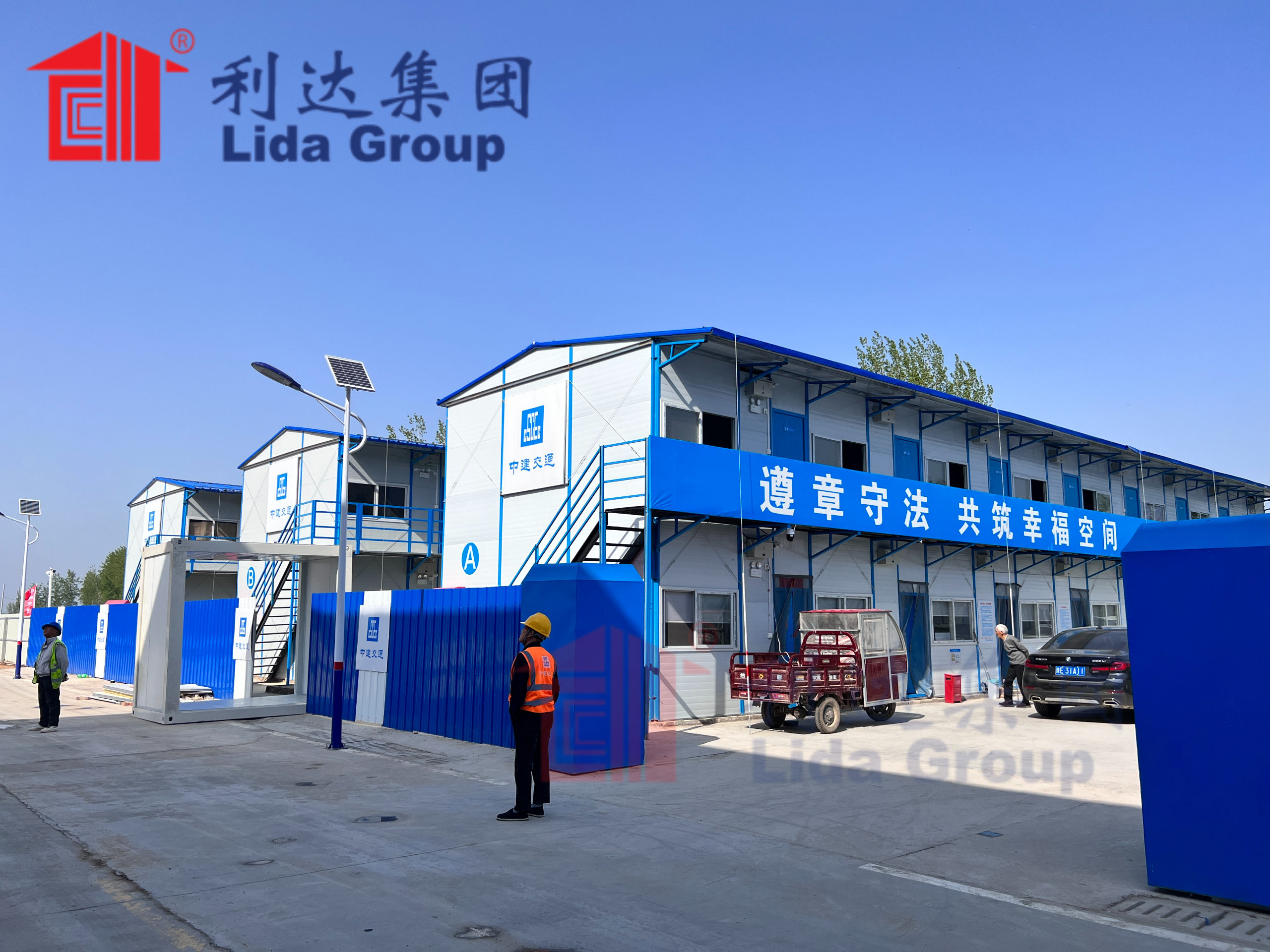
Chapter 6: Real-World Impact—Projects That Demonstrate the Revolution
6.1 Major Prefab Dormitory Project
Lida Group recently marked a significant milestone by completing a major prefab dormitory project leveraging its innovative sandwich panels. This project showcases the group‘s engineering prowess and redefines standards for prefab dormitories worldwide, demonstrating how advanced sandwich panel technology can elevate the quality, sustainability, and functionality of mass-produced residential structures.
6.2 The Shanghai 40-Story Apartment
A 40-story apartment building in Shanghai using Lida Group‘s prefabricated concrete sandwich wall panels was completed in just 140 days. This project demonstrated that sandwich panel construction is not limited to low-rise buildings—it can deliver high-density urban housing at unprecedented speed.
6.3 Qingdao Huangdao Container Hospital Station
Completed in just 12 days during the pandemic, this 74,000-square-meter facility included 1,000 isolation rooms and 126 staff dormitories. The project underscored Lida Group‘s ability to mobilize resources at scale, integrate engineering efficiency with humanitarian urgency, and deliver projects that directly improve public health and community resilience.
6.4 Remote and Rural Applications
In remote areas, Lida Group quickly deploys portable modular classrooms, clinics, and emergency shelters for communities in need. These applications demonstrate the versatility of sandwich panel construction—it works equally well in urban high-rises and rural outposts.
Chapter 7: The Market Impact—Transforming China‘s Housing Landscape
7.1 Scale and Reach
Currently, Lida Group owns more than 380,000 mobile homes in China. Major real estate developers now rely almost entirely on its patented solutions to deliver quality residential, multifamily, and commercial properties at unparalleled speeds.
The company has exported to over 110 countries, earning certifications including ISO 9001, CE, SGS, and BV. With a production capacity of 3,000 sets per week and 5,000 square meters weekly for steel-structured units, Lida Group has solidified its status as China‘s top supplier of industrial prefab housing.
7.2 Meeting Urbanization Demands
As urbanization drives China to build the equivalent of another New York City every year, industrialized prefabricated building systems pioneered by companies like Lida Group have emerged as a way to stabilize rising construction costs while maintaining environmental goals. With continued modular innovation, Lida Group aims to reduce the national housing shortage and redefine 21st century construction standards.
7.3 Policy Alignment
China‘s government has recognized prefabrication‘s role in addressing housing needs. The Ministry of Housing and Urban-Rural Development has set targets for prefabricated buildings to account for 30% of new construction by 2025. Lida Group‘s methods align perfectly with these policy goals, offering a scalable solution for meeting national housing targets.
Chapter 8: The Future—Where Lida Group Is Heading
8.1 Vertical Expansion
Lida Group sees opportunities in replicating its single-family model vertically through mid-rise and high-rise apartments assembled off-site. This densifies living more affordably. Challenges remain in establishing assembly sequences for taller buildings while maintaining speed.
8.2 Technological Innovation
Continual R&D optimizes Lida Group‘s panelized components through computational modeling, material science, and partnerships with startups. Advancements like additive manufacturing, mass timber, and cementitious skins could revolutionize modular buildings. Digitally integrated “Smart Factories” streamline costs toward recyclable zero-energy structures erected autonomously.
8.3 Global Expansion
If current research and scaling innovations continue, nearly half of China‘s projected population may inhabit modular homes by 2050. Robust offsite construction sectors will emerge abroad, addressing housing crises across Asia, Africa, and beyond. Advanced additive and autonomous systems may even establish pioneering Martian colonies leveraging indigenous construction.
Conclusion: A New Standard for 21st Century Construction
Lida Group‘s sandwich panel prefab construction methods represent far more than a technological innovation—they embody a fundamental reimagining of how societies build. In a nation where urbanization demands the equivalent of a new New York City every year, traditional construction simply cannot keep pace.
The numbers tell the story. Construction efficiency increased by 40-60%. Project timelines compressed from months to weeks. Costs reduced by 15-30%. Energy consumption minimized through superior insulation. Waste dramatically reduced through precision manufacturing. These are not incremental improvements—they are transformative leaps.
The sandwich panel itself is a masterpiece of engineering simplicity: three layers bonded together to create a structure that is strong, lightweight, insulated, and ready for assembly. At Lida Group‘s Weifang factory, more than 800 robots mass-produce these components with millimeter precision. The result is a construction process that resembles assembling furniture more than traditional building.
But perhaps most significantly, Lida Group‘s methods are scalable. From single-family homes to 40-story apartment towers, from emergency hospitals delivered in 12 days to massive dormitory complexes, the sandwich panel system adapts to virtually any application. With over 380,000 mobile homes already deployed and production capacity of 3,000 sets per week, Lida Group has proven that industrialized construction can meet mass housing needs.
The environmental benefits are equally compelling. Lower carbon emissions, reduced waste, superior energy efficiency, and the ability to disassemble and reuse structures all align with China‘s “dual carbon” goals and global sustainability targets.
As Lida Group‘s leadership envisions, nearly half of China‘s projected population may inhabit modular homes by 2050. The company‘s goal remains establishing modular construction globally as the sustainable norm. With continued innovation and policy support, that vision is increasingly within reach.
Lida Group is not just building houses—it is building a new model for how humanity can house itself sustainably, affordably, and at scale. In doing so, it is revolutionizing not just China‘s housing market, but the very future of construction itself.
Contact us, please click here!
Post time: Jul-24-2026