
In the modern energy sector, capital allocation efficiency often dictates the margin between commercial profitability and financial strain. Whether executing offshore oil and gas developments, deep-desert solar farms, or remote wind and hydro installations, energy companies face an uncompromising reality: their assets are almost always located in harsh, geographically isolated regions. Establishing operational infrastructure in these environments traditionally demands exorbitant expenditure long before a single kilowatt of energy or barrel of oil is produced.
Historically, remote camp housing—essential for supporting engineering teams, technical staff, and site workforces—relied on permanent masonry construction or low-grade site-built temporary shelters. Both models carry severe financial penalties. Traditional builds incur huge logistical overheads, unpredictable weather delays, high local labor costs, and long-term energy inefficiencies. Conversely, low-grade temporary shelters suffer from rapid structural degradation, poor thermal performance, and elevated maintenance expenses.
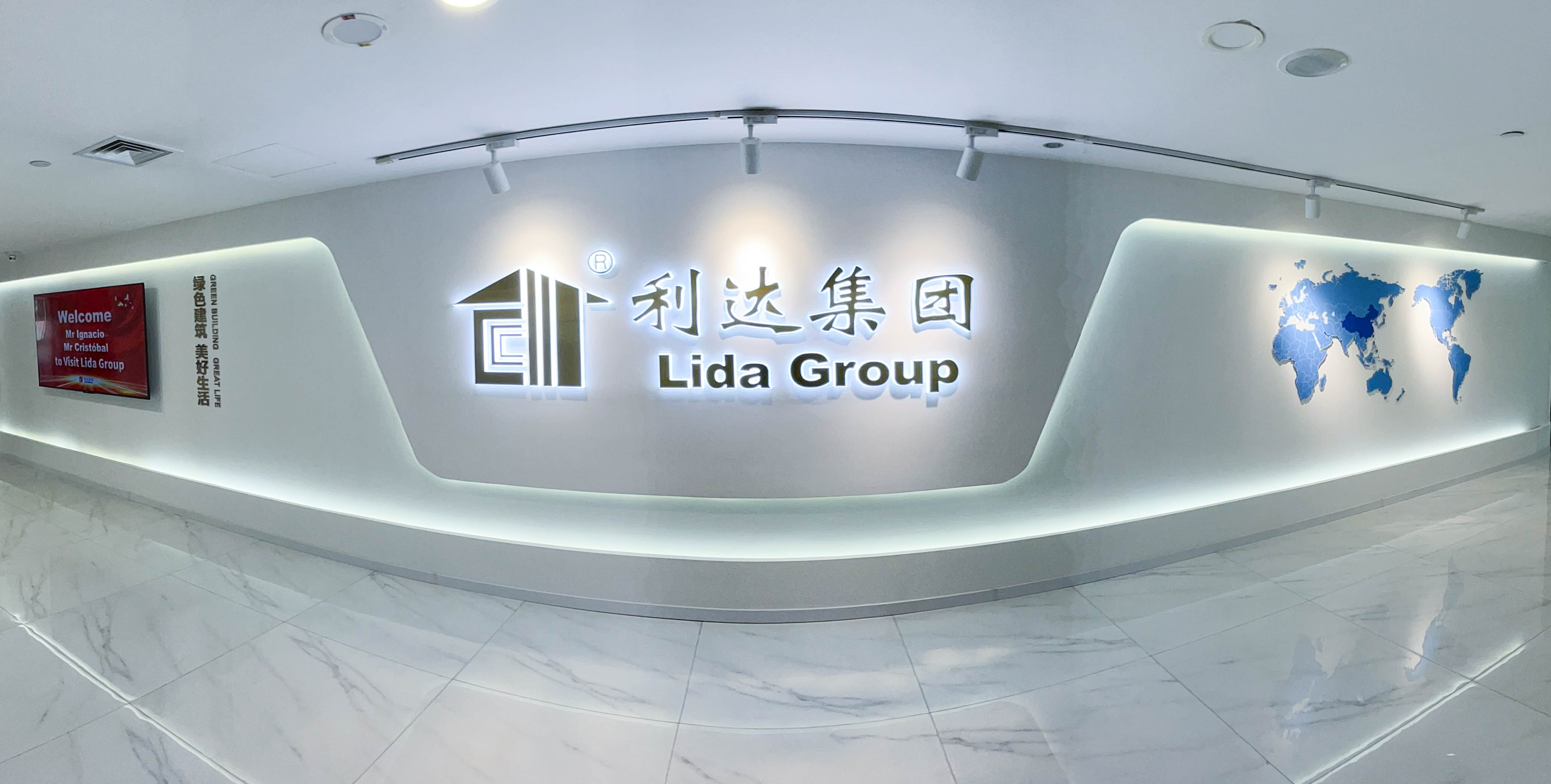
Lida Group, a global pioneer in structural steel and prefabricated modular building solutions established in 1993, has redefined the economics of remote workforce housing. By combining advanced industrial design, automated off-site manufacturing, high-performance thermal engineering, and circular lifecycle economics, Lida Group’s modular container camps reliably cut overall remote energy project costs by 30%.
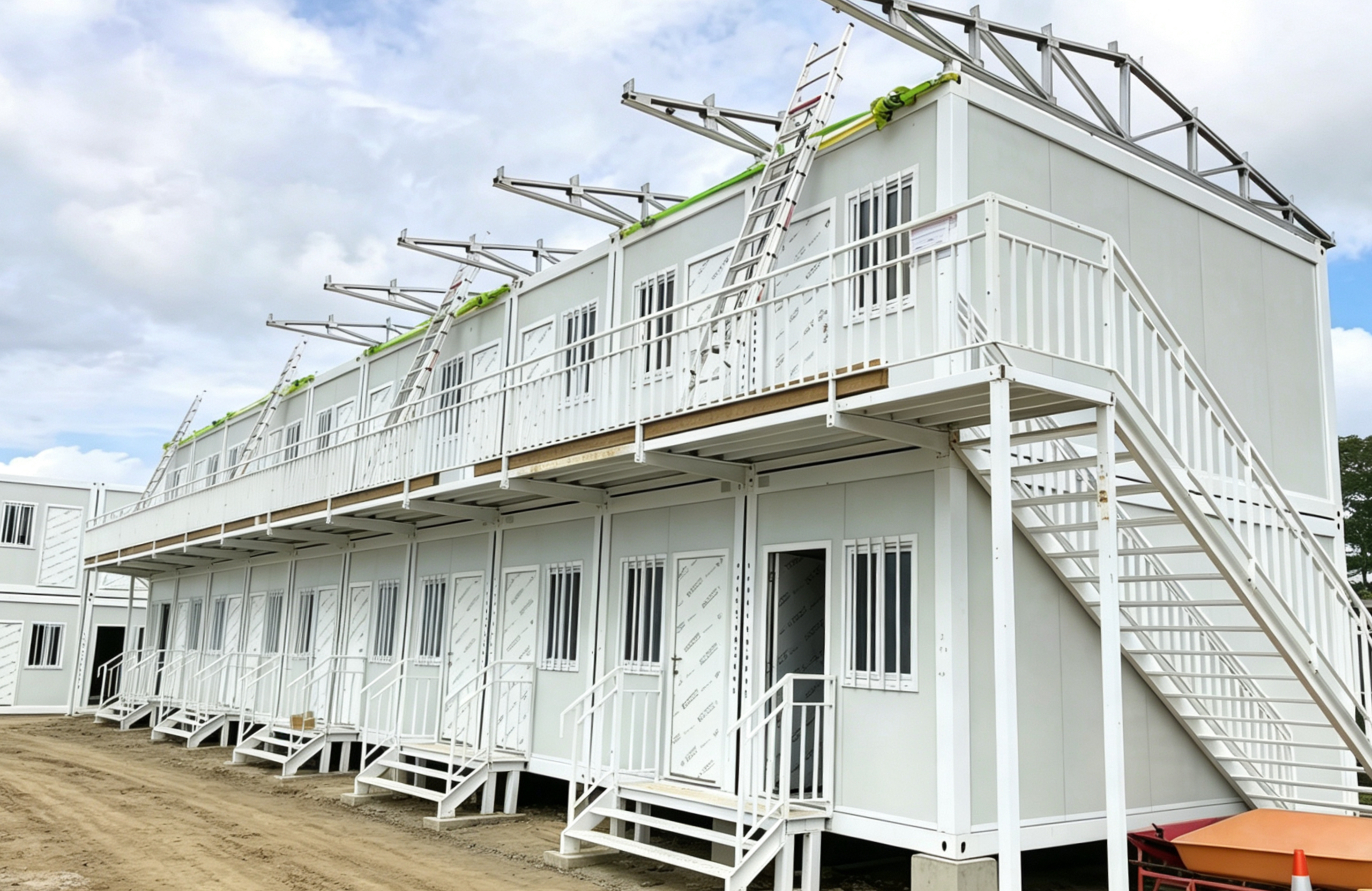
This article details the engineering mechanisms, financial metrics, and operational strategies through which Lida Group delivers these capital expenditure (CapEx) and operational expenditure (OpEx) reductions.
1. Off-Site Manufacturing vs. Traditional On-Site Construction
To understand how a 30% cost reduction is achieved, one must first break down the systemic cost drivers of conventional remote construction.
The Financial Pitfalls of On-Site Construction
In extreme or isolated environments, the cost of civil works scales non-linearly. Sourcing raw materials like cement, rebar, and aggregate requires long supply chains across poor infrastructure. On-site labor in remote regions requires high travel allowances, specialized per diems, and dedicated support facilities just to sustain the construction crew. Furthermore, unpredictable weather conditions—such as Arctic freezes, tropical monsoons, or extreme desert heatwaves—frequently halt on-site progress. Every day of construction delay compounds overhead, inflates rental equipment fees, and defers the primary project’s revenue timeline.
The Factory Precision Advantage
Lida Group shifts up to 90% of the construction process away from the field and into controlled manufacturing facilities. Utilizing computer-controlled manufacturing, automated robotic welding, and standardized quality-assurance processes, structural steel frames and container modules are built with millimeter precision.
This transition yields four direct financial advantages:
-
Material Waste Reduction: Off-site fabrication minimizes steel and panel scrap through optimized software cutting layouts, lowering raw material waste significantly compared to site-built structures.
-
Predictable Timeline Execution: Factory manufacturing operates continuously, unaffected by environmental variables, allowing precise delivery schedules.
-
Labor Efficiency: Concentrating labor in specialized manufacturing plants eliminates the need to transport and house massive civil construction crews at remote sites.
-
Parallel Site Preparation: Civil foundation work at the remote energy site occurs simultaneously with module manufacturing in the factory, reducing total project delivery schedules by 50% to 70%.
Traditional Build Timeline:  [ Civil Prep ] ---> [ Structural Frame ] ---> [ Wall & Roof Build ] ---> [ Internal MEP Fitout ]
Lida Modular Timeline:     [ Civil Prep ]
                           [ Factory Manufacturing & Fitout ] ----> [ Rapid Site Assembly ]
                           (Time Savings: 50% - 70%)
By shortening the critical path from groundbreaking to site occupancy, energy operators save millions in project management, equipment leases, and capital financing costs.
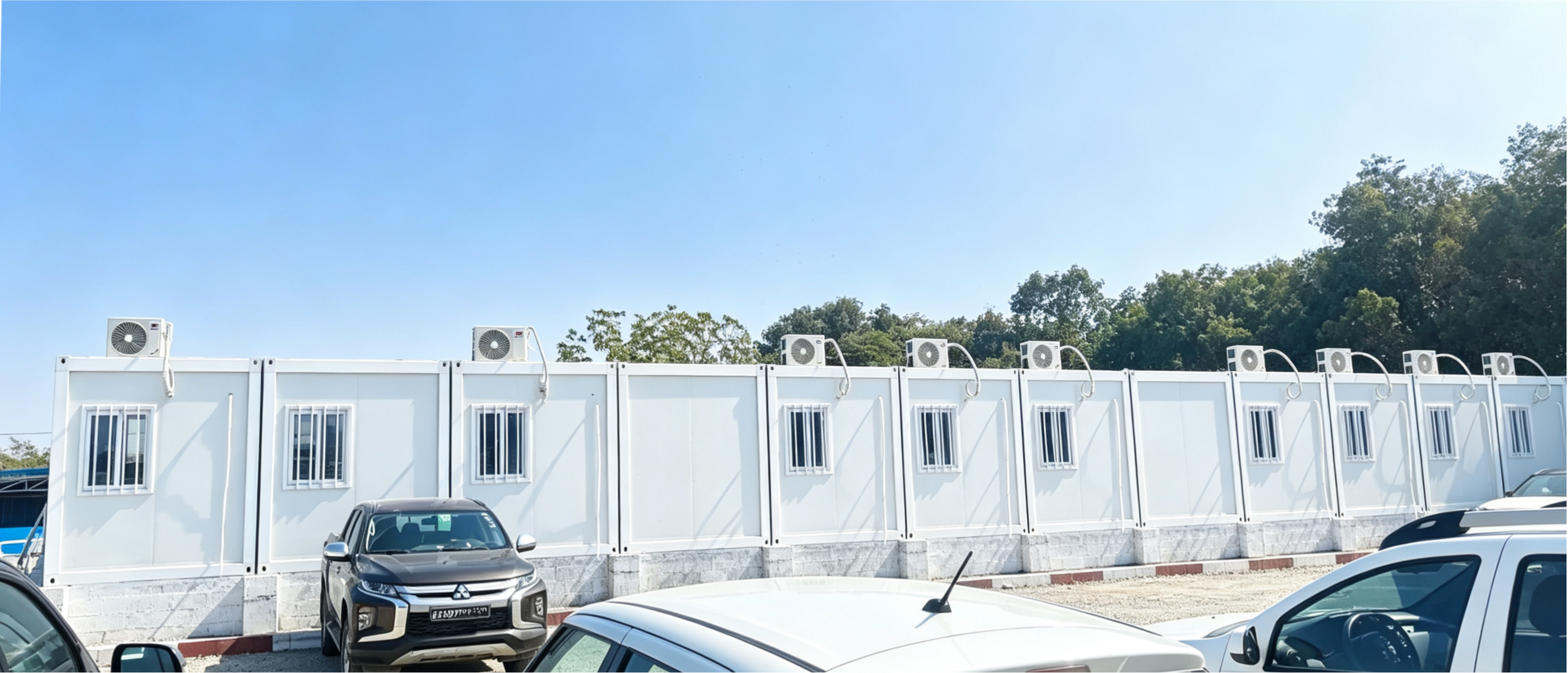
2. Logistics, Shipping, and Packaging Optimization
Transporting building materials to remote locations represents one of the largest budget items in camp deployment. Conventional modular units can be costly to transport because shipping fully assembled volumetric boxes means paying to haul empty internal space.
Lida Group addresses this freight challenge through proprietary Flat-Pack Container engineering and optimized ISO shipping container integration.
Flat-Pack Engineering and Cube Utilization
Lida Group’s flat-pack container system packs structural corner posts, floor frames, roof sections, and insulated wall panels into a compact package.
-
Standard Transport Conversion: Four flat-packed modular units are engineered to match the exact dimensions of a single standard 20-foot ISO intermodal shipping container.
-
Volumetric Reduction: Flat-packing decreases transit volume by up to 75% compared to pre-assembled modular boxes.
-
Intermodal Logistics: These bundled modules feature standard corner castings, enabling seamless transport via standard commercial cargo ships, freight trains, and flatbed trucks without specialized oversized-load permits.
| Logistics Metric | Traditional Modular Units | Lida Flat-Pack Container System |
| Shipping Footprint | 1 Unit per Transport Bed | 4 Units per ISO Container Slot |
| Freight Cost per Unit | Baseline (100%) | 35%–50% Reduction |
| Oversized Transport Permits | Frequently Required | Not Required |
| Handling Requirements | Heavy-lift specialized cranes | Standard intermodal cranes / forklifts |
By maximizing freight density, Lida Group slashes maritime and land transportation costs. This allows energy companies to ship complete 500-man or 1,000-man camp complexes using a fraction of the logistics fleet normally required.
3. Rapid On-Site Assembly and Reduced Labor Dependencies
Once materials arrive at a remote site, assembling the camp poses another major financial variable. Remote labor is expensive, scarce, and difficult to manage.
The Plug-and-Play Assembly Model
Lida Group container modules feature precision-engineered bolted structural connections that eliminate the need for heavy on-site welding or structural modification.
-
Pre-Integrated Utilities: Electrical wiring, LED lighting fixtures, plumbing conduits, and HVAC ductwork are pre-installed within the modular wall and ceiling panels during factory production.
-
Simple Mechanical Connections: On-site teams connect structural modules using high-strength bolt assemblies and plug-and-play quick-connect utility joints.
-
Minimized On-Site Skilled Labor: The simplified assembly process requires fewer specialized tradespeople, such as certified welders or master electricians, on-site. Standard technical assembly crews guided by clear engineering documentation can reliably install up to 20–30 units per day.
By reducing total on-site labor hours by 60% to 80%, operators eliminate extensive crew support costs and dramatically reduce occupational safety risks in high-hazard environments.
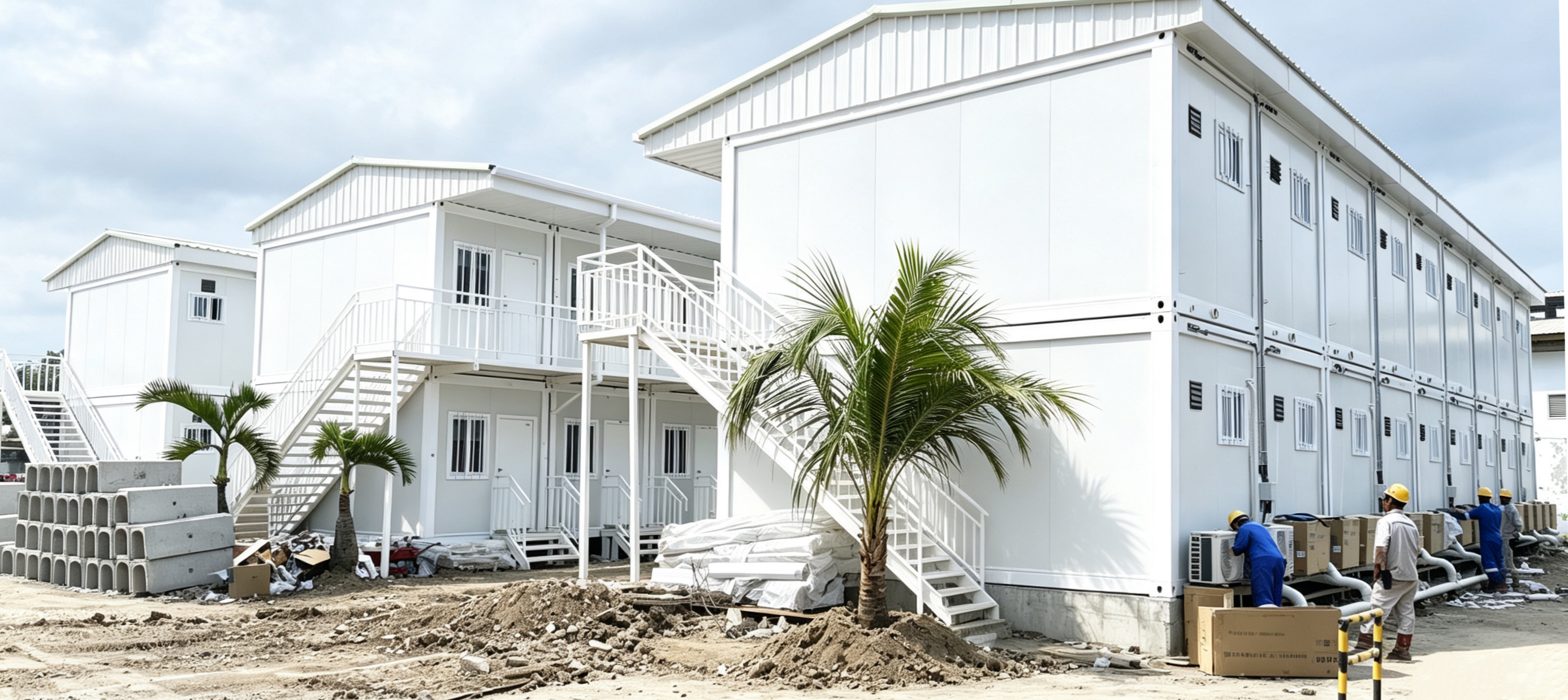
4. Superior Thermal Insulation and Long-Term Energy Efficiency
While capital expenditure savings during acquisition and setup are substantial, operational expenditure over a camp’s 5-to-15-year lifecycle can easily surpass its initial purchase price. In remote energy installations, camp power is typically generated on-site via diesel generators, making every kilowatt of wasted heating or cooling expensive.
Lida Group engineers container building envelopes specifically to mitigate extreme thermal loads, whether operating in Arctic conditions at -45°C or Middle Eastern deserts at +50°C.
┌─────────────────────────────────────────────────────────┐
│     Lida Composite Insulated Wall Panel Structure       │
├─────────────────────────────────────────────────────────┤
│ [Outer Shell] High-Strength Galvanized Steel Sheet       │
│ ─────────────────────────────────────────────────────── │
│ [Core Insulation] Polyurethane (PU) / PIR Foam Core     │
│                   (Thickness: 75mm - 200mm)             │
│ ─────────────────────────────────────────────────────── │
│ [Inner Surface] Easy-Clean Flame-Retardant Wall Board   │
└─────────────────────────────────────────────────────────┘
High-Performance Envelopes and HVAC Optimization
-
Advanced Insulation Cores: Wall and roof panels utilize high-density Polyurethane (PU), Polyisocyanurate (PIR), or structural Rockwool cores. A typical 100mm PU panel provides an excellent thermal insulation value ($U\text{-value} \le 0.28 \text{ W/m}^2\text{K}$), preventing thermal bridging far more effectively than traditional field-built walls.
-
Thermal Bridge Elimination: Double-sealed rubber gaskets and integrated thermal break profiles at module connections prevent air leakage, maintaining tight envelope integrity.
-
Solar and Off-Grid Integration: Lida Group modules are designed to integrate directly with roof-mounted photovoltaic solar panels and battery storage units. This hybrid configuration allows camps to offset daytime air-conditioning loads directly with renewable power, reducing generator diesel consumption by 30% to 40%.
Over multi-year project lifecycles, these structural energy efficiencies prevent millions of liters of diesel fuel from being purchased, transported, and burned.
5. Lifecycle Flexibility, Reusability, and High Residual Value
Traditional temporary site facilities are usually demolished, abandoned, or sold for scrap at the conclusion of a project phase, resulting in a total write-off of invested capital. In contrast, Lida Group container camps are built as durable, re-deployable physical assets.
Structural Durability and Anti-Corrosion Protection
Lida Group utilizes high-grade galvanized steel structural frames ($Q235B / Q355B$) treated with multi-layer anti-corrosion marine-grade coatings. This engineering enables structural modules to withstand wind loads up to 150 km/h, resist seismic activity, and endure humid, saline, or alkaline soils without structural failure.
Relocation and Modular Scalability
-
Repeated Demountability: The full-bolted assembly design allows modules to be disassembled, flat-packed, and re-transported to new project locations up to 10–15 times without compromising structural integrity.
-
Scalable Architecture: Units can be stacked up to three stories high or expanded laterally to convert dormitory blocks into administrative offices, dining halls, medical clinics, or recreation spaces as project requirements evolve.
-
High Residual Value: Due to their long structural lifespan (25+ years), Lida container units retain 60% to 70% of their asset value after five years of initial service. Energy companies can easily redeploy these assets across future project phases or liquidate them on the secondary market.
Initial Project Phase ──► Disassembly & Flat-Packing ──► Transport to Site B ──► Redeployment
  (Capital Invested)          (Minimal Waste)             (Low Freight)        (CapEx Recaptured)
By shifting camp infrastructure from an amortized expense to a reusable asset, operators secure significant multi-project financial savings.
6. Comprehensive Financial Cost Analysis
To illustrate how these engineering factors combine to yield a 30% total cost saving, consider a benchmark financial comparison for a 500-person remote energy workforce camp over a 5-year operational lifecycle.
Cost Breakdown Comparison: 500-Person Camp (5-Year Lifecycle)
| Cost Category | Traditional On-Site Build | Lida Group Modular Camp | Net Cost Impact |
| Material & Fabrication | $8.5 Million | $6.2 Million | 27% Savings (Factory scale & automated production) |
| Freight & Logistics | $2.4 Million | $1.3 Million | 46% Savings (Flat-pack intermodal shipping) |
| On-Site Installation Labor | $4.2 Million | $1.2 Million | 71% Savings (Plug-and-play bolted assembly) |
| 5-Year Energy & Diesel Fuel | $6.5 Million | $4.2 Million | 35% Savings (High R-value insulation & PV options) |
| Maintenance & Structural Repairs | $1.2 Million | $0.5 Million | 58% Savings (Galvanized corrosion resistance) |
| Residual Value Asset Recovery | $0 (Demolition/Abandonment) | -$2.5 Million (Asset Residual) | CapEx Recaptured (60% value retention) |
| Total Net Cost | $22.8 Million | $10.9 Million | > 50% Lifetime Net Savings |
Even when excluding long-term asset residual value and focusing strictly on the upfront deployment budget (CapEx + initial setup), Lida Group consistently reduces initial deployment budgets by 30% to 35%. When factors like reduced site preparation downtime, lower heating and cooling loads, and reusability are included over a multi-year project, total cost savings can exceed 40–50%.
Summary
In remote energy projects, controlling capital expenditure while maintaining worker health, safety, and operational continuity is essential. Lida Group’s modular container camps achieve a overall 30% cost reduction by addressing the major financial vulnerabilities inherent to remote engineering:
-
Off-Site Factory Precision: Replaces expensive, weather-delayed remote labor with efficient, high-speed automated factory production.
-
Logistics Optimization: Flat-pack engineering cuts maritime and land transport volumes by up to 75%, lowering freight expenses.
-
Rapid Field Deployment: Bolted connections and pre-integrated utilities cut on-site assembly schedules and labor costs by over 60%.
-
Operational Energy Efficiency: High-performance insulation panels reduce thermal leakage, driving down ongoing diesel generator fuel consumption.
-
Multi-Project Circularity: High structural durability allows units to be disassembled, relocated, and reused across multiple project lifecycles, preserving long-term capital value.
Through these structural innovations, Lida Group provides a proven framework that allows global energy operators to deploy remote infrastructure quickly, sustainably, and within tight budgetary targets.
Post time: Sep-24-2026