
Introduction
In the competitive world of industrial development, time is money. Every day of delayed construction translates into lost revenue, extended financing costs, and postponed operational benefits. For businesses investing in warehouse facilities—whether for manufacturing, logistics, agriculture, or e-commerce fulfillment—the speed with which these structures can be designed, approved, and brought into service directly impacts their return on investment. Traditional construction methods, with their reliance on sequential on-site processes, weather-dependent schedules, and fragmented supply chains, consistently fail to meet the time-sensitive demands of modern industry.
It is within this context that steel structure warehouses have emerged as a transformative solution. Among the pioneers of this construction revolution is Lida Group, a global leader in integrated building engineering solutions established in 1993. With over three decades of experience, more than 5,000 completed projects across 152 countries, and a comprehensive portfolio of prefabricated building systems, Lida Group has perfected a steel structure warehouse system that consistently reduces construction time by 40 percent or more compared to conventional methods.
This article examines the engineering principles, manufacturing processes, and construction methodologies that enable Lida Group to achieve such remarkable time savings—and explores why this capability matters for businesses across diverse industries.
The Time Challenge in Traditional Warehouse Construction
To appreciate the significance of a 40 percent reduction in construction time, one must first understand the inefficiencies inherent in traditional warehouse construction. Conventional warehouses, typically built using cast-in-place concrete or masonry, are subject to a cascade of time-consuming processes that collectively extend project timelines for months or even years.
The traditional construction sequence begins with extensive site preparation, including excavation, grading, and foundation work. Concrete foundations must cure for days or weeks before supporting structures can be erected. Structural steel or concrete columns and beams are then installed sequentially, often requiring specialized equipment and skilled labor that may be in short supply. Exterior walls and roofing follow, typically involving multiple trades working in sequence rather than parallel. Interior systems—electrical, plumbing, HVAC, fire protection—are installed after the building envelope is complete, adding further time. Finally, finishing work, inspections, and commissioning extend the timeline further.
Weather represents a persistent threat to traditional construction schedules. Rain, snow, extreme temperatures, and high winds can halt work for days or weeks at a time. In regions with distinct wet and dry seasons, construction may be effectively impossible during certain months. These weather-related delays compound other schedule risks, pushing project completion ever further into the future.
Labor availability and productivity add another layer of uncertainty. Traditional construction relies heavily on skilled tradespeople—carpenters, ironworkers, electricians, plumbers—whose availability may be limited. Coordination among multiple trades on a single site often leads to conflicts, delays, and rework. And because much of the work occurs outdoors and at height, safety concerns can further slow progress.
Lida Group’s Steel Structure Warehouse System
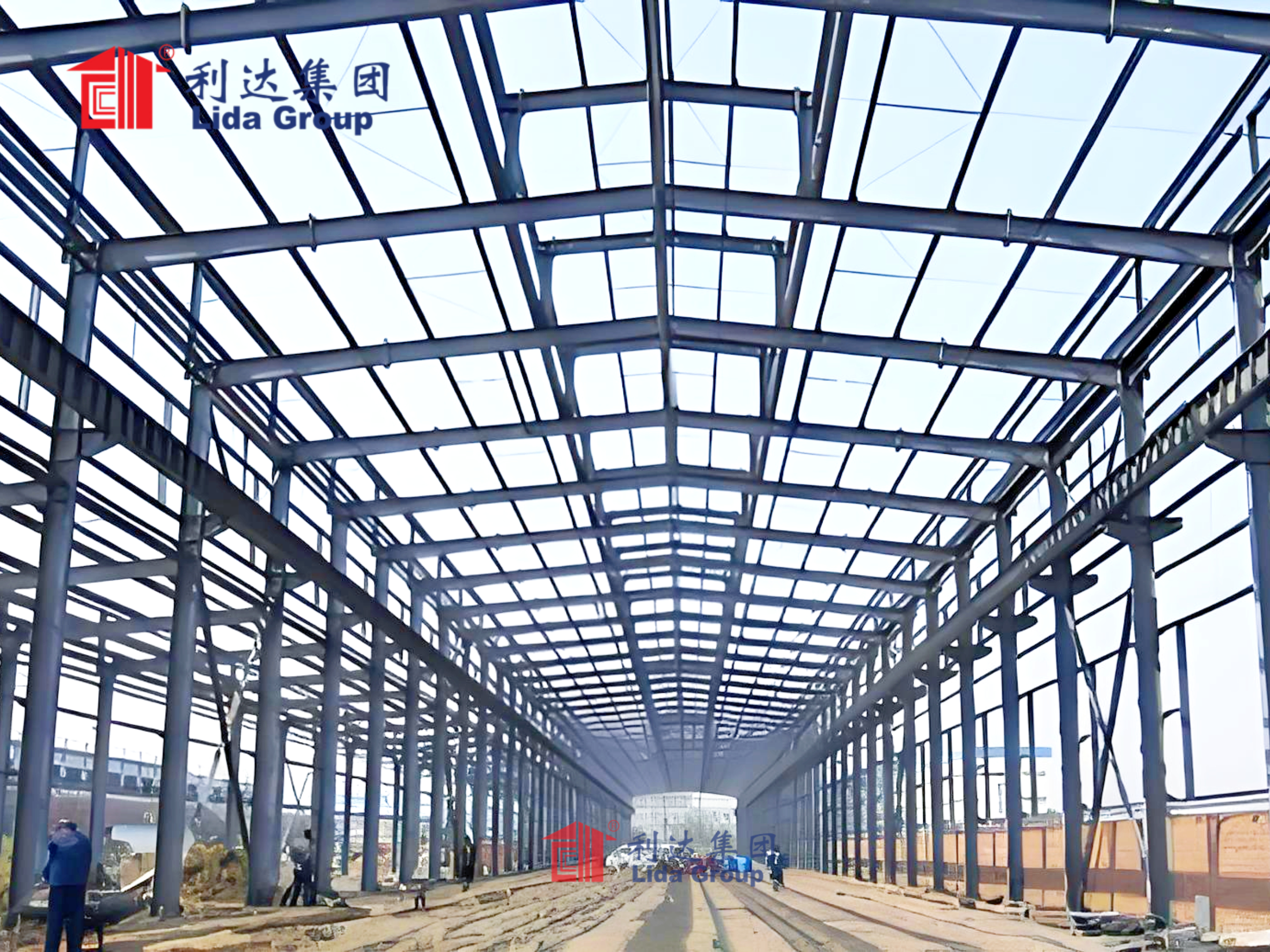
Lida Group’s steel structure warehouse system addresses these challenges through a fundamentally different approach to construction—one that emphasizes off-site manufacturing, parallel processing, and rapid on-site assembly. The system is built upon a foundation of high-quality steel components engineered for precision, durability, and ease of installation.
At the core of the system are the structural frames, fabricated from premium-grade H-section steel and C-section steel. These frames are designed using advanced computer-aided engineering software that optimizes material usage while ensuring structural integrity. Every component is manufactured in controlled factory environments, where computerized cutting, robotic welding, and automated assembly ensure dimensional accuracy of 99.96 percent across all parts.
The building envelope employs composite sandwich panels that combine structural performance with thermal insulation. These panels are manufactured with insulation cores—rock wool, fiberglass, or foam—sandwiched between durable metal skins. The panels are pre-fitted with windows, doors, and service penetrations, arriving at the site ready for installation. This pre-fabrication eliminates the need for on-site cutting, fitting, and finishing that consumes so much time in traditional construction.
Lida Group operates six dedicated container modular house production lines and eight independent steel structure production lines, all following unified internal quality standards. This industrial-scale manufacturing capacity enables the company to produce components rapidly and consistently, regardless of external weather conditions. While traditional construction sites may be idle during rain or snow, Lida Group’s factories continue producing components that will be assembled when conditions permit.
The 40 Percent Time Reduction: How It Is Achieved
The remarkable time savings achieved by Lida Group’s steel structure warehouses result from multiple factors working in concert. Understanding these factors illuminates why this construction approach consistently outperforms traditional methods.
Parallel Processing vs. Sequential Construction
Traditional construction follows a largely sequential process: foundations must be complete before columns are erected; columns must be in place before beams are installed; the structural frame must be finished before walls and roofing begin. Each phase depends on the completion of the previous one, creating a linear timeline that cannot be compressed.
Lida Group’s approach fundamentally changes this dynamic by enabling parallel processing. While site preparation and foundation work proceed on-site, structural components, wall panels, and roofing systems are being manufactured simultaneously in the factory. When foundations are ready, pre-fabricated components arrive and are assembled rapidly. Interior systems—electrical, plumbing, HVAC—can be installed in parallel with exterior work because the building envelope is completed so quickly.
This parallel processing compresses the overall timeline dramatically. Tasks that would take weeks or months in sequence are completed simultaneously, eliminating the delays inherent in sequential construction.
Off-Site Manufacturing: Weather-Independent Production
Weather is perhaps the single greatest source of delay in traditional construction. Rain, snow, extreme temperatures, and high winds can halt work for days or weeks, pushing schedules ever further into the future. In regions with pronounced wet seasons, construction may be impossible for months at a time.
Lida Group’s off-site manufacturing model eliminates this vulnerability. Components are produced in climate-controlled factories where weather has no impact on production schedules. While competitors’ construction sites may be idle during adverse conditions, Lida Group’s factories continue producing components that will be assembled when conditions permit. This weather independence ensures consistent progress regardless of external conditions.
Rapid On-Site Assembly
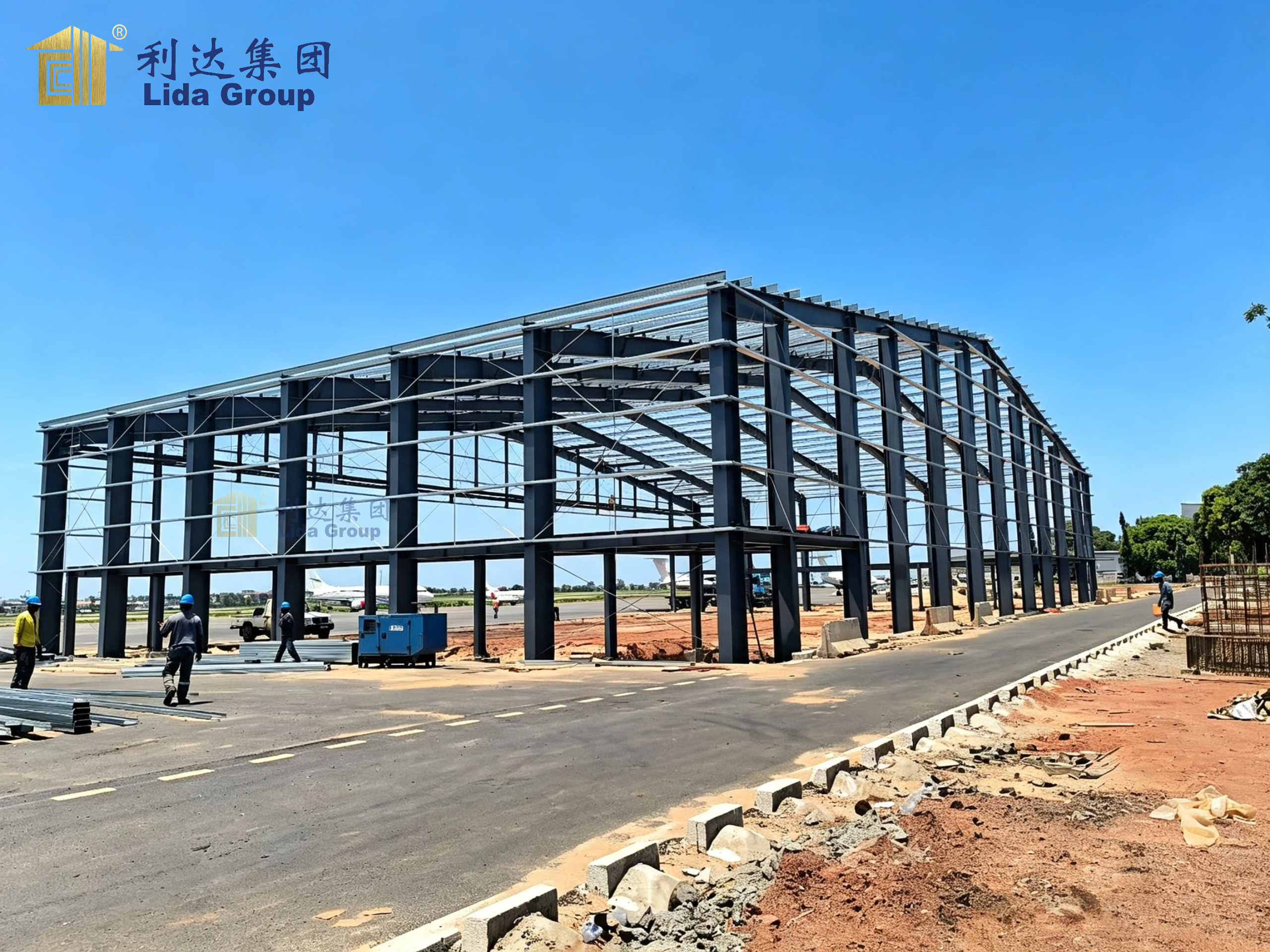
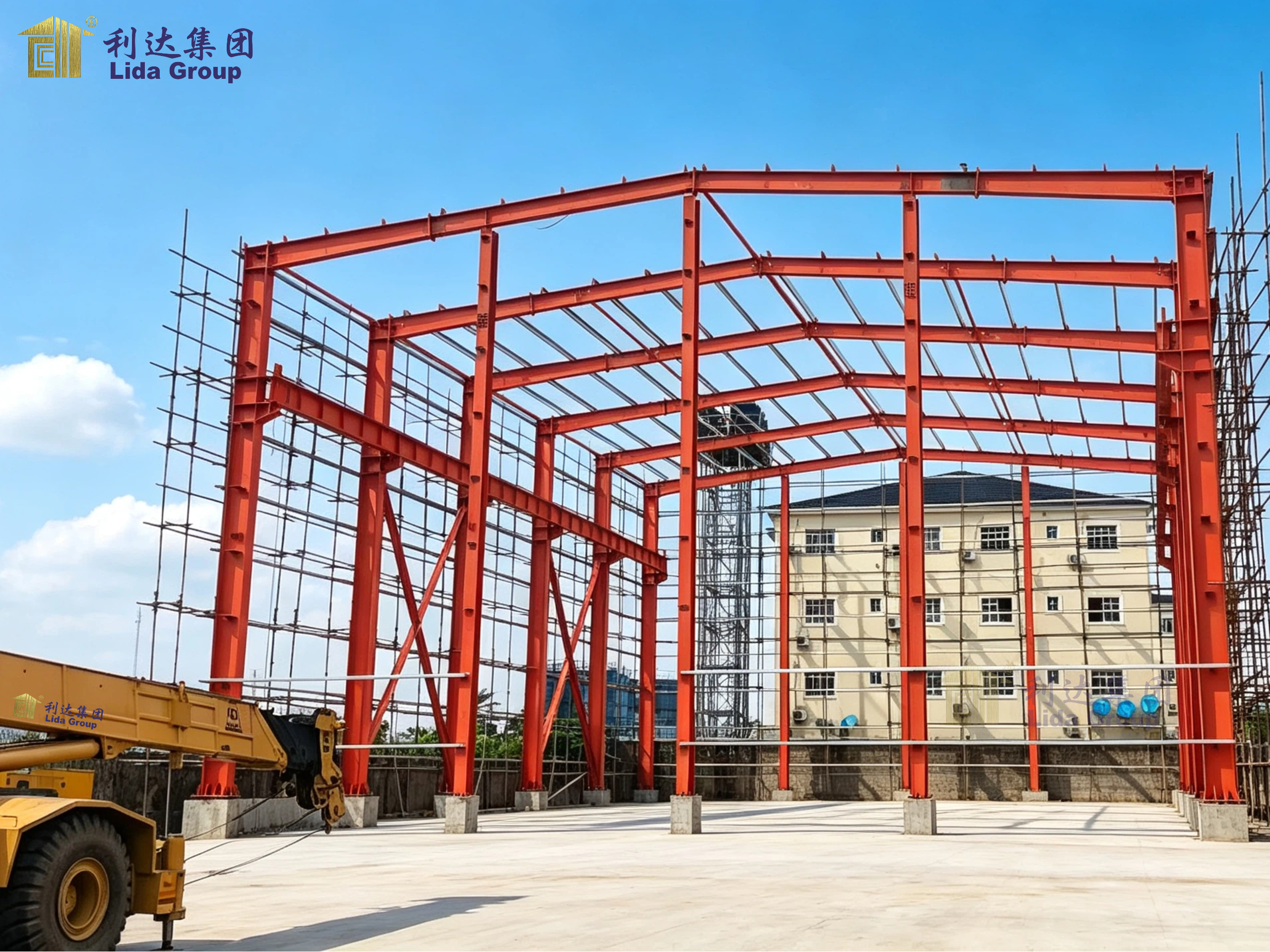
The speed of on-site assembly is perhaps the most visible manifestation of Lida Group’s efficiency. Because components arrive pre-fabricated, pre-fitted, and pre-finished, on-site work is reduced to assembly rather than construction. Bolted connections replace welding. Pre-installed panels replace on-site framing and cladding. Pre-wired electrical systems replace on-site rough-in.
Lida Group has developed advanced assembly protocols that further accelerate deployment. Using drone-assisted positioning technology, the company can achieve the assembly of large warehouse structures in a fraction of the time required by traditional methods. Because components are standardized and connections are simple, assembly can proceed rapidly even with relatively unskilled labor—a critical advantage in regions where skilled tradespeople are scarce.
Integrated Design and Engineering
Time savings begin long before construction starts. Lida Group’s integrated design-build approach eliminates the coordination delays that plague traditional projects. Rather than separate architects, engineers, and contractors working sequentially—each introducing their own timelines and potential conflicts—Lida Group provides a single point of responsibility from concept through completion.
Advanced Building Information Modeling (BIM) allows all stakeholders to visualize the project in three dimensions before construction begins. Clashes between structural, mechanical, and electrical systems are identified and resolved during design, eliminating the rework that so often delays traditional projects. Prefabrication specifications are integrated into the design from the outset, ensuring that components are manufactured correctly the first time.
Real-World Evidence: Time Savings in Practice
The theoretical advantages of Lida Group’s steel structure warehouses have been validated through countless real-world projects. The company’s portfolio includes numerous examples of warehouses delivered in dramatically compressed timelines.
In Kenya’s Rift Valley, Lida Group delivered a 5,000-square-meter steel structure warehouse for agricultural storage and equipment housing. The light steel framework was coated with anti-corrosion paint to withstand the arid climate, while the modular design allowed the client to expand the facility incrementally without major renovations. The project was completed in a fraction of the time that traditional construction would have required.
In Fiji, Lida Group completed a steel structure project adapted to the local tropical climate. The structures utilized H-shape steel frames and hot-dip galvanized steel sheets, ensuring durability against high temperatures, rainfall, and humidity. The project demonstrated how Lida Group’s construction methods deliver rapid results even in challenging environments.
In Brazil, Lida Group’s 2025 vertical farm project in São Paulo utilized a modular light steel structure framework to support 12 levels of agricultural production. The steel structure’s seismic-resistant joints protected the facility from Brazil’s frequent earthquakes, ensuring uninterrupted production. The project showcased the speed and reliability of Lida Group’s construction approach.
These projects, drawn from Lida Group’s portfolio of more than 5,000 completed steel structure buildings across 152 countries, illustrate the consistent time savings that the company’s steel structure warehouse system delivers.
Beyond Speed: Additional Benefits
While the 40 percent reduction in construction time is the headline advantage of Lida Group’s steel structure warehouses, it is far from the only benefit. The same engineering principles that enable rapid construction also deliver durability, energy efficiency, and long-term value.
Steel structure warehouses offer service lives exceeding 50 years with minimal maintenance. The galvanized steel components resist corrosion for decades, even in challenging environments. The composite panels provide thermal insulation that reduces energy consumption for heating and cooling. And the modular design allows for expansion, reconfiguration, or relocation as business needs evolve.
The precision of factory manufacturing also enhances quality. Components are produced to exact specifications in controlled environments, eliminating the variability inherent in on-site construction. Quality control processes at every stage of production ensure that buildings meet rigorous international standards, including ISO9001, ISO14001, and ISO45001 certifications.
Conclusion
Lida Group’s steel structure warehouses represent a transformative advancement in industrial construction—one that delivers a 40 percent reduction in construction time while maintaining superior quality, durability, and performance. This remarkable efficiency results from the integration of off-site manufacturing, parallel processing, rapid on-site assembly, and integrated design-build project delivery. Together, these factors compress construction timelines from months to weeks, enabling businesses to bring their facilities into service faster and begin realizing returns on their investments sooner.
The implications of this capability extend far beyond individual projects. In an era of rapid industrialization, expanding global trade, and intensifying competition, the ability to construct high-quality warehouse facilities quickly and reliably provides a significant competitive advantage. Businesses that can respond rapidly to market opportunities, that can scale their operations efficiently, and that can minimize the capital tied up in unfinished construction are better positioned to succeed.
As global supply chains continue to evolve and as e-commerce and logistics demands grow, the need for rapid warehouse construction will only intensify. Lida Group, with its three decades of experience, its industrial-scale manufacturing capacity, and its proven track record across 152 countries, stands ready to meet this demand. The company’s steel structure warehouse system is not merely a construction method—it is a strategic enabler for businesses seeking to compete in an increasingly time-sensitive world. By choosing Lida Group, businesses are choosing speed, quality, and value—and gaining the time advantage that makes all the difference.
Contact us, please click here!
Post time: Sep-28-2026