
01 Introduction: Where the Work Is, Comfort Must Follow
Every remote project shares a quiet contradiction. The construction, mining, and energy sites that demand the most from a workforce are almost always located in the places least able to support it. Roads end at the site boundary. Utilities arrive late, if at all. Power, water, and shelter have to be brought in, and the people who run the operation need somewhere safe to sleep after a long shift. Lida Group has spent years answering that problem with weatherproof container dormitories, units engineered not merely to survive the site but to make it genuinely livable. This article walks inside those units to explain how they are built, what keeps them safe, and why comfortable accommodation has become a decisive factor in how modern remote projects are planned.
The demand is not abstract. Oil and gas fields, mining camps, pipeline corridors, and infrastructure projects frequently operate in climates that punish poor housing. Heat, cold, dust, humidity, and wind are not background noise; they directly affect rest, morale, and retention. When workers cannot recover, productivity falls and turnover climbs, both of which carry real costs for the operator. Lida’s container dormitories are designed with this reality in mind, treating the sleeping quarters not as a temporary afterthought but as a core piece of project infrastructure that deserves the same rigor as the equipment on site.
02 The Shell: Engineered Against the Elements
The strength of a container dormitory begins with its steel frame, and Lida builds that frame from structural-grade steel that is selected for its ability to take repeated handling, stacking, and transport without losing integrity. The same container that travels by truck, rail, or sea must then serve as a permanent building envelope, which means the frame has to absorb far more than static loads. Corrugated steel panels form the outer skin, providing a hard, impact-resistant surface that sheds rain, snow, and debris while protecting the structure beneath.
Weatherproofing, however, is not a single layer but a system. Lida seals every joint, door, and window opening with industrial-grade gaskets and sealants chosen to resist both temperature extremes and ultraviolet degradation. Roofing is pitched or detailed with positive drainage so that water never pools, and flashing is fitted at every penetration where services enter the unit. The result is an envelope that keeps moisture out even under persistent rain or drifting snow, protecting insulation, wiring, and interior finishes from the damage that typically shortens the life of lesser buildings.
Insulation works in concert with the shell to regulate the interior climate. Lida selects high-density insulation materials and installs them continuously across walls, ceiling, and floor to reduce thermal bridging, the weak points where heat escapes or enters. In cold climates this keeps warmth inside and prevents condensation from forming on cold surfaces; in hot regions it slows solar gain so that cooling systems do not have to fight the sun alone. The combination of a weathertight shell and a well-designed thermal envelope means the dormitory maintains a comfortable temperature with far less energy, a benefit that becomes more valuable the more isolated and expensive the site.

03 Safety: The Priority That Never Sleeps
Safety in a remote dormitory goes well beyond protecting against the weather. A fire in an isolated camp, far from emergency services, is a serious risk, and Lida addresses it with fire-resistant materials and clear evacuation planning. Interior linings, insulation, and finishes are selected for their fire performance, and the steel structure itself does not contribute fuel to a fire. This does not eliminate the need for discipline on the part of occupants, but it gives the building a fundamental resistance that is difficult to achieve with lightweight or combustible alternatives.
Structural safety extends to the way the units behave in extreme conditions. The same frame that survives transport is engineered to withstand the wind and snow loads of the region where it will be deployed, and units can be stacked and fixed together to form multi-level dormitory blocks that behave as one stable structure. When storms arrive, the building holds firm, and the confidence this gives to workers is itself a form of wellbeing. Emergency exits, smoke detection, and clear internal layouts ensure that people can move quickly if a situation does arise, while the robust shell keeps occupants safe from the elements and from any external hazards present at the site.
There is also a quieter form of safety in the way the units are finished. Edges are trimmed, floors are non-slip, electrical systems are protected and properly earthed, and access points are designed to reduce trip and fall hazards. These details rarely appear in a brochure, but they are exactly the things that keep a tired worker safe at the end of a long day. Lida treats safety as a property of the whole building system rather than a checklist bolted on afterward, which is why its dormitories are trusted in some of the most demanding industrial environments in the world.
04 Comfort: Rest That Actually Restores
A dormitory that merely keeps out the rain has failed half its purpose, because the true measure of the building is how well its occupants sleep and recover. Lida equips its units with climate control systems sized to the volume of the space and the conditions of the site, delivering steady heating in cold seasons and effective cooling where temperatures climb. Ventilation is designed to supply fresh air continuously and to remove humidity, so that the interior never feels stuffy or damp even when the unit is sealed against a storm outside.
The interior itself is arranged for real living rather than bare survival. Sleeping quarters are laid out to give each worker personal space, storage, and a sense of privacy, while shared areas are sized and furnished for cooking, eating, and relaxing after hours. Power is provided reliably and distributed safely, so that lighting, heating, and personal devices all work as expected, and the layout minimizes noise transfer between berths so that rest is not disturbed by activity elsewhere in the block. These may sound like modest details, but together they are the difference between a place workers tolerate and a place they are glad to return to.
Hygiene is part of comfort as well. Sanitary units and washing facilities are built to the same standard as the sleeping quarters, with durable, easy-to-clean surfaces, reliable plumbing, and controlled water temperatures. Waste systems are designed to work dependably in locations without municipal services, so that daily life does not become a constant struggle against breakdowns. By treating comfort as a system that includes climate, space, privacy, and hygiene together, Lida ensures that rest is genuinely restorative, which is the outcome the entire operation depends on.

05 Speed and Simplicity in the Field
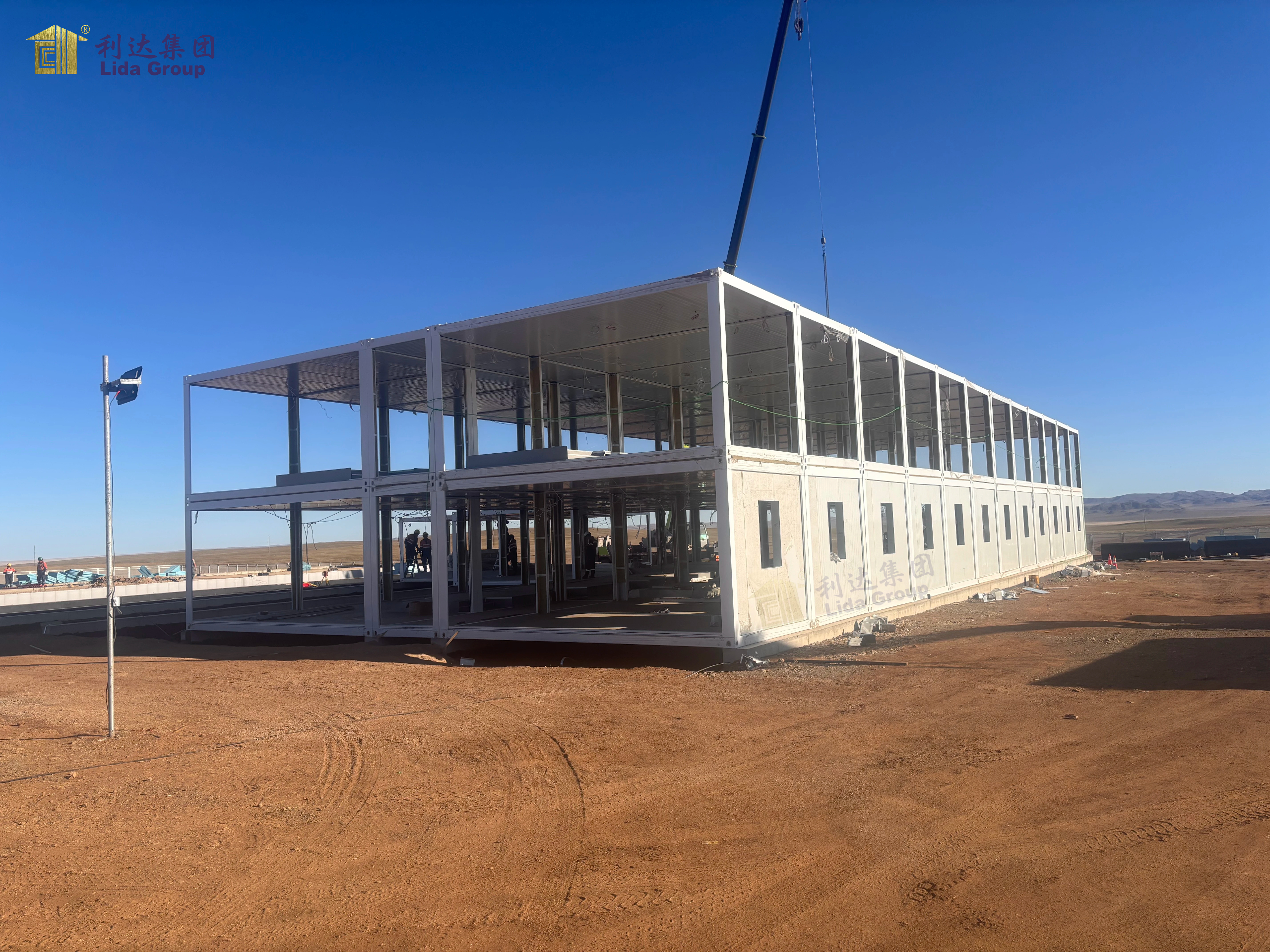
A weatherproof dormitory is only valuable if it can be deployed where it is needed, and this is where the container form delivers a decisive advantage. Because each unit is built and finished in the factory to a consistent standard, it arrives at the site essentially ready to use. Cranes set the units in place, connections are made to power, water, and waste, and the block can be occupied in a fraction of the time required to build conventional accommodation. This speed matters enormously in remote locations, where every week of delay on housing delays the entire project.
Factory fabrication also brings consistency. Each dormitory is built from the same controlled process, with the same materials, the same sealing, and the same safety details, regardless of where it is sent. This means operators know exactly what they are getting, can plan capacity accurately, and can expand or reconfigure a camp by adding or rearranging units without waiting for new construction. When a project scales up, housing scales with it; when work moves, the units can be relocated rather than abandoned. This flexibility is a form of efficiency that traditional building methods simply cannot match.
06 The Human Dimension: Why Housing Drives Performance
It is easy to treat worker accommodation as a cost center, but the evidence from remote projects points the other way. People who rest well, stay dry, and feel safe are more productive, more careful, and far more likely to stay for the duration of the project. High turnover in a remote camp is expensive, because every departure means recruiting, training, and transporting a replacement across the same difficult logistics that brought the original worker. Comfortable housing directly attacks that cost by giving people a reason to stay.
There is also a moral dimension that operators increasingly take seriously. The workforce that builds a mine or runs a pipeline deserves housing that respects their basic dignity, and a well-designed dormitory communicates that respect in a way that words cannot. This matters for recruitment, for morale, and for the reputation of the project among the communities it touches. Lida’s weatherproof dormitories help operators meet this responsibility while also protecting the project’s schedule and budget, aligning doing right by people with doing right by the bottom line.
07 A Long-Term Asset, Not a Temporary Fix
Although these units are often described as temporary housing, their lifespan tells a different story. A properly maintained Lida container dormitory serves for many years, survives relocation, and can be reconfigured as project needs change. The steel frame resists the corrosion and degradation that shorten the life of lesser structures, and the weatherproofing system keeps the interior from being ruined by the very conditions that the unit exists to exclude. This durability turns the dormitory into an asset with real residual value rather than a disposable expense.
The cost advantages compound over time. Lower energy use from good insulation reduces operating costs, fewer breakdowns reduce maintenance, and the ability to reuse units across multiple projects spreads the original investment across a longer working life. When operators compare the total cost of a Lida dormitory over its full lifespan against cheaper alternatives, the weatherproof and durable design consistently wins, because it avoids the hidden costs of frequent repair, premature replacement, and the productivity losses that come from uncomfortable housing.
08 Built for the World’s Toughest Locations
The design philosophy behind these dormitories has been refined through deployment in the environments that test buildings hardest. In desert operations, the thermal envelope and cooling systems keep interiors livable against intense heat and dust. In arctic and high-altitude sites, the insulation and weatherproofing hold warmth against severe cold and wind. In tropical regions, the ventilation and moisture control resist the humidity and rain that plague lesser buildings. This breadth of experience is built into every unit, so that a Lida dormitory performs reliably whether it is delivered to a desert, a coastline, a mountain, or a forested construction corridor.
This reliability also simplifies the operator’s job. Rather than managing a bespoke solution for every site, a project team can specify a proven, standardized product and trust that it will perform. The result is less risk, fewer surprises, and a camp that comes together quickly and runs dependably from the first day of occupancy. For organizations that manage multiple remote projects, this consistency is especially valuable, because it makes housing predictable across an entire portfolio.
09 Conclusion: Weatherproof by Design, Livable by Intention
Lida Group’s weatherproof container dormitories answer the central challenge of remote worksites: how to give a demanding workforce a safe, comfortable place to live in places that offer nothing. The answer rests on a steel frame that survives transport and harsh weather, a weatherproofing system that keeps moisture and climate at bay, insulation that makes the interior efficient and comfortable, and safety details that protect occupants in isolation. Together, these features turn a container into a genuine home away from home, one that restores workers so they can return to the job at their best.
The value of this design extends far beyond the building itself. Comfortable, safe housing improves productivity, reduces turnover, and protects the schedule and budget of the entire project. The durability of the units makes them a reusable asset rather than a disposable expense, and the standardized factory-built quality makes deployment fast, predictable, and consistent across even the most difficult locations. For operators who understand that a workforce performs at its best when it is properly supported, Lida’s weatherproof dormitories are not an indulgence but a foundation for the success of the whole undertaking. In the end, the most remote worksite in the world can still offer its people a good night’s rest, and that single fact changes everything.
Post time: Oct-16-2026