
Introduction: A New Solution for Efficient and Affordable Worker Accommodation
With the continuous development of global industries, infrastructure projects, manufacturing facilities, and large-scale construction sites, the demand for safe, comfortable, and cost-effective worker accommodation is increasing rapidly. Companies operating in remote areas or managing large labor forces often face challenges in providing suitable living spaces within a short construction period while maintaining reasonable project costs.
Traditional building methods usually require long preparation periods, large amounts of labor, and significant investment. In addition, conventional construction can be affected by weather conditions, material transportation difficulties, and limited construction efficiency. These challenges have created a growing demand for modern prefabricated building solutions that can provide fast installation, reliable quality, and long-term usability.
Lida Group, a professional manufacturer of prefabricated buildings and modular construction solutions, is developing an innovative approach by using factory-assembled sandwich panel modules to construct a 200-unit cheap labor dormitory complex. This project demonstrates how advanced prefabricated technology can provide efficient accommodation solutions for workers while reducing construction time and improving overall project performance.
The factory-assembled sandwich panel module system combines modern manufacturing technology, high-quality building materials, and flexible modular design. By producing building components in a controlled factory environment and assembling them efficiently on-site, Lida Group provides a practical solution for large-scale worker housing projects.
This innovative dormitory complex is designed to deliver comfortable living spaces, excellent structural performance, energy efficiency, and rapid construction. It represents a new direction for temporary and semi-permanent accommodation development in industries around the world.
Understanding Factory-Assembled Sandwich Panel Modules
What Are Sandwich Panel Modular Buildings?
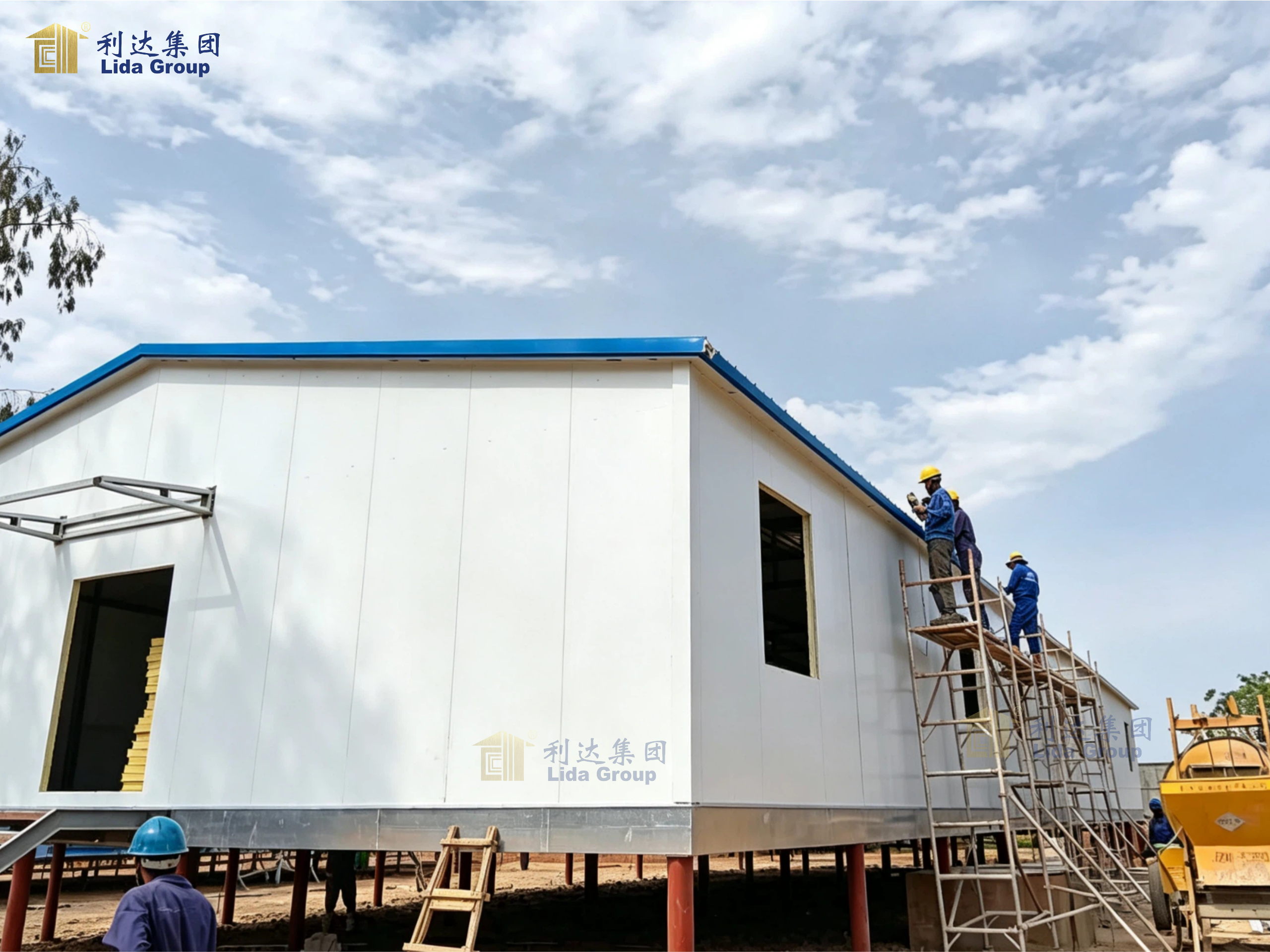
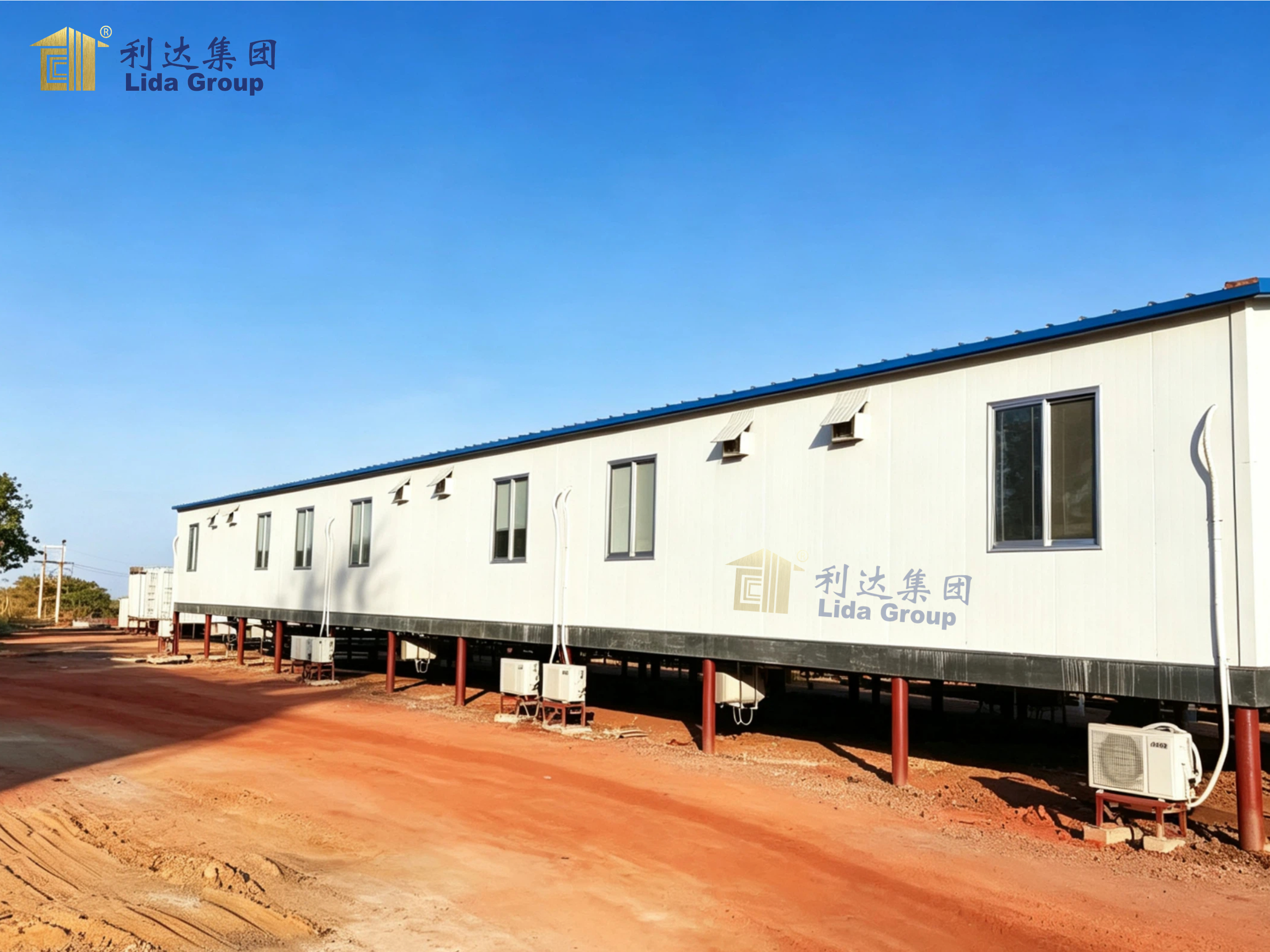
Sandwich panel modular buildings are prefabricated structures that use insulated sandwich panels as the primary wall and roof materials. These panels usually consist of two protective outer layers and an insulated core material in the middle.
The combination of different materials provides excellent thermal insulation, sound reduction, fire resistance, and structural performance.
Unlike traditional buildings that are constructed completely on-site, sandwich panel modular buildings are manufactured in factories. Major components are prepared in advance, including wall panels, roof panels, structural frames, doors, windows, electrical systems, and interior finishing.
After production is completed, the modules are transported to the construction site and assembled quickly.
This construction method offers several advantages:
- Faster project completion
- Better quality control
- Reduced construction waste
- Lower labor requirements
- Improved cost management
- Flexible building expansion options
For large accommodation projects such as a 200-unit labor dormitory complex, factory production provides significant efficiency advantages.
Lida Group: Professional Experience in Modular Construction
Providing Complete Prefabricated Building Solutions
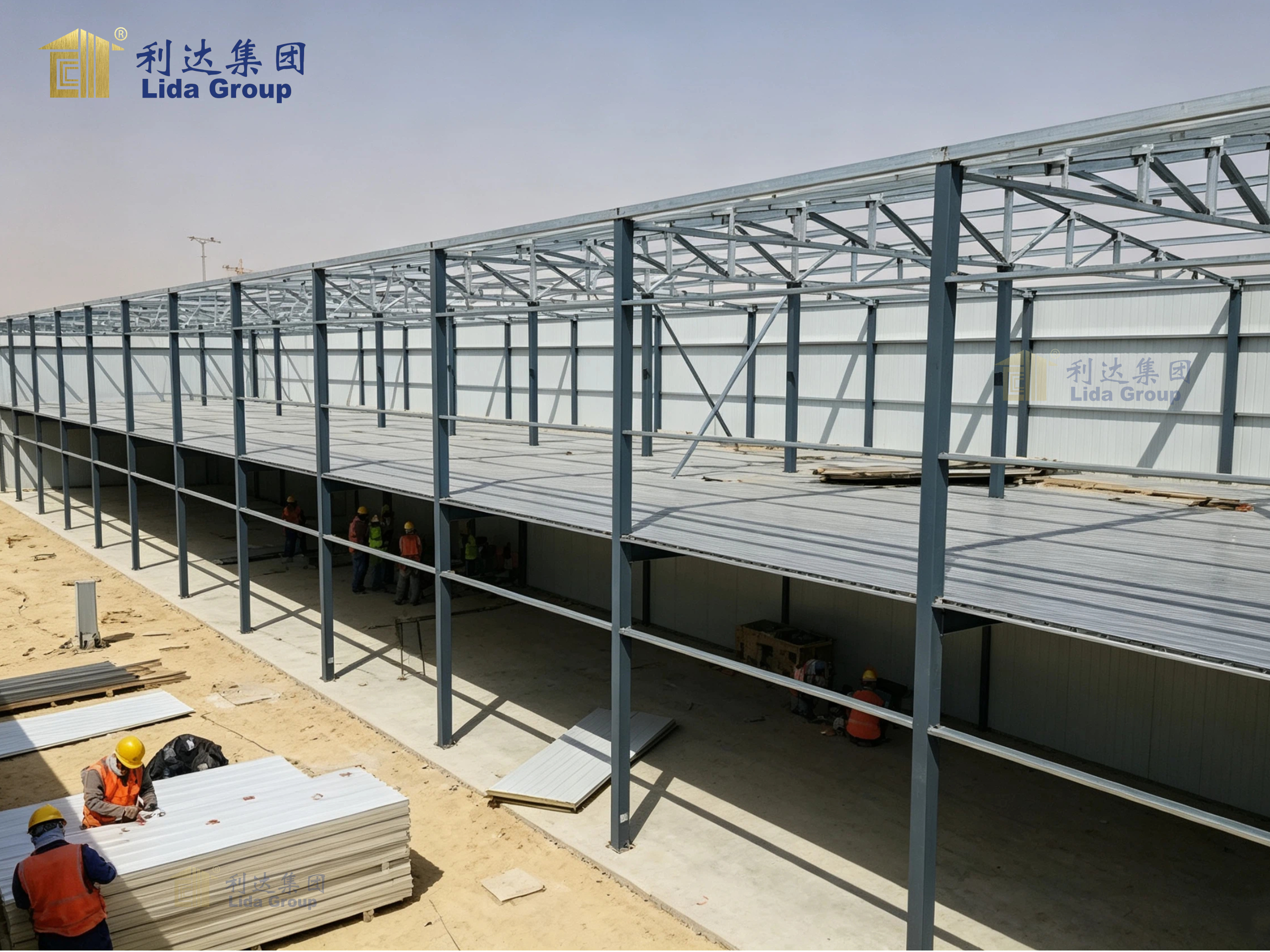
Lida Group has extensive experience in designing, manufacturing, and installing prefabricated buildings for customers worldwide. The company specializes in modular houses, container buildings, steel structures, and integrated accommodation solutions.
With advanced production facilities and professional engineering teams, Lida Group is capable of handling projects ranging from small temporary buildings to large-scale modular complexes.
The company focuses on delivering complete solutions that include:
- Architectural design
- Structural engineering
- Factory production
- Transportation planning
- On-site installation
- Project support
For labor accommodation projects, Lida Group understands that speed, durability, comfort, and cost control are critical factors. Therefore, the company develops customized solutions according to project requirements, local conditions, and customer expectations.
The 200-unit cheap labor dormitory complex project demonstrates Lida Group’s ability to provide efficient housing solutions for large numbers of workers while maintaining high construction standards.
Project Overview: 200-Unit Cheap Labor Dormitory Complex
Meeting the Needs of Large Workforce Accommodation
Large industrial and construction projects often require accommodation facilities for hundreds or even thousands of workers. Providing suitable housing is essential for improving worker satisfaction, project efficiency, and overall management.
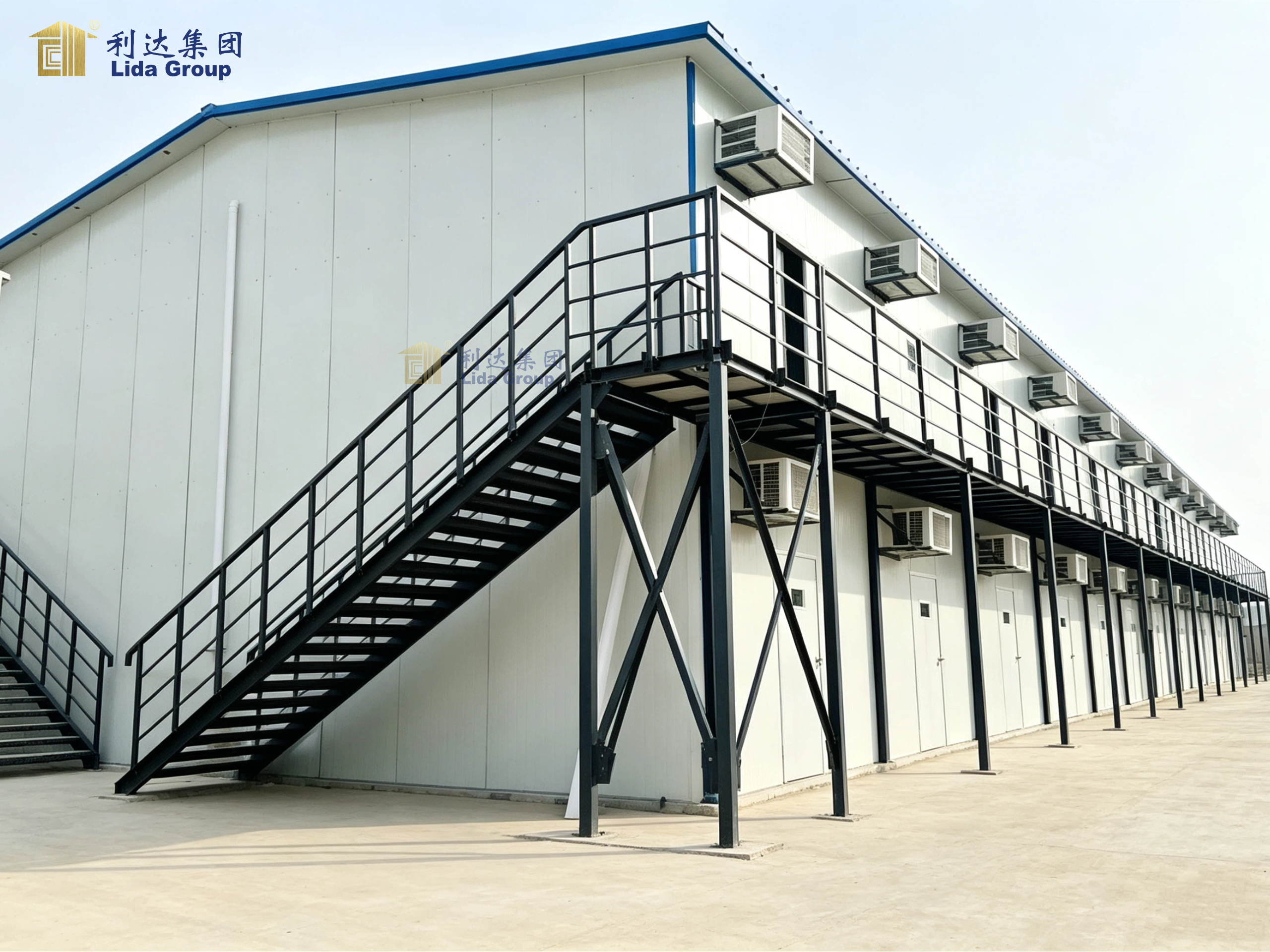
The 200-unit labor dormitory complex designed with Lida Group’s factory-assembled sandwich panel modules provides an effective solution for these requirements.
The project is planned as a complete living community rather than simply a collection of sleeping rooms. The modular design can include:
- Individual dormitory rooms
- Shared bathrooms
- Rest areas
- Dining facilities
- Laundry spaces
- Management offices
- Public activity areas
Through professional space planning, the complex creates a comfortable and organized living environment for workers.
The modular approach also allows future expansion. If additional accommodation is needed, more units can be added without major reconstruction.
Advantages of Factory-Assembled Modular Construction
1. Faster Construction Speed
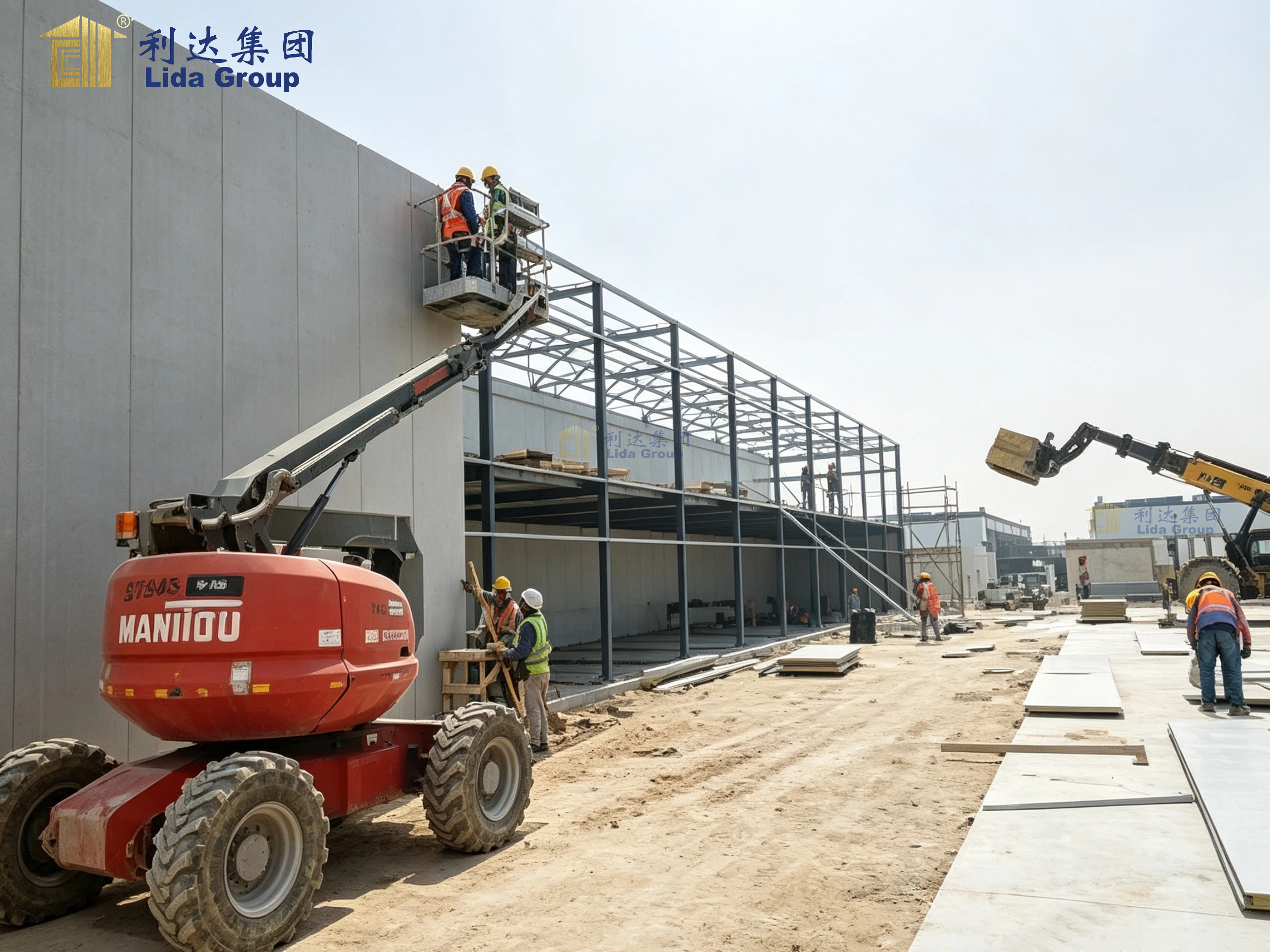
One of the most important benefits of factory-assembled sandwich panel modules is rapid construction.
Traditional buildings require many separate construction stages, including foundation work, structural construction, wall installation, interior decoration, and system installation. These processes often take months or even years.
With modular construction, many components are manufactured simultaneously in the factory while site preparation is carried out.
Once the modules arrive at the project location, installation can be completed quickly.
For a 200-unit dormitory complex, this significantly reduces the overall construction schedule and allows workers to move into the accommodation sooner.
Fast construction is especially valuable for:
- Large construction projects
- Mining operations
- Energy facilities
- Industrial parks
- Infrastructure developments
2. Improved Quality Control
Factory production provides better control over construction quality compared with traditional on-site methods.
In a controlled manufacturing environment, workers can follow standardized procedures and perform detailed inspections at every production stage.
Quality control includes:
- Material inspection
- Structural checking
- Panel installation accuracy
- Electrical system testing
- Interior finishing inspection
Because the production process is standardized, each module maintains consistent quality.
This helps reduce construction errors and ensures reliable building performance after installation.
Comfortable Living Environment for Workers
Designing Accommodation Beyond Basic Shelter
Modern worker accommodation requires more than simple sleeping areas. Companies increasingly recognize that comfortable living conditions contribute to better worker performance and project efficiency.
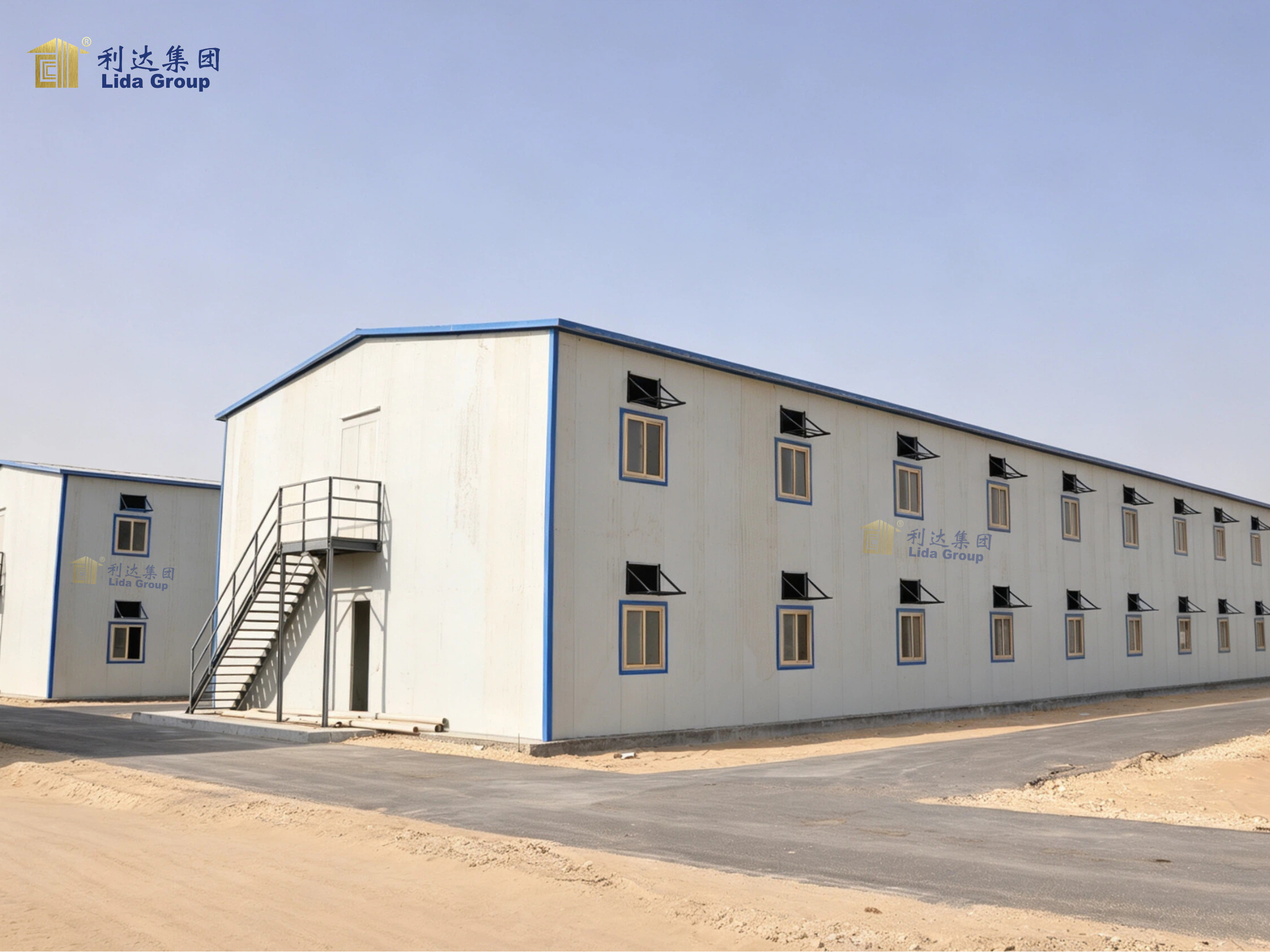
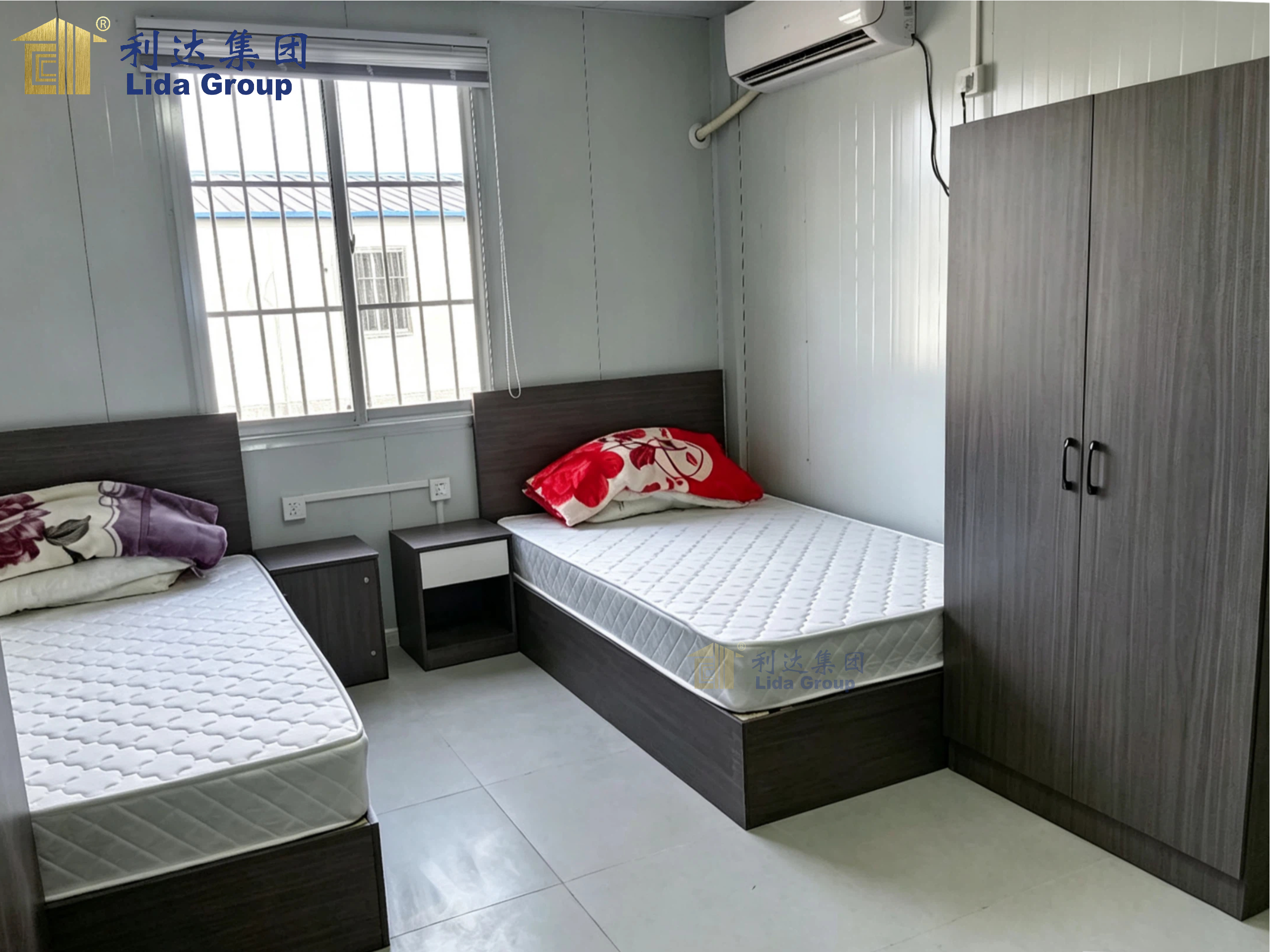
Lida Group’s sandwich panel modular dormitory buildings are designed with worker comfort as an important consideration.
The interior environment can include:
- Good ventilation systems
- Effective thermal insulation
- Comfortable room layouts
- Proper lighting systems
- Functional furniture arrangements
The insulated sandwich panels help maintain indoor temperature stability, making the buildings suitable for different climates.
Whether the project is located in a hot region, cold environment, or area with changing weather conditions, the modular system can be customized to meet local requirements.
Energy Efficiency and Sustainable Construction
Reducing Operating Costs Through Smart Design
Energy efficiency is becoming increasingly important in modern construction. Accommodation buildings consume energy through lighting, cooling, heating, and daily operations.
Lida Group sandwich panel modules provide excellent insulation performance, helping reduce energy consumption.
The insulated walls and roofs help maintain comfortable indoor temperatures and reduce dependence on heating or cooling equipment.
Additional energy-saving solutions can also be integrated, such as:
- LED lighting systems
- Energy-efficient air conditioning
- Solar energy applications
- Smart electricity management systems
By improving energy efficiency, the dormitory complex can reduce long-term operating costs and support more sustainable development.
Structural Performance and Durability
Reliable Buildings for Long-Term Use
Although modular buildings are often associated with temporary accommodation, modern prefabricated structures can provide excellent durability and long service life.
Lida Group’s sandwich panel modular buildings use reliable structural systems designed to withstand various environmental conditions.
Key performance advantages include:
Weather Resistance
The building envelope can be designed to resist rain, wind, temperature changes, and other environmental factors.
Structural Stability
The combination of steel structures and high-quality panels provides strong support and durability.
Low Maintenance Requirements
The materials used in modular buildings are selected for long-term performance, helping reduce maintenance needs.
These features make the dormitory complex suitable for both temporary projects and long-term accommodation applications.
Flexible Design and Customization Options
Creating Solutions Based on Project Requirements
Every project has different requirements. The number of workers, location conditions, budget limitations, and operational needs may vary significantly.
Lida Group provides flexible customization options for modular dormitory projects.
Possible customization includes:
- Room size adjustments
- Different floor layouts
- Various exterior designs
- Customized interior configurations
- Additional functional areas
- Multi-story accommodation solutions
For the 200-unit dormitory complex, the modular design allows the accommodation layout to be optimized according to worker numbers and management requirements.
This flexibility ensures that customers receive a practical solution rather than a standard building package.
Applications of Large-Scale Modular Labor Dormitories
Construction Industry
Construction companies often require temporary housing for workers near project locations.
A modular dormitory complex allows companies to quickly establish accommodation facilities without waiting for traditional buildings to be completed.
Industrial Parks and Manufacturing Facilities
Factories and industrial zones may need employee accommodation, especially in areas where local housing resources are limited.
Prefabricated dormitory buildings provide a fast and economical solution.
Mining and Remote Projects
Mining operations and remote infrastructure projects often face challenges in providing worker housing.
Modular accommodation can be transported and installed in difficult locations, providing safe living spaces for employees.
Installation Process of Lida Group Modular Dormitory Buildings
From Factory Production to Final Operation
The construction process of the 200-unit dormitory complex follows a systematic approach.
Step 1: Project Planning and Design
Engineers analyze project requirements and develop a suitable modular building design.
Step 2: Factory Manufacturing
Sandwich panels, structural components, and building systems are produced under controlled conditions.
Step 3: Transportation
Completed modules and components are transported efficiently to the project site.
Step 4: On-Site Assembly
Professional installation teams assemble the modules and complete connections between systems.
Step 5: Final Inspection and Handover
The completed dormitory complex undergoes quality checks before being delivered for use.
This efficient process ensures smooth project implementation and reliable results.
The Future of Modular Worker Accommodation
Moving Toward Smarter and More Sustainable Solutions
The demand for efficient workforce accommodation will continue growing as global industries expand.
Future modular dormitory solutions are expected to include more advanced technologies, such as smart management systems, renewable energy integration, and improved building materials.
Lida Group continues to explore innovative solutions that combine construction efficiency with better living standards.
Factory-assembled sandwich panel modules represent an important step toward the future of sustainable and intelligent accommodation development.
They provide a balance between affordability, quality, flexibility, and environmental responsibility.
Conclusion: Building Efficient Worker Communities with Lida Group
Lida Group’s factory-assembled sandwich panel modules for the construction of a 200-unit cheap labor dormitory complex demonstrate the advantages of modern prefabricated construction technology.
By combining factory production, efficient installation, high-quality materials, and flexible design, this innovative solution provides a reliable answer to the growing demand for large-scale worker accommodation.
The modular dormitory complex offers fast construction, excellent insulation performance, comfortable living conditions, and long-term durability. It helps companies reduce project costs while improving worker welfare and operational efficiency.
As industries continue to expand and construction requirements become more demanding, modular buildings will play an increasingly important role in global accommodation solutions.
With professional experience, advanced technology, and a commitment to quality, Lida Group continues to create smarter, faster, and more sustainable prefabricated building solutions for customers around the world. The 200-unit labor dormitory complex is not only a practical housing project but also an example of how modern modular construction can support the future of industrial development.
Contact us, please click here!
Post time: Jul-30-2026