
01 Introduction: What Mining Companies Actually Buy
When a mining company procures site accommodation, it is not buying buildings in any ordinary sense. It is buying the ability to mobilize a workforce into a remote location within a defined window, to keep that workforce productive through years of operation across hostile seasons, to expand or contract as the mine plan evolves, and to leave the ground in a condition that satisfies its obligations when the operation finally closes. The buildings are only the means through which those outcomes are delivered, and the companies that buy them know the difference.
Lida Group’s prefabricated house systems are chosen by mining operators for that reason rather than for any single specification. The system is assembled from complete, transportable units built around steel frames, which means the same product can scale up for a peak construction workforce, contract when operations are handed over to a smaller permanent team, and move onward to the next project without being written off. This article sets out why that combination fits the way large mining organizations actually manage a portfolio of sites.
02 The Economics of Uptime
Mining projects are capital-intensive and schedule-driven, which makes accommodation a revenue issue rather than a welfare issue. A camp that is not ready when crews arrive delays the start of production, and every day of delay has a cost that is measured in millions rather than thousands. Equally, a camp that houses an unstable workforce, with high turnover and frequent absence, degrades productivity across the whole operation, because a mine cannot produce at its rated capacity if its shifts are persistently short of people.
This is why serious operators evaluate accommodation on the same basis as plant and equipment: availability, reliability, and cost over the life of the mine. A system that can be installed in weeks rather than seasons, that continues to function through dust and temperature extremes, and that can be extended without a new construction program is worth more than a cheaper alternative that must be rebuilt or repaired continuously. The purchase decision, once framed this way, tends to favor systems over structures, which is exactly where prefabricated unit-based accommodation fits. It also shifts the conversation away from unit price and towards the total cost of housing a workforce for the life of an asset.
03 A System, Not a Building
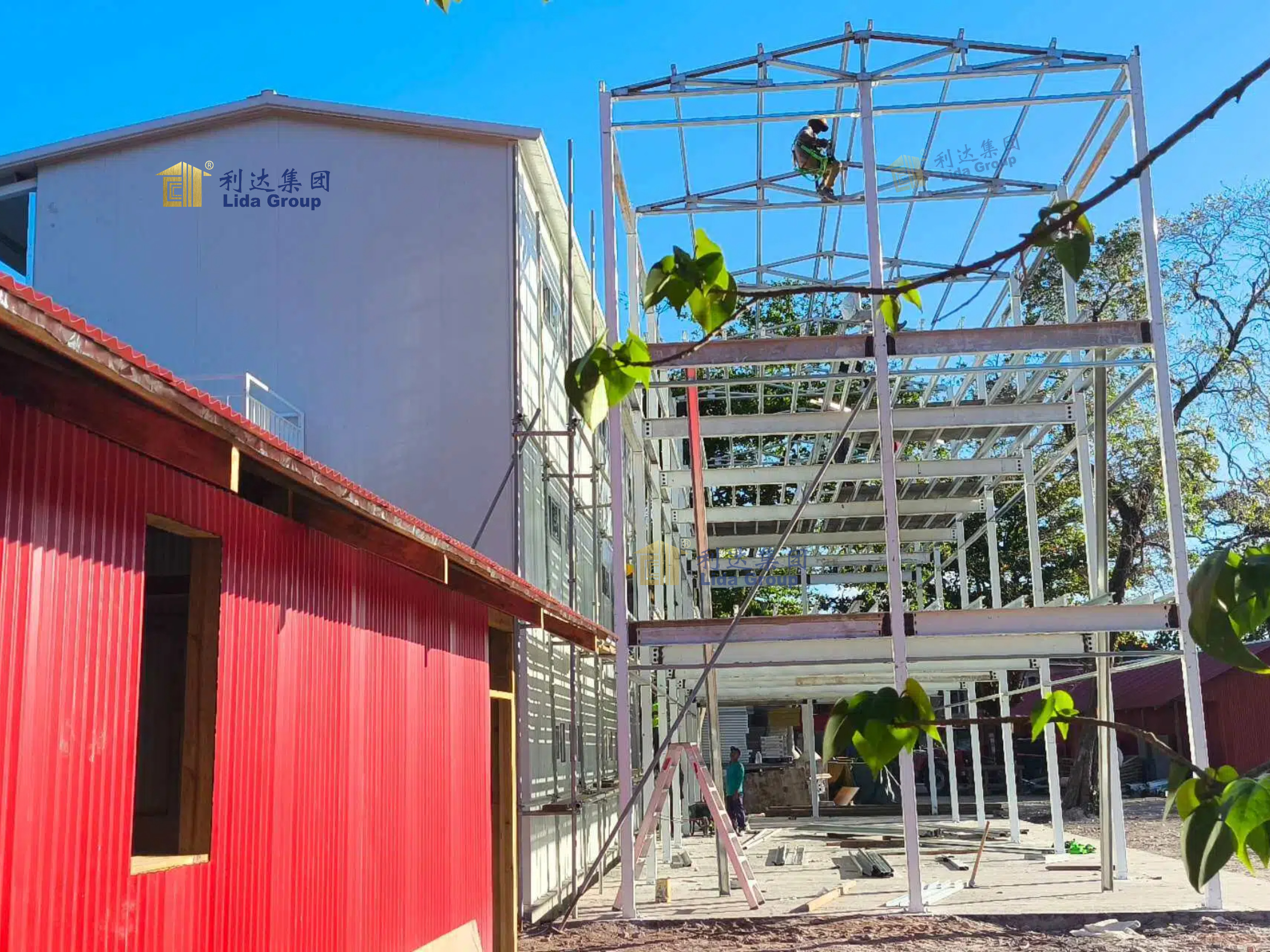
The distinction between a system and a building is the heart of the Lida approach. A conventional camp is designed as a whole, constructed as a whole, and retired as a whole, which means every change requires new design and new work on site. Lida’s accommodation is built from standard units that can be combined into blocks, added to existing camps, removed when no longer required, and reconfigured as the population changes, without revisiting the design that was approved at the start.
For a mining group operating several assets, this changes the nature of the investment. Rather than buying accommodation for one site and writing it off at closure, the group builds a managed stock of units that moves between projects as each one enters its construction phase, its operating phase, or its expansion. Capacity becomes a pool rather than a fixed commitment, and the capital tied up in housing continues to earn across a pipeline of work instead of being consumed by a single mine. Planning also becomes simpler, because the cost of adding a block to an existing camp can be estimated from what previous blocks actually took rather than modelled from scratch each time.
04 Comfort as a Retention Strategy
Mining sites are often located where nobody would choose to live, and the people who work there are making a deliberate trade: good pay in exchange for distance, long rotations, and difficult conditions. That trade holds only if the accommodation respects the people making it. A dormitory that is too hot, too cold, dusty, noisy, or poorly serviced becomes the reason an experienced operator does not return, and replacing experienced people is one of the most expensive things a mine can do.
Lida’s units are engineered for the standard that retention requires. Insulation keeps interiors stable through the temperature swings of a remote site, ventilation maintains air quality and controls humidity, and the sealed envelope keeps dust out of the spaces where people sleep and eat. Layout separates rest areas from communal activity, power and lighting are reliable, and finishes are chosen to withstand continuous occupation rather than looking worn within the first months. Doors, fittings, and surfaces are specified for the wear of a shared building used around the clock, so the standard holds through a full rotation rather than only on the day the camp opens. Comfort of this kind is not decoration; it is the mechanism by which a camp keeps the workforce it has trained.
05 Built for the Geology and the Climate
Every mining region imposes its own version of difficulty. Some are desert, with dust that abrades everything exposed and heat that tests every seal. Some are arctic, with frost that heaves the ground and snow loads that must be carried without deformation. Some are tropical, with humidity that attacks metals and rainfall that finds every weakness in an envelope. A camp system that only performs in moderate conditions is of little use to a company operating across several such environments.
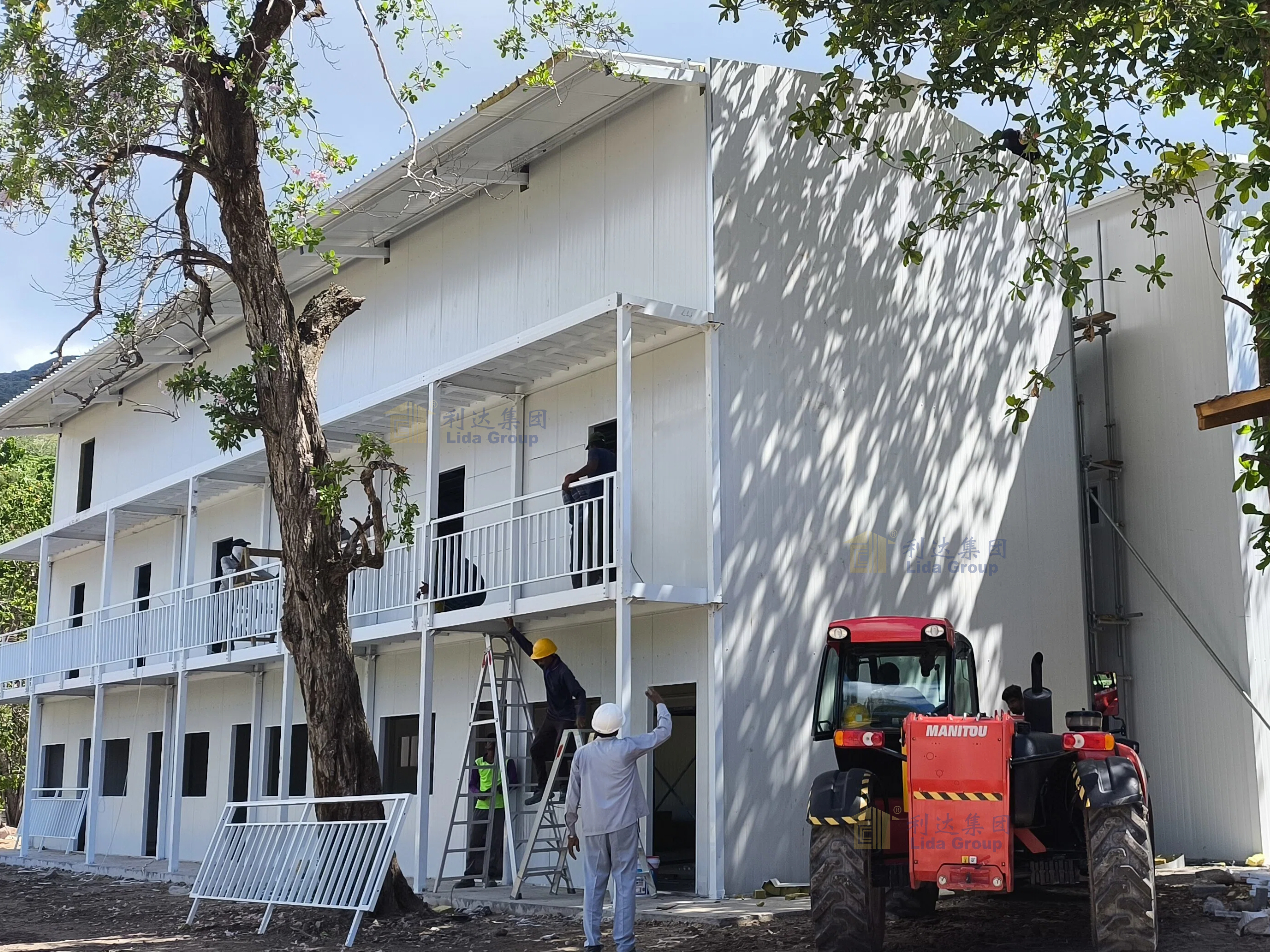
Lida addresses this through the structural frame and the envelope rather than through special variants for each climate. Steel provides strength and dimensional stability under load, and does not rot, warp, or attract pests in any of these settings. The envelope is detailed to resist water ingress, and insulation is specified against local conditions so that the same basic unit delivers a stable interior whether the outside is at fifty degrees or minus thirty. That consistency across regions is a practical advantage for a group that moves assets between sites.
06 Speed at Mobilization
Mobilization is the point of greatest schedule risk on any mining project, because there is no earlier phase to absorb slippage. Crews must arrive, be housed, be fed, and be put to work, and every element depends on the accommodation being ready first. Conventional construction cannot compress this window, because building a camp takes seasons regardless of how urgently it is needed. Prefabrication can, because the manufacturing happens elsewhere while the ground is being prepared.
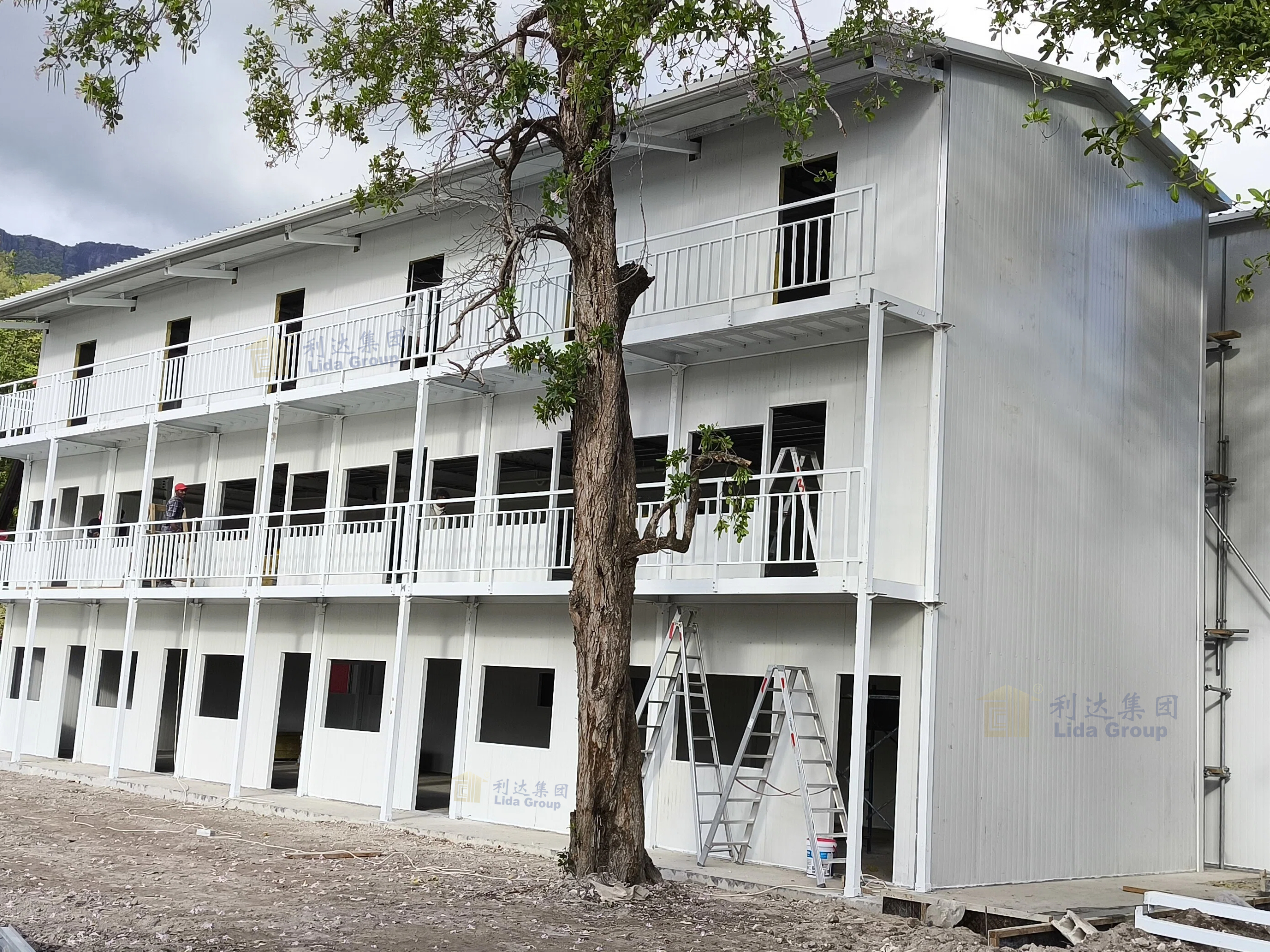
Lida’s units leave the factory complete and tested, so site work is limited to placement, securing, and connection to services. A block can be brought into service in days rather than months, which means mobilization proceeds on the date the plan requires rather than the date the camp happens to be finished. Because the units arrive with their internal fit-out already in place, there is no secondary trade to sequence after the shell is up, and no period in which a building exists but cannot be used. For an organization whose reputation with partners and investors depends on delivering projects on schedule, that responsiveness at the very start of a project is worth a great deal more than a marginal saving on unit price.
07 Reuse Across a Portfolio of Sites
The strongest argument for prefabricated accommodation emerges over a decade rather than a single contract. Mines are developed, expanded, and eventually closed, and a group with several assets in different stages has a continuous need for accommodation that moves with the programme. Units released from a site entering its operating phase can be transferred to a site entering construction, and units from a closing operation can serve an expansion elsewhere, so the same housing stock keeps working instead of being abandoned.
This requires durability that survives repeated relocation and a standard that stays consistent across years of manufacture. Lida builds units around steel frames engineered for transport and handling, with lifting points and reinforced corners, and produces them under factory procedures that keep quality even across long production runs. A unit added in the fifth year of a program matches the units installed at the start, so a camp assembled from a mixed pool still performs as one coherent system rather than a patchwork of generations. Service connections are kept to a consistent pattern as well, which means a camp can be re-planed around new arrivals without re-engineering the utilities layout each time.
08 Serviceability Far From Support
Remote sites cannot call on a nearby contractor when something fails. Maintenance is performed by the team that is on site, using the spares that were brought in, following procedures that must be simple enough to apply without specialist depth in every trade. A camp system that requires manufacturers’ technicians for routine work is a liability in that environment, however well it performs when new. The practical test is whether an ordinary site fitter can restore a failed service before the shift ends, and whether the parts needed to do it are already in the store rather than on an order form.
Lida’s system is designed for local serviceability. Units share a common design, so spares overlap and procedures repeat across the whole camp, and components that wear can be replaced individually rather than requiring an entire building to be rebuilt. Documentation is consistent, which means a new maintenance supervisor inherits a known system rather than an undocumented one, and the same drawings apply to every block on site regardless of when it was delivered. For an operator measuring the true cost of accommodation over a mine’s life, this reduction in maintenance burden is often the deciding factor, because it converts an unpredictable expense into a routine one.
09 Conclusion: Why the System Wins
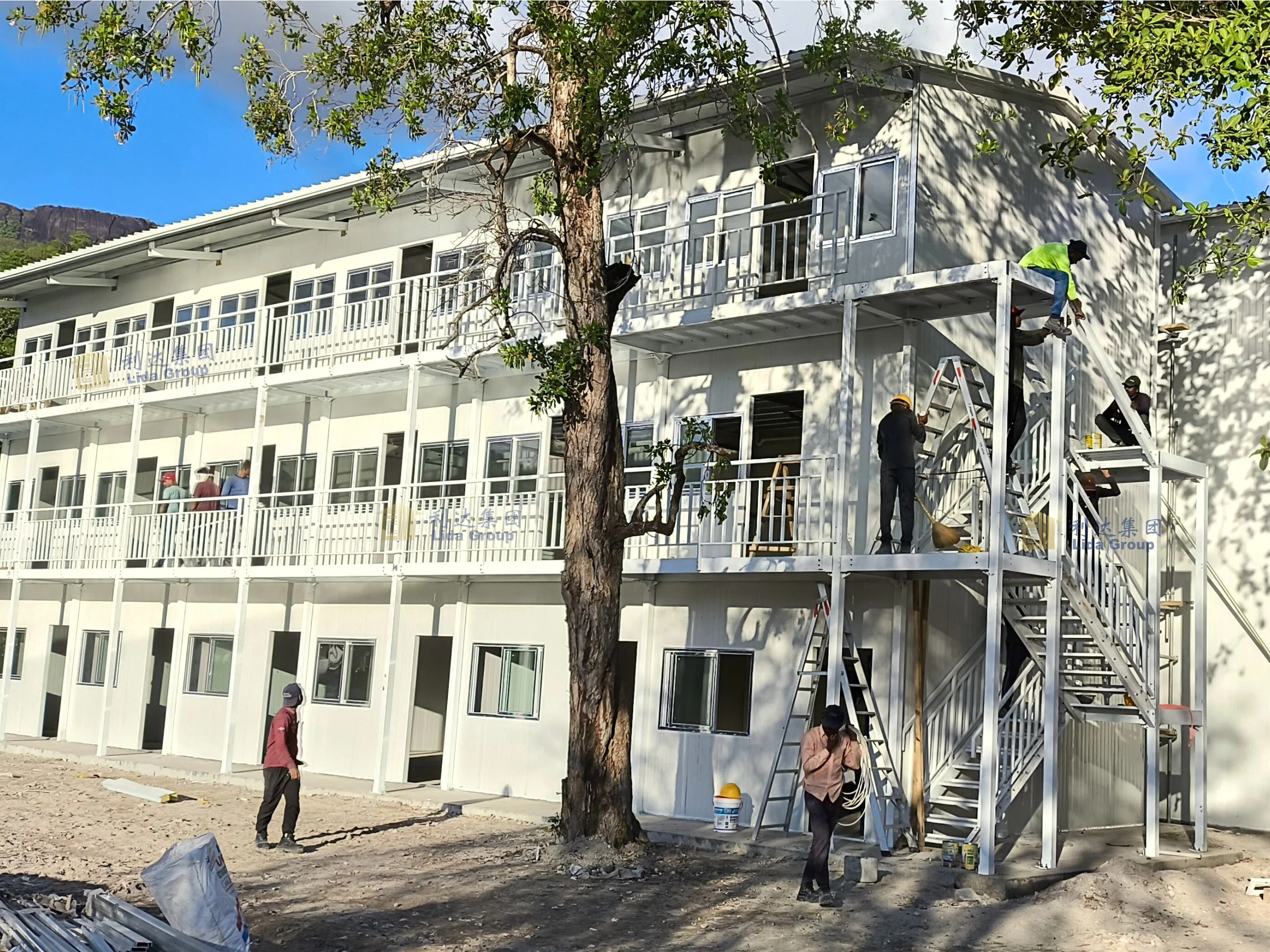
Mining giants choose Lida prefabricated house systems because the decision is about the operation rather than the building. A system that installs quickly protects the mobilization schedule, one that holds its comfort protects the workforce, one that survives climate and relocation protects the capital, and one that can be serviced locally protects the daily running of a camp that may be hundreds of kilometers from any support network. Each of these advantages is significant alone, and together they make the case for accommodation as infrastructure rather than as a temporary purchase.
The result is a camp that behaves like an asset under management. Capacity can be added when a project expands and recovered when it contracts, units can move between sites as a portfolio evolves, and the same standard applies wherever they stand. For organizations that must house a workforce in difficult places for years at a time, that combination of speed, durability, comfort, and reuse is not a set of features to be compared line by line. It is a different way of owning site accommodation, and it is the reason the system has become the default choice for operators who intend to keep building.
Post time: Nov-18-2026