
Community hospitals serve as the cornerstone of grassroots public health systems, providing residents with convenient daily medical treatment, health screening, chronic disease management and emergency preliminary diagnosis services. In rapidly expanding urban and suburban areas, the shortage of local medical facilities has long been a prominent problem affecting people’s livelihood. Traditional hospital construction relies on cast-in-place concrete processes and full on-site construction modes, which are plagued by long project cycles, vulnerability to weather interference, and complicated on-site procedures. Most conventional community hospital projects require more than a year of construction, delaying the supplementation of regional medical resources and failing to respond timely to growing resident health needs. To resolve this dilemma, modern medical construction projects are increasingly adopting prefabricated steel component systems to replace traditional building methods. This innovative construction mode greatly compresses the overall construction cycle of community hospitals, enabling formal medical service opening months ahead of schedule while ensuring building safety, functional standardization and long-term operational stability.
The inherent limitations of traditional hospital construction are the core reason for prolonged project delivery and delayed medical service launch. Traditional concrete building construction involves multiple sequential processes including foundation maintenance, steel bar binding, concrete pouring, long-term curing, and gradual enclosure and decoration construction. Each process requires strict waiting periods for structural solidification and quality stabilization, resulting in unavoidable construction intervals. In addition, outdoor construction is easily affected by rainy seasons, low temperature weather and seasonal climate changes, often leading to project suspension and schedule delays. Hospital buildings have stricter requirements for structural precision, functional zoning and environmental hygiene than ordinary civil buildings, and traditional on-site manual construction is prone to dimensional deviations, repeated revisions and low construction efficiency. Moreover, the long-term occupation of construction sites increases labor costs, site management expenses and material loss, bringing higher economic and time costs to medical infrastructure investment. For community public health projects with strong public welfare and urgent service demands, such slow construction modes cannot match the rapid iteration of urban resident health needs.
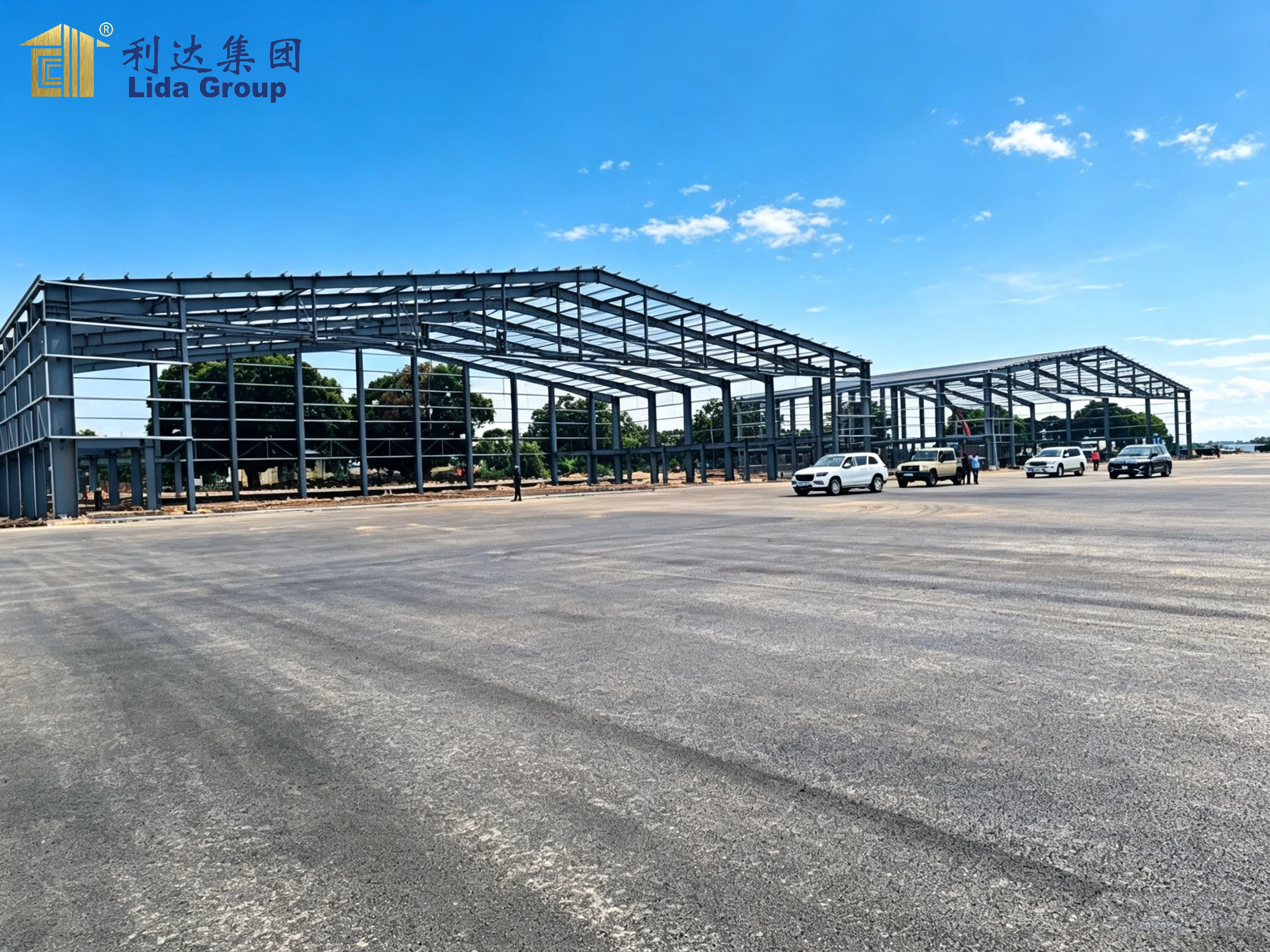
Prefabricated steel component construction thoroughly subverts the sequential construction logic of traditional buildings and realizes fundamental breakthroughs in construction efficiency. Different from traditional full on-site operation modes, this advanced building system realizes centralized factory prefabrication of almost all core building components, including steel frame beams, columns, floor decks, prefabricated wall panels and standardized auxiliary structures. All components are processed, polished, anti-corrosion treated and pre-assembled in a closed and standardized factory environment. Precision mechanical processing and unified production standards ensure accurate component sizes and stable structural performance, eliminating quality fluctuations caused by on-site manual operation and weather changes. While the factory completes component production, the construction team can simultaneously carry out on-site foundation construction, site leveling and pipeline pre-burial work. This parallel working mode completely saves the waiting time of traditional step-by-step construction and greatly shortens the overall project cycle.
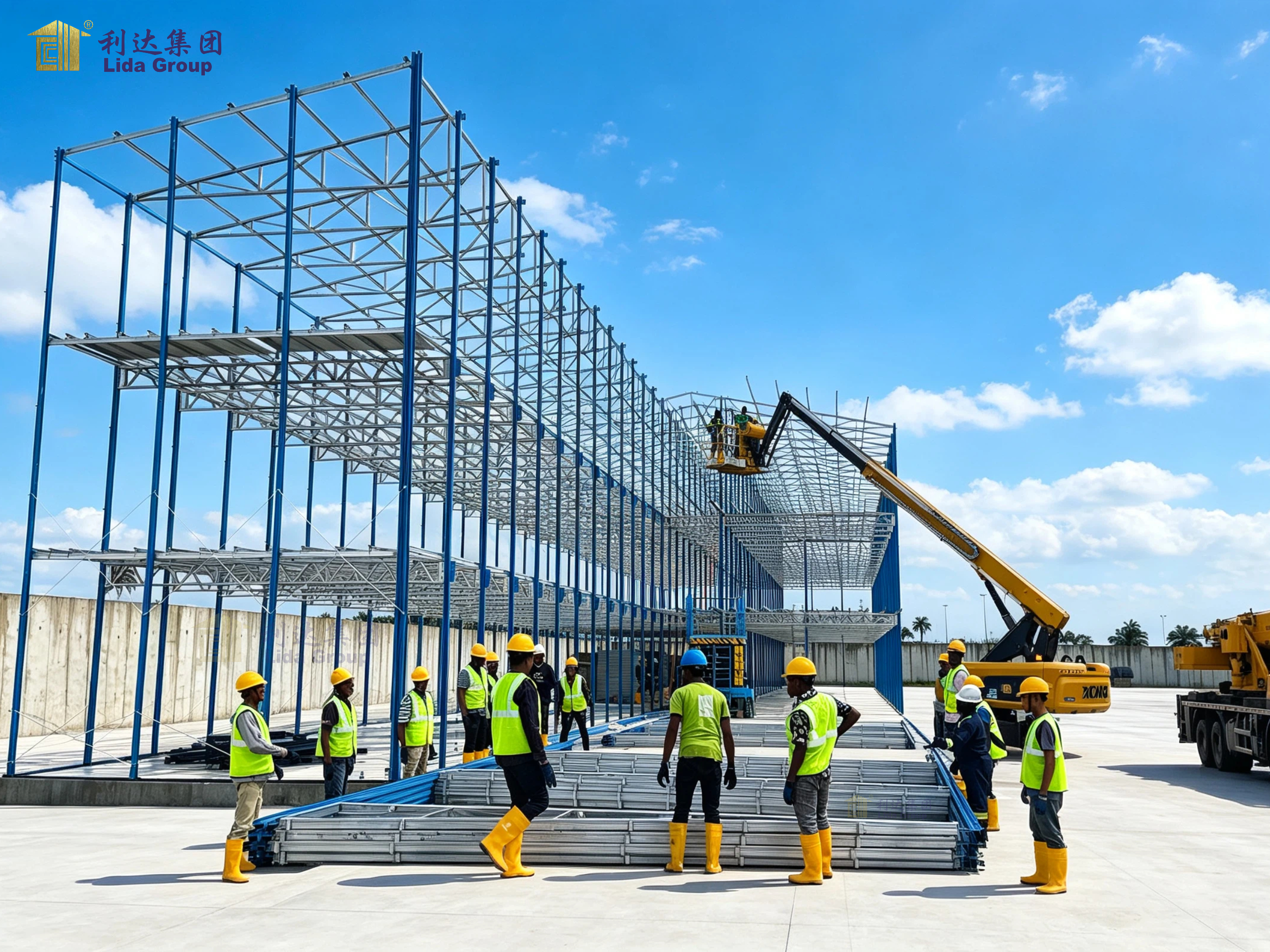
In the construction of the new community hospital, the application of prefabricated steel components brings extremely obvious time advantages. Statistical comparison with similar traditional medical building projects shows that the prefabricated steel construction mode reduces the overall project duration by nearly 40% compared with concrete construction. Most importantly, this time optimization is concentrated in the key construction stage that determines the opening time of medical services. The on-site construction process of the steel structure hospital is mainly based on hoisting and bolt assembly, which eliminates a large number of wet operations such as concrete pouring and plastering that require long curing cycles. After the completion of foundation construction, the on-site assembly of the main steel frame can be completed in a short period, and the enclosure structure and interior functional partitioning can be implemented simultaneously. The overall construction progress is stable and efficient, without frequent delays caused by environmental factors, allowing the entire hospital project to complete main structure closing, internal decoration and facility debugging several months earlier than traditional schemes.
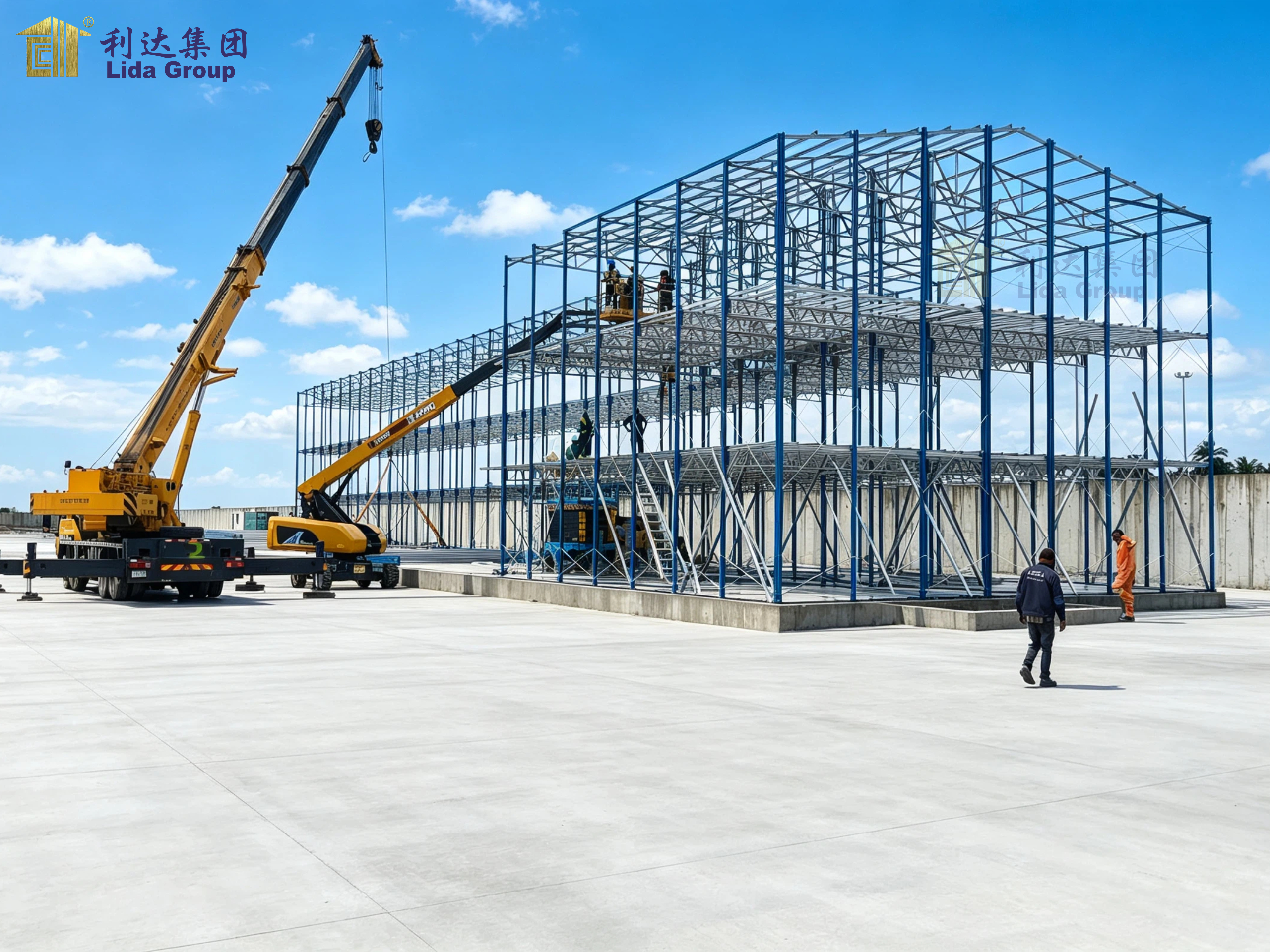
Beyond efficient construction, prefabricated steel components fully meet the strict safety and functional standards of modern community hospitals. Medical buildings have high requirements for structural stability, seismic performance, space flexibility and environmental safety. The high-strength galvanized steel frame adopted in the project has excellent overall rigidity and uniform force distribution, which can effectively resist wind load, seismic vibration and long-term building load operation. Compared with concrete structures that are prone to cracking and deformation, steel structures feature better ductility and structural stability, creating a safe and reliable medical space for patients and medical staff. All steel components undergo professional anti-corrosion and weather-resistant treatment, avoiding structural aging and rust problems, and ensuring the long-term safe operation of hospital buildings.
In terms of medical functional design, the modular characteristics of prefabricated steel structures provide flexible space layout advantages for community hospitals. The steel frame system adopts large-span and few-pillar design, which breaks the space limitation of traditional concrete structures with dense columns and small spacing. It can freely divide functional areas such as outpatient rooms, observation rooms, examination rooms, nursing areas and public service halls according to medical process standards. The neat and open indoor space is not only conducive to standardized medical work deployment, but also convenient for later equipment upgrading and functional area adjustment, adapting to the continuous improvement of community medical service capabilities. At the same time, the matching insulated enclosure panels have excellent thermal insulation, sound insulation and antibacterial and easy-to-clean properties, meeting the high environmental hygiene requirements of medical venues and creating a comfortable and sterile medical environment.
The early completion and opening of the community hospital brought by prefabricated steel construction has important practical value for regional public health construction. For local residents, the advance launch of medical services makes up for the lack of grassroots medical resources in the area, enabling residents to enjoy convenient daily medical treatment, health examination and chronic disease management services nearby, reducing the time and economic cost of seeking medical treatment across regions. For the urban public health system, the early operation of community hospitals optimizes the hierarchical medical service system, effectively diverts the patient flow of large general hospitals, and improves the efficiency of regional medical resource allocation. In emergency public health scenarios, the newly built hospital can quickly undertake grassroots screening, preliminary diagnosis and resident health guarantee work, improving the emergency response capacity of the regional public health system.
In terms of project economy and green construction, prefabricated steel component construction also shows outstanding advantages. Factory standardized production greatly reduces material waste generated by on-site cutting and modification, and the assembly construction mode reduces construction dust, noise and sewage discharge, meeting the green and low-carbon construction standards of public infrastructure. The shortened construction cycle significantly reduces comprehensive costs such as on-site labor, site leasing and project management, improving the cost performance of medical infrastructure investment. In addition, the steel structure building has a long service life and low later maintenance cost, which can maintain stable operation of medical services for a long time and create sustained public welfare value for the region.
Conclusion
In summary, the application of prefabricated steel component systems fundamentally solves the pain points of long cycle and low efficiency in traditional community hospital construction. Through off-site factory prefabrication and on-site rapid assembly, coupled with parallel multi-process operation modes, this construction technology greatly compresses the project construction cycle, enabling the new community hospital to complete construction, debugging and service launch months earlier than traditional concrete buildings. While achieving efficient construction, the prefabricated steel structure also ensures superior structural safety, flexible space layout and excellent environmental performance, fully meeting the professional and standardized operation requirements of modern grassroots medical institutions. The early opening of medical services effectively supplements local grassroots medical resources, optimizes regional public health service layout, and brings tangible convenience and health guarantees to residents. With the continuous upgrading of urban public health infrastructure, prefabricated steel construction technology will become the mainstream choice for community medical building projects, providing efficient, safe and sustainable construction solutions for the rapid improvement of global grassroots medical service capabilities.

Post time: Sep-10-2026