
01 Introduction: The Camp That Has to Grow With the Project
Remote camps have always been shaped by the projects they serve, and those projects are changing. A mine that starts with a small exploration team may grow into a full-scale operation within a few years. An oil field may expand as new reserves are confirmed, then contract as production matures. A pipeline or infrastructure program may open several sites in sequence and shift its workforce from one to the next. A camp that is fixed in size and location cannot keep up with this rhythm, which is why scalability has become one of the defining requirements of modern remote living.
Lida Group has built its container living and rest units around exactly this requirement. Rather than treating the camp as a single finished building, the company designs it as a system of units that can be added, removed, rearranged, and relocated as the project evolves. This article explores how that scalable approach works, why it matters for the way remote camps are likely to develop, and what it means for operators who must plan housing that is not just adequate for today but flexible enough for the years ahead.
02 From Fixed to Flexible: What Scalability Really Means
Scalability in a remote camp is often misunderstood as simply buying more units when the workforce grows. In practice it is a good deal more than that. A truly scalable camp must be able to change in size, in configuration, and in location without losing the quality of the living environment or the efficiency of its operation. It must expand quickly when a project ramps up and contract without leaving stranded assets behind. It must also be able to move when the work moves, which is common in industries where reserves are exhausted or construction phases come to an end.
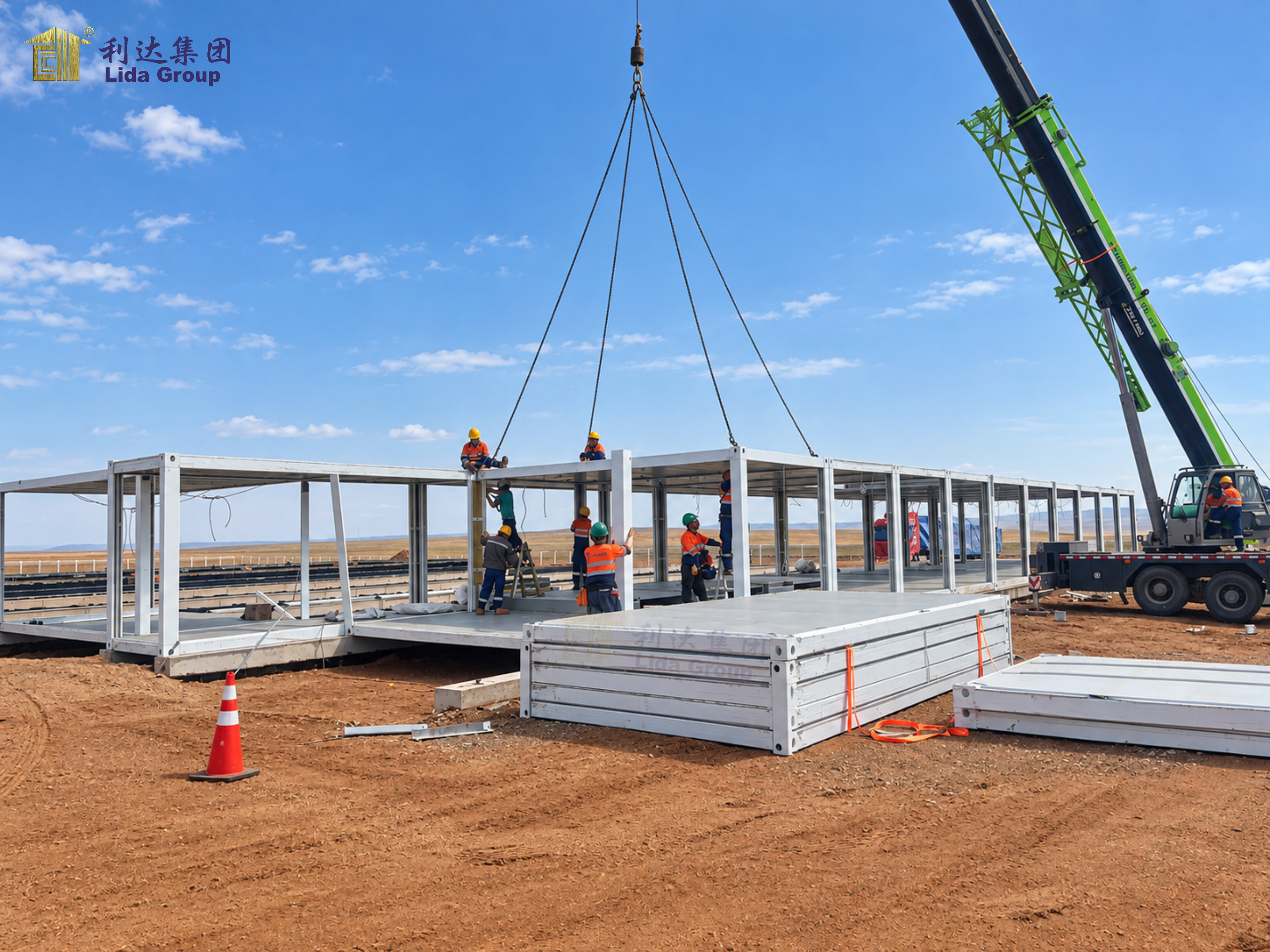
This is why the container format suits the future of remote camps so well. A container unit is self-contained, structurally complete, and transportable, which means a camp is not a monolithic building but an assembly of parts that can be recombined. Lida designs its living and rest units as standard modules that fit together predictably, so that a camp can be planned as a set of building blocks rather than a single fixed structure. That flexibility is the foundation on which everything else in a scalable camp depends, from the speed with which new capacity can be added to the ease with which an entire camp can be picked up and moved to the next site.
03 Units Designed for Living, Not Just Sleeping
The word accommodation often hides the real requirement, which is that people must actually be able to live in a remote camp for months at a time. A scalable camp that offers only a place to sleep will struggle to hold a workforce, no matter how easily it can be expanded. Lida’s units are designed with this in mind, treating the living environment as a system rather than a set of rooms. Sleeping quarters give each worker personal space, storage, and a degree of privacy, while shared areas provide room for cooking, eating, and relaxing after a shift.
Comfort is built into the design through the building envelope and the interior layout together. Insulation and climate systems keep the interior at a comfortable temperature in hot and cold conditions alike, ventilation supplies fresh air and controls humidity, and careful planning reduces noise between berths so that rest is not disturbed by activity elsewhere. Shading and considered orientation reduce the load on cooling in hot climates, while airtight detailing and effective seals prevent the condensation that damages buildings in cold ones. Clean, well-equipped sanitary facilities complete the picture, ensuring that daily routines remain simple even far from any town. When these elements work together, a container unit becomes a genuine home away from home rather than a temporary shelter.
04 Living and Rest Units in the Wider Camp System
A remote camp is not made of accommodation alone. It also needs the spaces that support daily life and the smooth running of the site: sanitary facilities, kitchens and dining areas, welfare and recreation spaces, and the utility and storage buildings that keep everything operating. Lida approaches these as parts of one integrated system rather than separate purchases, so that all units share the same construction standards, materials, and service requirements. This integration is what allows a camp to grow coherently rather than as a patchwork of unrelated buildings.
Because every unit is built to the same standard, expansion does not dilute quality. When a camp adds a new rest block or a new dining hall, it inherits the performance the existing camp already relies on, and the operator does not have to manage a second set of systems or a different maintenance routine. This consistency is quietly important in a scalable camp, because it is what makes repeated expansion practical. A camp that must relearn its own building systems with every new phase is a camp that is scaling in name only.
05 Speed: Scaling Without Waiting for Construction
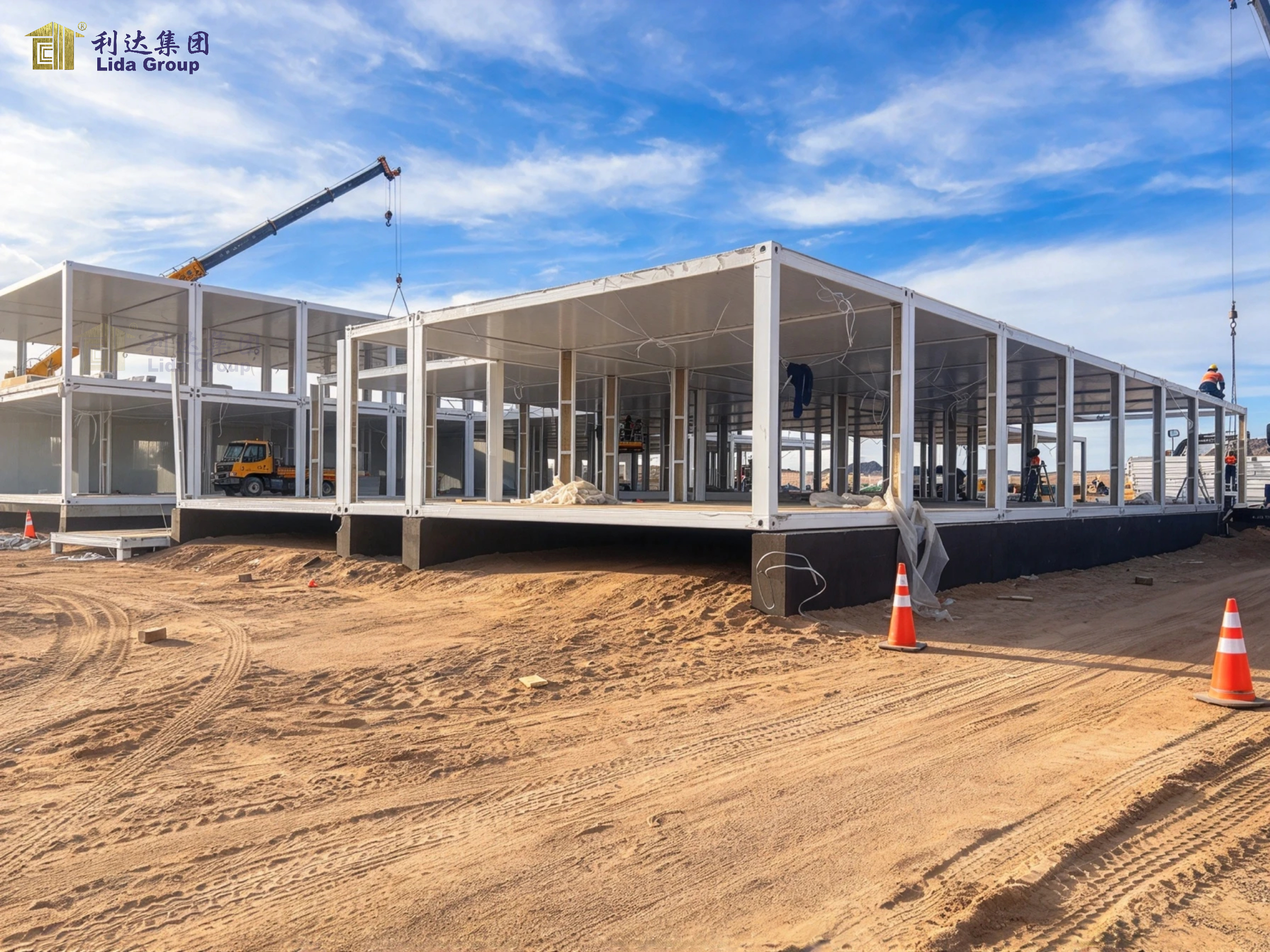
Scalability is only useful if it can happen quickly. In a remote project, the moment when a camp needs more capacity is usually the moment when more workers are arriving, and there is rarely time to build in the conventional way. Lida manufactures its units in a controlled factory and delivers them to the site ready for rapid assembly, so additional capacity can be brought online in a fraction of the time required for site-built accommodation. Workers position the units, secure them, and connect the services, and the expanded camp is ready to occupy.
This speed changes how a camp is planned. Instead of building for a forecast that may prove wrong in either direction, an operator can start with the capacity that is needed now and add more as the project progresses. That approach reduces the risk of overbuilding, which wastes money on space that may never be used, and of underbuilding, which forces expensive temporary arrangements. Because expansion is quick and predictable, the camp can track the project’s actual needs rather than its best guess, which is a more disciplined way to spend a housing budget.
06 Relocation: Preserving Value When the Work Moves
Perhaps the most valuable quality of a container-based camp is that it does not have to be abandoned when a project ends. Mines close, fields mature, and construction programs move on, and a conventional building left behind is a sunk cost. A Lida camp, by contrast, can be dismantled and relocated to the next site, carrying its value with it. The same units that housed one workforce can house another hundreds of kilometers away, which turns housing from a one-time expense into a reusable asset.
Relocation also supports the way remote operations are increasingly structured. Companies that run several sites in sequence can treat their camp as a mobile resource, moving it to wherever the next phase of work begins. This reduces the capital spent on new housing for every project and shortens the time needed to establish a camp at a new location, because the units arrive complete and can be set in place without a fresh construction program. For an industry that must respond to shifting reserves and changing programs, the ability to move a camp intact is a practical advantage that conventional construction simply cannot offer.
07 Durability and Reliability at Scale
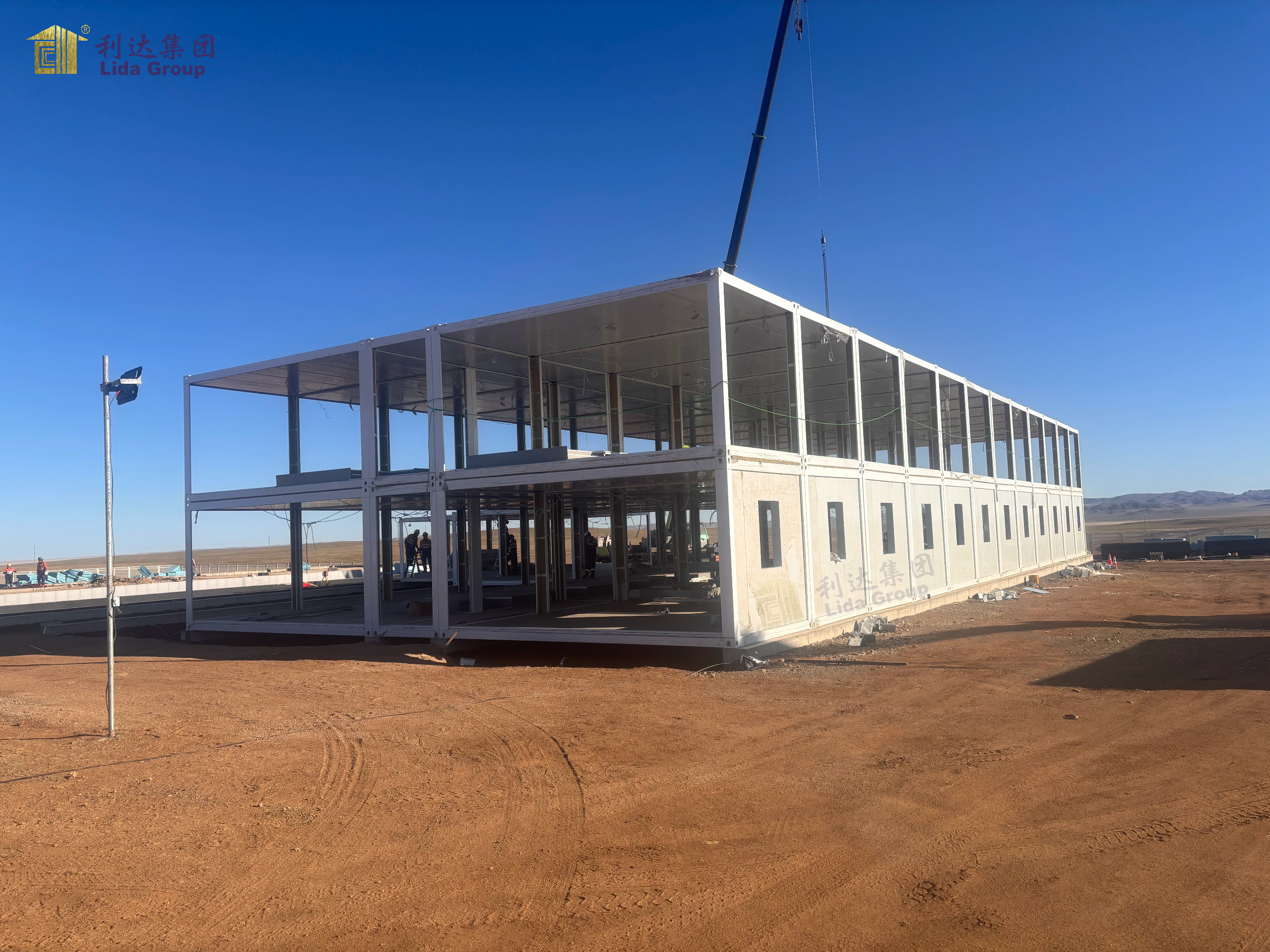
A scalable camp must be durable, because it will be used hard and reused many times. Lida builds its units around a structural steel frame chosen for its strength and longevity, engineered to withstand the loads of wind and snow as well as the rough treatment of repeated transport and installation. Steel does not rot, warp, or attract pests as some materials do, and it holds its integrity through years of service. This durability is what makes repeated reuse possible, and reuse is central to the economics of a scalable camp.
Factory fabrication reinforces this reliability. Because each unit is built indoors under controlled conditions, with established procedures and quality checks at every stage, the finished product arrives with a consistency that site-built construction rarely achieves. Seals are applied properly, insulation is installed as designed, and systems are tested before shipment. For an operator who will add units over many years and move them across multiple sites, this predictability is what makes a scalable strategy dependable rather than risky.
08 A More Sustainable Way to House a Workforce
Scalability also has a sustainability dimension that is becoming more relevant to how remote camps are planned. A camp that can be expanded to match actual need avoids the waste of building capacity that stands empty, and a camp that can be relocated avoids the waste of abandoning a functioning building at the end of a project. Both of these reduce the material and energy that a project consumes in housing its workforce, and both follow directly from the container approach.
Efficiency in operation adds to this. Well-insulated units with efficient climate systems use less energy, which matters most in remote locations where fuel must be transported at great expense. Durable finishes simplify maintenance and extend the working life of every unit. None of these measures is dramatic on its own, but together they make a scalable container camp a leaner way to provide housing than a series of one-off buildings, each constructed and then discarded as a site changes hands.
09 Conclusion: The Camp as a Living System
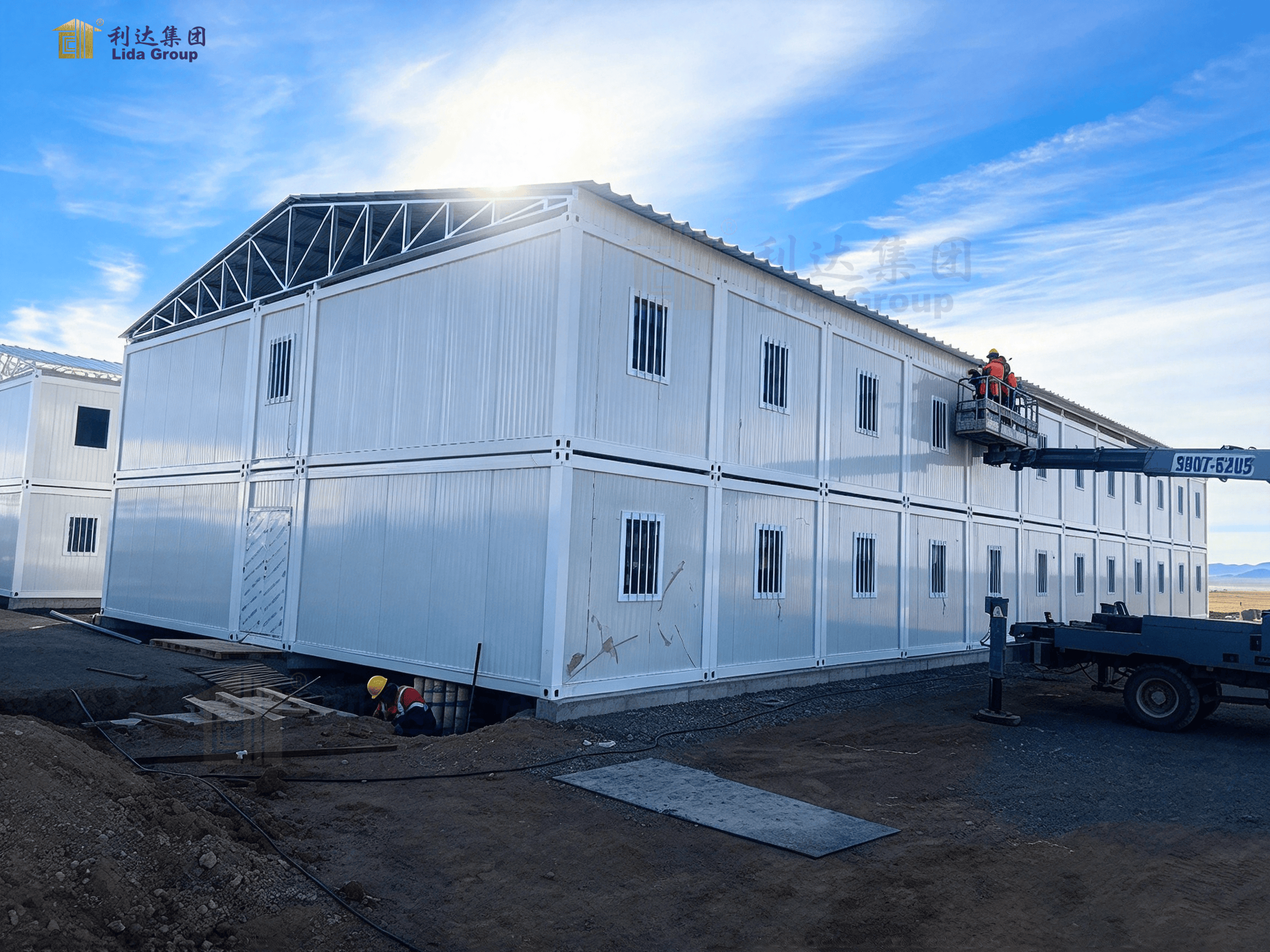
The future of remote camps lies in treating housing not as a fixed structure but as a living system that grows, adapts, and moves with the project it serves. Lida’s scalable container living and rest units make this possible. Their modular design allows a camp to be expanded, reconfigured, and relocated without losing quality or efficiency, while their comfortable interiors ensure that workers are housed well enough to stay and perform. Durability and factory consistency make repeated reuse dependable, and the integration of all units into one coherent system keeps a growing camp simple to operate.
For operators who must plan housing in an industry of shifting sites and changing workforces, this approach offers a more disciplined way to spend a housing budget. Capacity can follow actual need rather than a forecast, assets can be carried from one project to the next instead of being written off, and the environmental cost of building and discarding housing is reduced. In the end, the value of Lida’s scalable camp lies not just in the units themselves but in the flexibility they give an operator to plan with confidence, knowing that the camp can become whatever the project requires, now and in the years to come.
Post time: Nov-05-2026