
Introduction
The global construction industry stands at a critical inflection point. As urban populations swell, as climate change intensifies the frequency of natural disasters, and as the demand for workforce housing continues to escalate across infrastructure, mining, and energy projects worldwide, the need for sustainable, scalable, and rapidly deployable building solutions has never been more urgent. For decades, the industry has relied on traditional construction methods that are slow, wasteful, and environmentally damaging. Conventional temporary buildings—from crude wooden huts to low-grade color steel cabins—suffer from universal drawbacks including toxic building materials, poor thermal insulation, insufficient weather resistance, low reusability, and excessive construction waste.
Recognizing these persistent challenges, Lida Group—a global leader in modular and prefabricated construction established in 1993—has taken a decisive step forward. In May 2024, the company announced the opening of a new advanced manufacturing plant in Shandong Province, China, specializing in the mass production of standardized wall, roof, and floor panels via recycled composite sandwich construction. This 100,000-square-foot facility represents a significant milestone in the company’s ongoing commitment to advancing off-site building systems that support dignified living at scale.
The new factory leverages automated panelization technology that combines recycled plastics with structural insulated core materials such as foam insulators. Proprietary formulations developed in-house optimize strength, insulation, and moisture resistance from waste feedstocks and minerals, significantly reducing embodied carbon footprints compared to competing products. This article examines the facility’s transformative potential, the technology behind it, and its implications for affordable prefabricated dormitory housing communities worldwide.
Lida Group: A Legacy of Innovation
Founded in 1993, Lida Group has evolved from a provider of camp solutions and office containers for China’s oil and gas industry into a National High-Tech Enterprise integrating research and development, design, production, marketing, construction, and service. The company has introduced a complete set of internationally advanced production lines for steel structure buildings, prefabricated houses, and light steel villas.
With over three decades of industrial research and development and engineering experience, Lida Group has completed more than 5,000 diversified construction projects spanning 155 countries and regions worldwide. The company operates six dedicated production lines for container modular houses and eight independent production lines for steel structure supporting facilities. Its main products include large-scale labor camps, steel structure buildings, light steel villas, container houses, prefab houses, and other integrated buildings.
Lida Group’s commitment to quality is validated through comprehensive certifications including ISO9001 (quality management), ISO14001 (environmental management), and ISO45001 (occupational health and safety), along with SGS and CE certification. The company’s products have been exported to more than 145 countries and regions, serving as critical infrastructure solutions for governments, NGOs, and private sector partners worldwide.
The Composite Sandwich Panel Revolution
At the heart of Lida Group’s new facility lies an advanced approach to building component manufacturing: recycled composite sandwich panel technology. This construction method represents a fundamental departure from conventional building practices, offering a combination of performance, sustainability, and efficiency that traditional materials simply cannot match.
Sandwich composite panels have gained attention in recent years as versatile solutions offering lightweight structures, high strength, and adaptability in construction applications. Lida Group’s panels adopt a scientific three-layer composite structure composed of anti-corrosion galvanized steel outer plates, high-performance flame-retardant insulation core materials, and formaldehyde-free inner decorative layers. All raw materials comply with international green building certification standards, achieving zero toxic emission, excellent weather adaptability, energy-saving operation, and recyclable utilization.
The proprietary formulations developed by Lida Group optimize strength, insulation, and moisture resistance from waste feedstocks and minerals. This approach not only diverts waste from landfills but also significantly reduces the embodied carbon footprint of building components compared to conventional manufacturing methods. Through continuous lamination processes, the panels assemble exterior skins filled with insulated cores, ready-fitted with windows, doors, and building services.
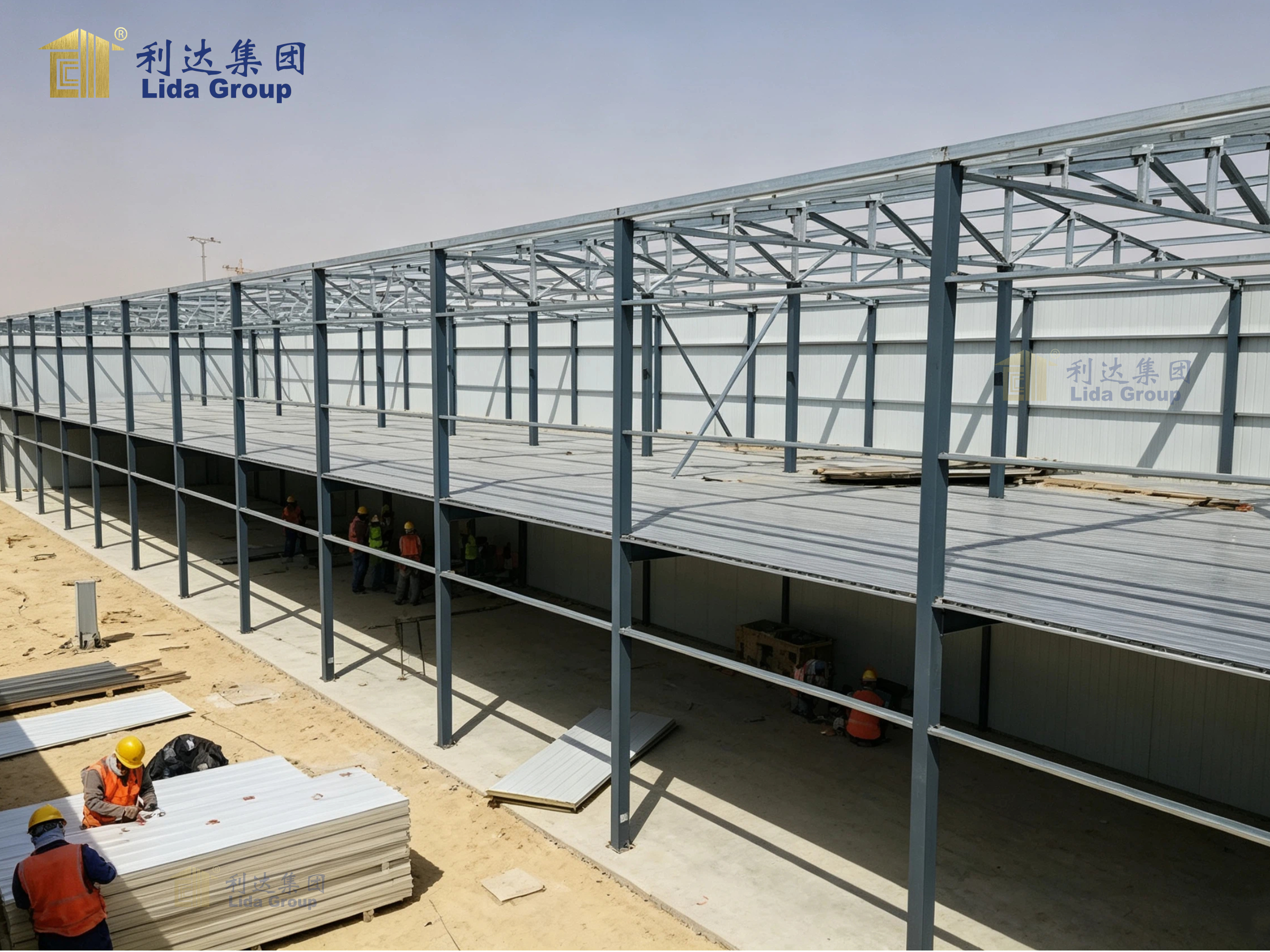
Computerized cutting machinery precisely contours full cassettes for structures in under an hour—a dramatic improvement over conventional methods that can take days or weeks. All of Lida’s sandwich panels are manufactured in climate-controlled factories using automated production lines, ensuring dimensional accuracy of 99.96% across components. The production equipment includes robotic welding systems and laser-guided cutting machines, representing the state of the art in prefabricated building manufacturing.
The New Facility: Scale and Capability
Located in Shandong Province, China, the new 100,000-square-foot factory represents a significant expansion of Lida Group’s manufacturing capacity. The facility is designed to mass-produce standardized wall, roof, and floor panels for the company’s growing portfolio of sustainable affordable housing projects worldwide.
Enhanced panelized construction guarantees quality, efficiency, and consistency for Lida’s modular building pipelines globally. The factory’s closed-loop automation minimizes waste while training local talent in advanced manufacturing. This approach aligns with China’s sustainable development goals, with Guangdong’s provincial authorities commending the facility’s “triple win” through job creation, environmental stewardship, and productivity.
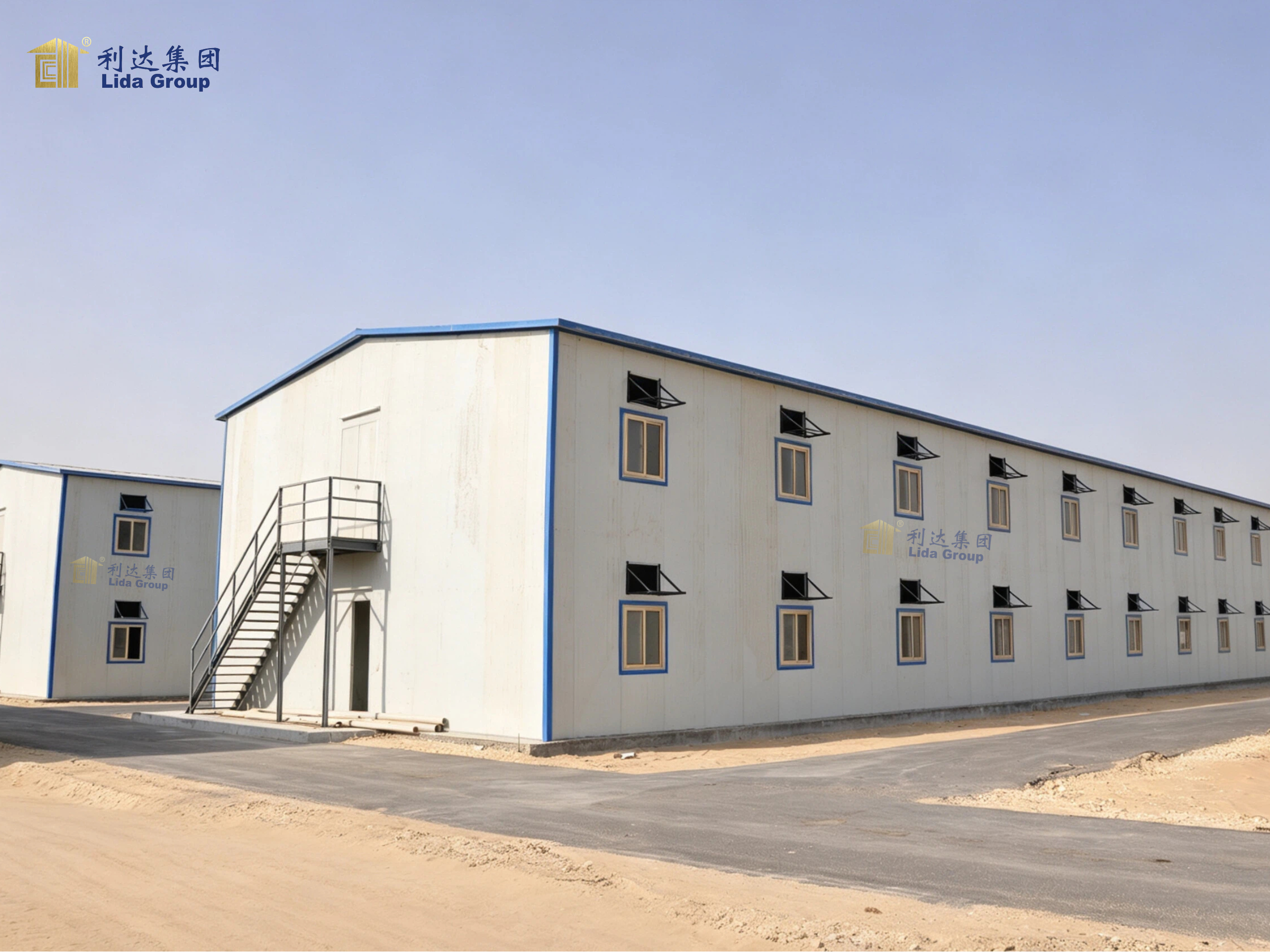
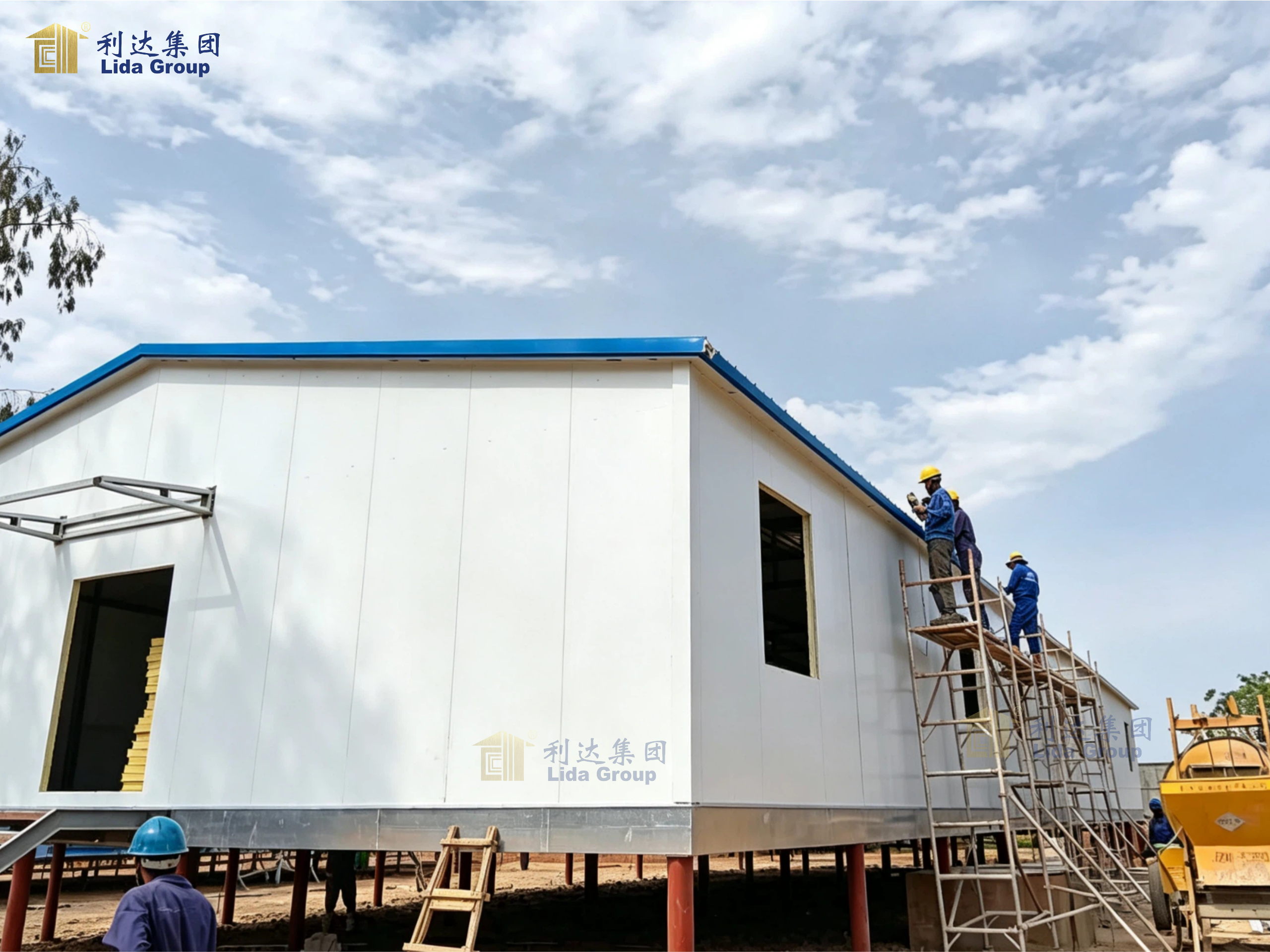
Initial panel production will supply dormitory projects lodging migrant workers near expanding industrial zones. Multi-story buildings stack interconnected floor, wall, and roof cassettes craned on-site, completing turnkey housing in months versus traditional schedules prone to weather delays. High-performance enclosures provide durable, energy-efficient shells for generations with minimal maintenance compared to other materials.
The facility’s strategic significance extends beyond immediate production capacity. Regional officials anticipate robust partnerships in workforce housing, disaster recovery, and urban renewal through localized prefabrication prowess. To demonstrate panelized modular construction capabilities globally, Lida has opened sales exhibitions across Southeast Asia, the Middle East, and Sub-Saharan Africa.
Addressing the Workforce Housing Crisis
One of the most pressing applications for Lida Group’s new panel production facility is the provision of affordable, dignified workforce housing. The global construction industry generates countless temporary workforce accommodation demands across infrastructure, municipal, mining, and energy engineering projects worldwide. Construction site worker dormitories serve as fundamental temporary facilities that directly influence workforce stability, worker physical and mental health, on-site management efficiency, and overall project productivity.
Traditional temporary worker dormitories have failed to meet modern green construction and humanized management standards. Most construction enterprises prioritize low upfront costs and rapid construction progress when building temporary accommodation, ignoring long-term environmental impact, worker living quality, and resource utilization efficiency. These inherent flaws make conventional dormitories unsuitable for the sustainable development needs of the modern construction industry.
Traditional dormitories face severe environmental and health risks. Low-cost ordinary color steel cabins use inferior adhesive and foam core materials containing formaldehyde, benzene, and other volatile harmful substances. These toxins continuously volatilize indoors throughout the building’s service cycle, polluting indoor air and triggering respiratory diseases, skin allergies, and other health problems among long-term residents. Wooden temporary huts consume massive natural wood resources and are prone to decay, mildew, and bacterial breeding in humid environments. Most traditional temporary buildings adopt fixed welding structures that cannot be disassembled and reused, generating massive construction waste at project completion.
Lida Group’s recycled composite sandwich panel dormitories directly address these deficiencies. Integrating low-carbon raw materials, optimized composite structural design, factory prefabrication technology, and detachable modular assembly systems, these sandwich panel houses perfectly fit the complex and changeable operating scenarios of construction sites. They have become the ideal temporary accommodation solution for global construction enterprises.
Sustainability and the Circular Economy
Lida Group’s new facility embodies a profound commitment to environmental sustainability and circular economy principles. Every production link on the company’s six container modular house production lines follows unified environmental protection standards, while the eight steel structure production lines adopt recycled steel raw materials that comply with international green building specifications.
The company’s modular buildings support complete disassembly, migration, and repeated reuse, forming a closed-loop sustainable construction model. This reusable feature perfectly matches the circular economy constructions trend, allowing project teams to reuse modular facilities in subsequent new projects and avoid repeated resource investment. Lida Group’s light steel structures use recycled scrap steel, with the company reclaiming 80% of demoed steel for reprocessing.
The new composite panel facility takes this commitment further by incorporating recycled plastics into the panel manufacturing process. This approach addresses two environmental challenges simultaneously: reducing plastic waste and creating high-performance building components. The proprietary formulations developed in-house optimize performance from waste feedstocks and minerals, significantly reducing embodied carbon footprints versus competitors.
Water conservation is another dimension of Lida Group’s sustainability strategy. Container building systems from Lida Group incorporate extensive recycling capabilities, with greywater systems treating and reusing up to 85% of water consumed within the facilities. This holistic approach to resource management ensures that the company’s buildings are not only sustainable in their construction but also in their operation.
Performance and Quality Assurance
The performance characteristics of Lida Group’s recycled composite sandwich panels represent a significant advancement over traditional building materials. The panels offer exceptional thermal insulation, structural strength, and weather resistance that conventional temporary buildings cannot match.
Insulation options include rock wool, glass wool, EPS (expanded polystyrene), and polyurethane, with thicknesses ranging from 50mm to 200mm available. This flexibility allows engineers to specify the appropriate thermal performance for any climate, from tropical to Arctic conditions. The anti-corrosion galvanized steel outer plates provide durability against harsh environmental conditions, while the formaldehyde-free inner decorative layers ensure healthy indoor air quality.
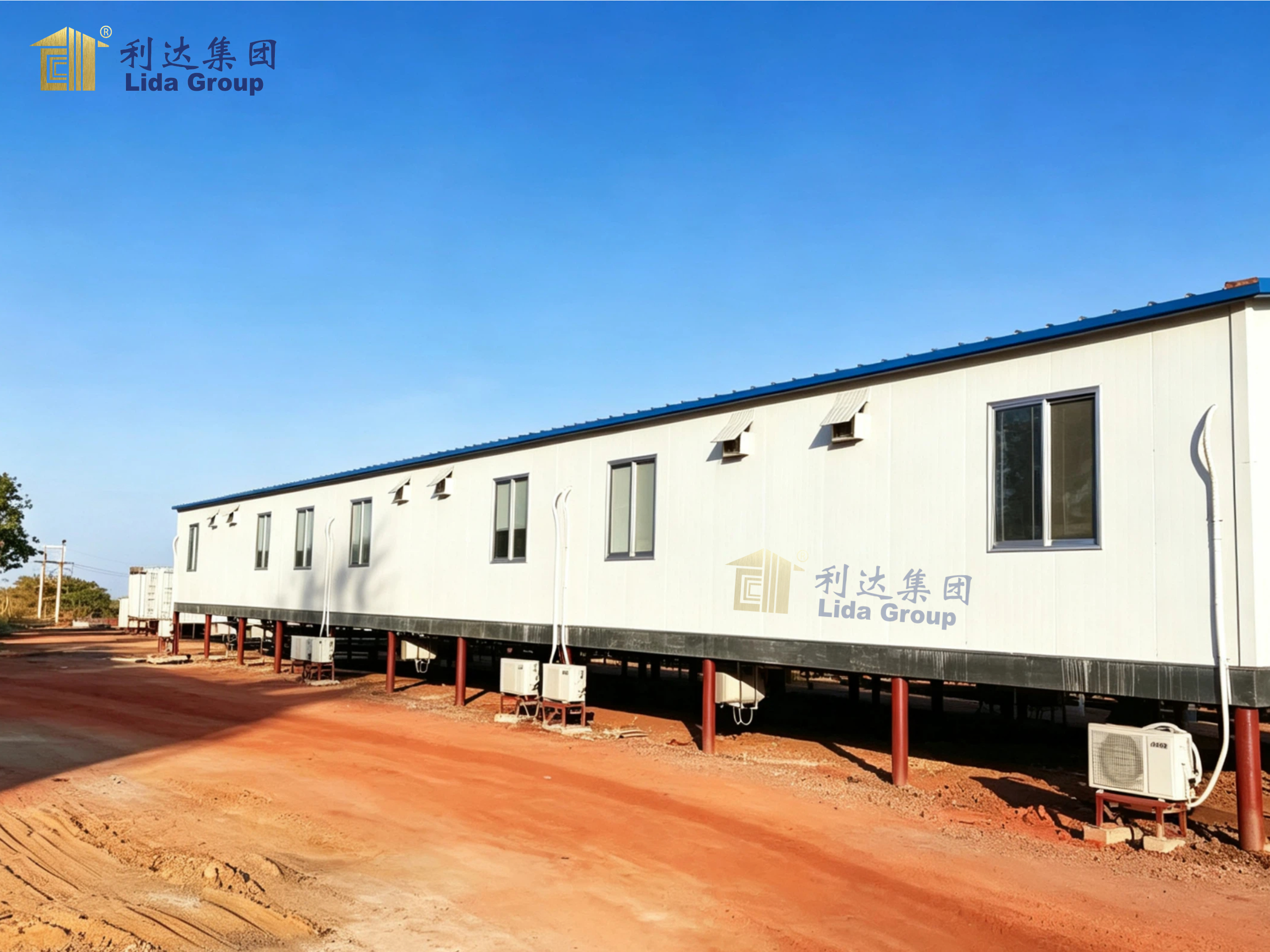
The structural integrity of Lida Group’s sandwich panel houses has been validated through widespread deployment in over 120 countries and regions, fully verifying their superior practicability and sustainability in diverse complex environments. From high-altitude cold plateaus to arid sandy deserts, rainy humid mountain areas, and wind-exposed wilderness regions, these buildings have demonstrated their ability to provide safe, comfortable, and durable accommodation.
Economic Impact and Affordability
Beyond environmental and performance benefits, Lida Group’s new facility addresses a critical economic challenge: making dignified housing affordable at scale. The factory’s automated production processes dramatically reduce manufacturing costs while maintaining consistent quality. Standardized panel production enables economies of scale that traditional on-site construction simply cannot achieve.
The speed of construction is another economic advantage. Multi-story buildings stack interconnected floor, wall, and roof cassettes craned on-site, completing turnkey housing in months versus traditional schedules prone to weather delays. This accelerated timeline reduces financing costs, minimizes project delays, and enables faster occupancy—all of which contribute to lower overall housing costs.
The durability of Lida Group’s sandwich panel buildings further enhances their economic value. High-performance enclosures provide durable, energy-efficient shells for generations with minimal maintenance compared to other materials. This longevity, combined with the ability to disassemble and relocate buildings, ensures that the initial investment delivers value over decades rather than years.
Global Reach and Future Applications
Lida Group has opened sales exhibitions across Southeast Asia, the Middle East, and Sub-Saharan Africa to demonstrate its panelized modular construction capabilities globally. Prefabricated student housing, seniors apartments, and workforce enclaves feature interior cassettes customized via software configurations addressing diverse cultures and floorplans. Modular relocatability further supports rapid scaling to poverty alleviation and disaster relief scenarios worldwide.
The potential applications for Lida Group’s panelized construction extend far beyond workforce housing. The technology is being explored for use as student dormitories, shelter for disaster relief, emergency housing, and even multi-family residential developments. The company’s 60-plus technical patents optimize connection structures and anti-aging performance, ensuring that buildings meet local safety and environmental protection standards after multiple deployments in different countries. Industry experts have commended Lida Group’s strategic reinventions leveraging circular economies to support sustainable housing at scale.
Conclusion
Lida Group’s launch of a recycled composite sandwich panel production facility represents a transformative advancement in sustainable, affordable housing construction. By combining automated manufacturing technology with recycled materials and innovative panel design, the company has created a system that addresses the most pressing challenges facing the global construction industry: the need for rapid deployment, environmental sustainability, and dignified living conditions at scale.
The 100,000-square-foot factory in Shandong Province embodies the convergence of multiple trends that are reshaping the built environment. The facility leverages automated panelization technology combining recycled plastics with structural insulated core materials. Proprietary formulations developed in-house optimize strength, insulation, and moisture resistance from waste feedstocks and minerals, significantly reducing embodied carbon footprints. Computerized cutting machinery precisely contours full cassettes for structures in under an hour.
The implications of this development extend far beyond Lida Group’s own operations. By demonstrating that recycled composite sandwich panel construction can deliver performance at scale with maximum sustainability, the company is establishing a model that can be replicated across the industry. As populations swell amid climate threats concentrated in densely populated emerging regions, partnerships integrating circular material innovations with modular construction scale promise to revolutionize equitable accessibility of dignified shelter resilient to future challenges.
From workforce housing near expanding industrial zones to disaster recovery and urban renewal projects, Lida Group’s panelized modular construction is proving that sustainable, affordable housing is not merely an aspiration but an achievable reality. The company’s new facility signals a future where the construction industry embraces circular economy principles, where waste becomes a resource, and where dignified housing is accessible to all.
For more information, please click here!
Post time: Sep-07-2026